When and where it appears
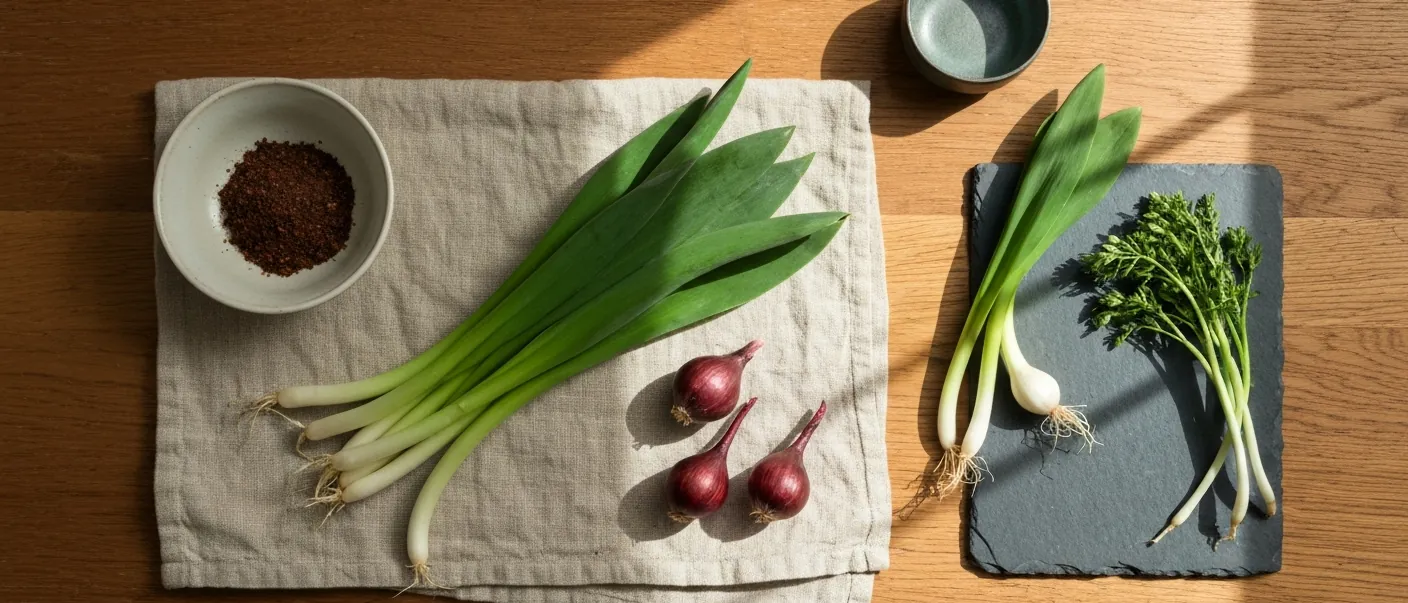
Wild garlic — known botanically as Allium ursinum and colloquially as ramsons — emerges in the damp, shaded ground beneath broadleaf trees, often alongside bluebells and close to streams or riverbanks. The season runs roughly from March through to May, though this shifts with altitude and how far north you are. A cold spring can push everything back by a fortnight; a mild one brings the leaves up earlier than expected.
The leaves come first, broad and bright green, and these are the most useful part. As the season progresses, white star-shaped flowers appear on tall triangular stems. By the time the flowers are fully open, the leaves have begun to toughen and lose some of their freshness. Timing your visit matters.
How to identify it confidently
The smell is the most reliable indicator. Crush a leaf between your fingers: genuine wild garlic gives an immediate, clean garlic scent. If there's no smell, stop. The plant most commonly confused with wild garlic is lily of the valley, which is toxic. Both have similar broad, pointed leaves and grow in similar woodland conditions — but lily of the valley has no garlic smell, and its leaves emerge in pairs from a single stem rather than individually from the base.
Lords-and-ladies (Arum maculatum) is another plant found in the same habitat, and again it lacks any garlic scent. The rule is simple: if crushing the leaf produces no strong garlic smell, leave it alone. Smell alone isn't sufficient for positive identification — use it alongside a careful look at the leaf shape and growth habit, and consult a field guide if you have any doubt.
Foraging responsibly
Wild garlic can carpet woodland in spectacular quantities, which makes it tempting to pick freely. Take modestly — a handful or two per visit, never stripping an area, and always leaving roots and bulbs undisturbed. The plant needs to set seed and regenerate. In some nature reserves and Sites of Special Scientific Interest, picking any wild plant is prohibited; check before you go, and stick to land where foraging is permitted.
Pick leaves cleanly at the stem rather than pulling — it's kinder to the plant and gives a cleaner harvest. Flowers can be gathered later as a garnish; they carry a milder, more delicate flavour than the leaves.
What the leaves actually taste like
Raw wild garlic leaves are pungent and fresh, somewhere between spring onion and a mild cultivated garlic clove, with a green, slightly herbal edge that dried or jarred garlic never captures. Heat softens the flavour considerably — wilted briefly, the sharpness rounds out into something more buttery and subtle. The flowers, eaten raw, are gentler still, with a faint sweetness alongside the allium note.
Wild garlic leaves work well stirred through butter, layered into bread, or used anywhere you'd use fresh herbs to finish a dish. The flowers make a striking garnish on anything from soup to soft cheese.
Getting the best from your harvest
Wild garlic wilts quickly once picked. Use it the same day if you can; if you need to keep it overnight, wrap the leaves loosely in a damp cloth and refrigerate. Beyond a day or two, the quality drops noticeably.
Making a wild garlic oil or butter extends the season well beyond the weeks of foraging — both preserve the flavour and mean a good harvest doesn't go to waste. The approach is straightforward: blitz leaves with a neutral oil, or work them into softened butter and roll in cling film to freeze. Dried wild garlic is available from some specialist suppliers if you miss the season entirely, though the fresh leaf has a character that drying can't fully replicate.
The season is brief and will not wait. If you spend it looking for a perfect day, it will have passed.