Picked hard, eaten soft
The medlar arrives in late autumn looking like a small, russet-brown apple that someone sat on. It is leathery, unyielding and completely inedible straight from the tree. Leave it alone for several weeks in a cool, dry place, resting on straw or a wooden tray, and something quietly extraordinary happens. The flesh softens and browns from the inside out, turning to a dense, grainy pulp that tastes of dates, apple purée and a faint hint of spiced wine. This process is called bletting, and it is the whole point.
No other commonly grown British fruit asks this of you. The medlar demands patience and a willingness to let something that looks slightly alarming become something genuinely good — which may explain why it has been so thoroughly forgotten.
What medieval England knew
For much of England's history, the medlar was an ordinary part of the orchard. It ripens when almost everything else has finished — after apples, after quinces — and before refrigeration, that late-season availability mattered enormously. It kept well precisely because it needed time to blett rather than being rushed to a table.
Medieval and Tudor cooks valued it at feasts and in stillrooms alike. Its reputation was earthy enough to earn several nicknames that would raise eyebrows today. Shakespeare made use of them, not entirely in polite company — the fruit's open, five-pointed base was the source of the humour. You don't make bawdy jokes about things nobody recognises, and the jokes have a raffish specificity that tells you just how familiar the medlar once was.
Why it disappeared from kitchens
The medlar's decline tracks almost exactly with the rise of modern food distribution. A fruit that cannot be picked and sold — that must sit, unpackaged and visibly browning, for weeks before it is ready — does not fit a supply chain. Supermarkets have no shelf space for something that looks, to an unfamiliar eye, as though it has already gone off.
It also requires knowledge to appreciate. Bite into an unbletted medlar and you will encounter something sharp, astringent and deeply unpleasant. Without understanding what it is supposed to do, there is no obvious reason to persist. As kitchen traditions thinned and orchard varieties were standardised around what could be transported efficiently, the medlar simply stopped being planted.
Where it survives
Old walled gardens, historic estates and the occasional forgotten corner of a country orchard are the medlar's strongholds. The tree itself is small and genuinely handsome — it blossoms with large, open white flowers in late spring, and its gnarled branches and dark autumn foliage give it a character that purely productive fruit trees rarely achieve. A handful of growers and heritage orchardists have kept it going, partly out of stubbornness and partly because there is a quiet constituency of people who find this kind of awkward, unfashionable produce worth seeking out.
Farmers' markets in late autumn are the most reliable place to encounter fresh medlars, though availability is never guaranteed. More likely — and considerably longer-lasting — is medlar jelly, the fruit's most established preserved form.
Medlar jelly and how the fruit is used
Medlar jelly is a deep amber preserve with a flavour that is hard to place: sweet but not cloying, with the roundness of quince and something slightly winey underneath. The fruit is naturally high in pectin, so the jelly sets firmly and with a jewel-like clarity that makes it as attractive on the table as it tastes.
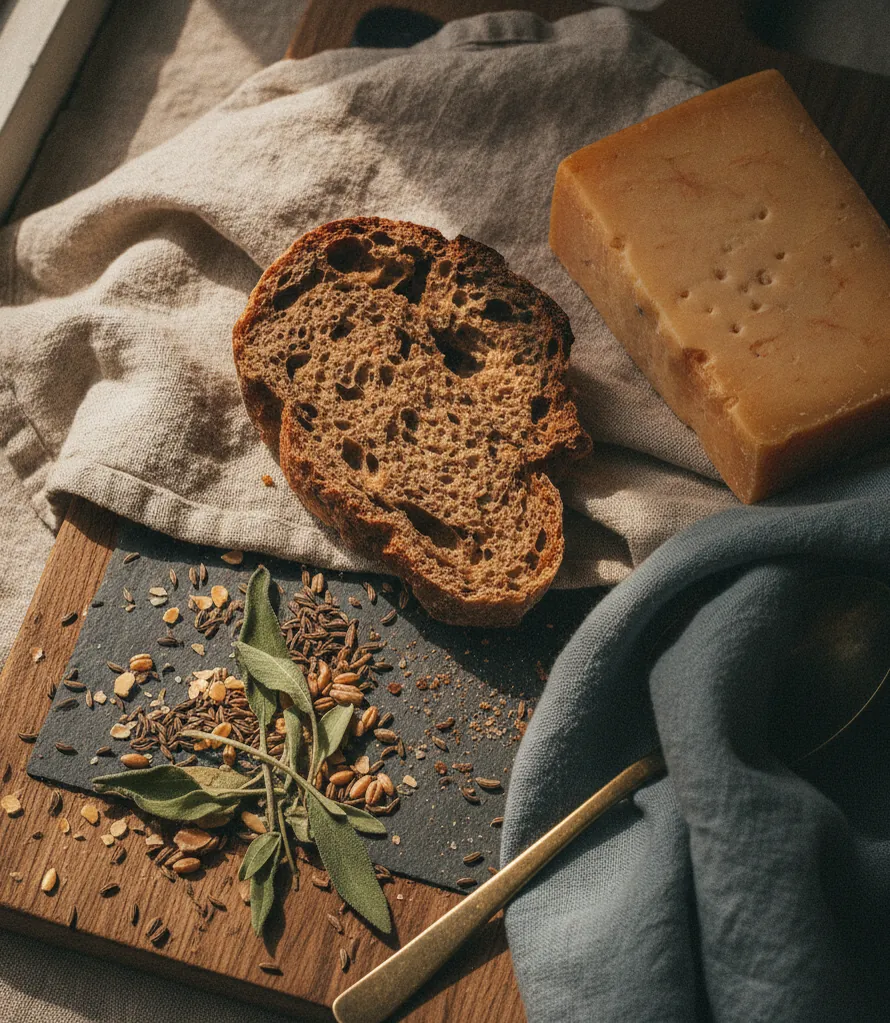
Traditionally paired with game, cold meats and strong cheeses, its slight acidity cuts through richness much as a good chutney does, but with more finesse. Bletted medlar flesh eaten on its own is typically scooped from the skin with a spoon and served with cream or clotted cream; the texture is too soft and fibrous for much else, but in that form it is very good indeed.
For anyone growing their own or lucky enough to find fresh fruit, the bletted pulp can be pressed through a sieve and used in sweet preparations — though medlar jelly remains the version most people will actually come across.