Older than the turkey itself
The turkey is a relative newcomer to the British table — imported from the Americas and only gradually displacing goose and capon as the Christmas centrepiece. Stuffing has been with us far longer. Medieval cooks packed birds and joints with breadcrumb mixtures seasoned with herbs and spices, sometimes sweetened with dried fruit, always practical: flavour the meat from within, stretch the meal further, use the cavity that would otherwise contribute nothing. The instinct has never changed. What has changed is the range of stuffings considered worth making.
Sage and onion: the baseline
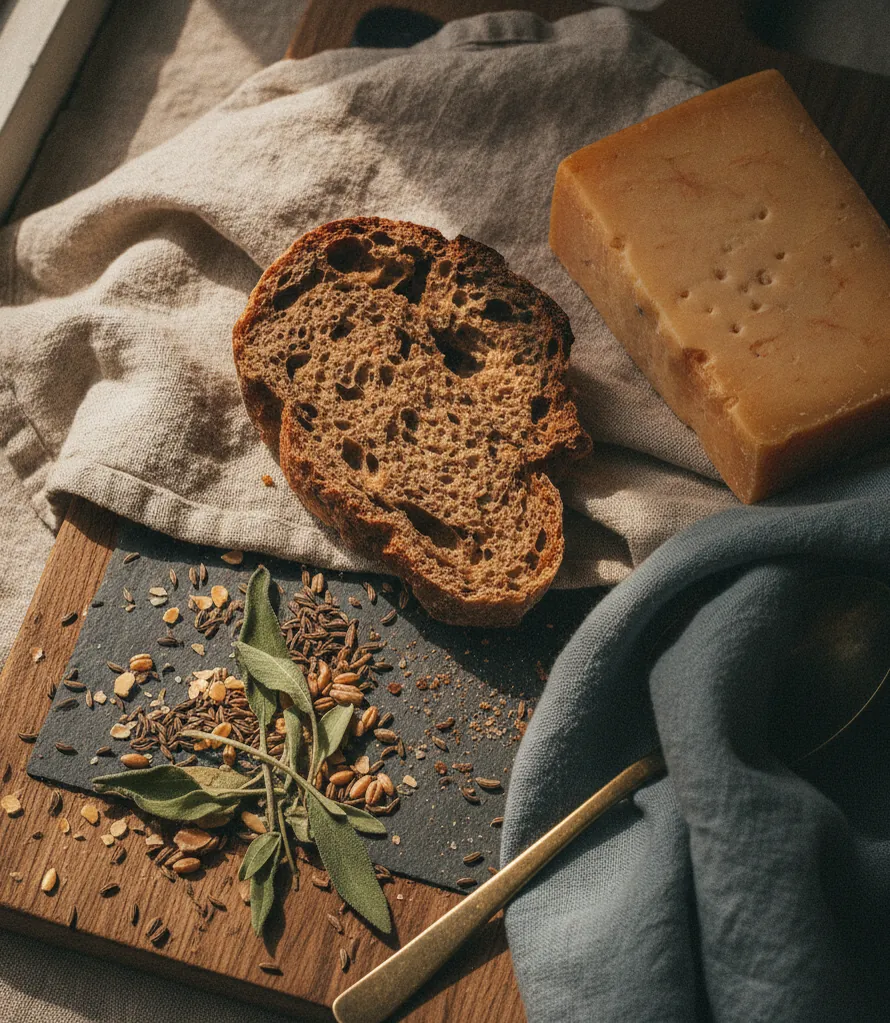
Sage and onion is so deeply embedded in British cooking that it barely registers as a recipe — it is simply what stuffing is to a large part of the country. Cooked onion, dried breadcrumbs, fresh or dried sage, and enough fat or egg to bind: this is the template. Sage does the heavy lifting. It has a slightly resinous, almost medicinal quality raw, but cooked slowly into softened onion it becomes round and savoury in a way few herbs manage. A good sage and onion stuffing should taste of the herb without being overwhelmed by it — assertive but not sharp.
Sausagemeat stuffing sits just beside sage and onion in the British canon, often as an elaboration of it. Pork sausagemeat carries its own seasoning and fat, giving a denser, juicier texture that holds together cleanly when sliced. Sage, thyme, sometimes a little rosemary, softened onion, and breadcrumbs to lighten the mix are the usual additions. This is the version most likely to appear as a roll baked beside the bird rather than inside it.
Chestnuts and fruit: the richer alternatives
Chestnut stuffing occupies a different register. Sweet chestnuts — properly cooked and peeled, not the water chestnuts of a stir-fry — bring a floury, slightly sweet quality that pairs well with dark turkey meat and rich gravy. We have written separately about sweet chestnuts and their place in British food; in a stuffing, they are usually combined with sausagemeat or butter, onion, and often celery, which cuts through their sweetness. The result is substantial, almost like a savoury pudding in character.
Dried fruit — chopped apricots, cranberries, prunes — works particularly well in sausagemeat or chestnut bases, where the sharpness balances the richness of the pork fat. Apricot and sausagemeat is a combination that needs no explanation once tried: the fruit softens into the meat during baking, leaving small pockets of sweet-sour flavour in every slice. Cranberries are more assertive and hold their shape better, which some people prefer.
Forcemeat balls
Forcemeat is any finely chopped or minced meat mixture used as a stuffing or garnish — from the French farce, meaning filled. British forcemeat balls, the small rounds of seasoned sausagemeat and breadcrumbs roasted alongside the bird, are probably the most democratic option: they need no cavity, cook quickly and evenly, and every guest gets one or two rather than competing for the crisp corner of a tray. Wrapped in streaky bacon before roasting, they become something close to a small sausage roll, which is never a bad outcome.
Inside or out — and making ahead
The case for baking stuffing separately is straightforward. A bird stuffed in its main cavity takes longer to cook through, which risks the breast drying out. Baked in its own tin or dish, stuffing cooks on its own terms, developing a crisp, almost caramelised top and edges while staying moist underneath. Many cooks now use the neck cavity only — it is shallower, cooks faster, and the stuffing swells to give the bird a more presentable shape at the table.
Stuffing also benefits from being made ahead. Most uncooked mixtures can be assembled a day or two in advance and kept refrigerated, ready to bake on the day. They freeze well too — form the mixture into a foil-wrapped roll, or press it into the dish you plan to bake it in, and freeze before cooking. Defrost overnight in the fridge before roasting. Cooked stuffing, once cooled, freezes equally well, though the crisp top will not survive reheating as impressively as a fresh-baked batch.