A short season
Gooseberry season in Britain runs from June into July and does not linger. The window is narrow enough that a busy fortnight can see you miss the best of it. Look for them at farm shops, farmers' markets and pick-your-own farms from early June onwards. Most supermarkets carry them briefly, but quality at the farm gate tends to be noticeably better: firmer, more fragrant, and sold ripe rather than picked hard for shelf life.
Cooking varieties and dessert varieties
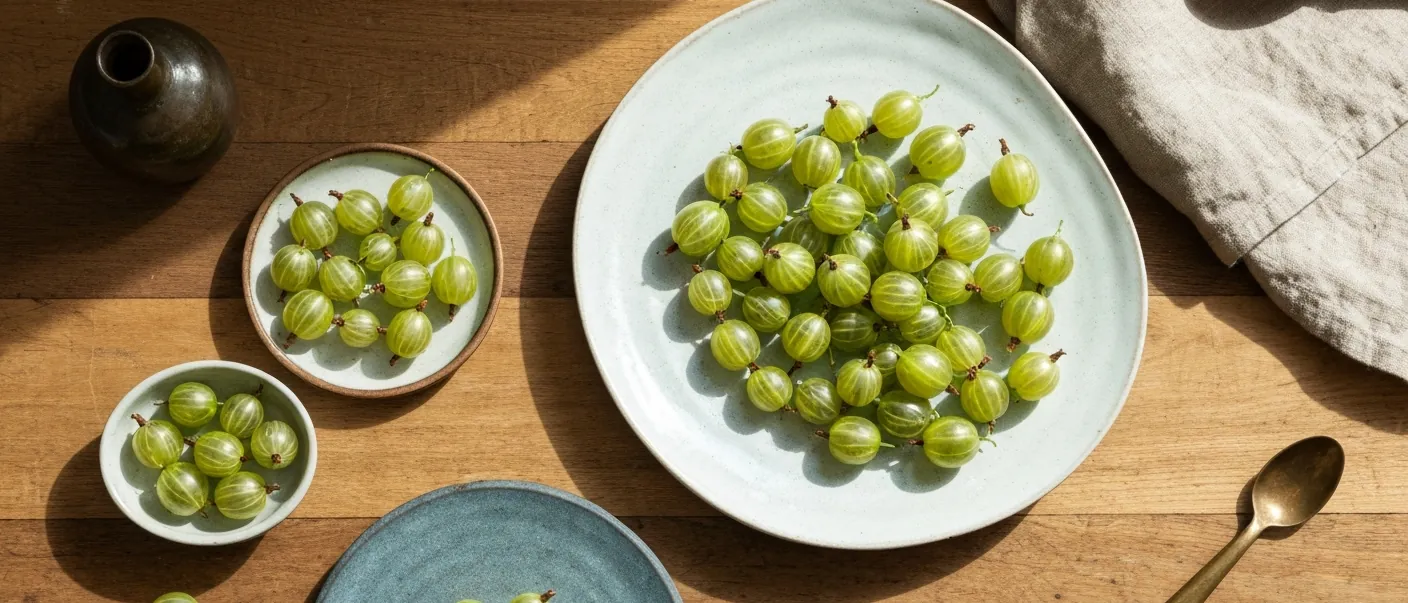
The distinction that matters most when buying gooseberries is not colour but purpose. Cooking gooseberries are harvested early in the season while still hard and sharp — high in pectin, built for heat. They collapse quickly when cooked, which is exactly what you want for a fool or a sauce to cut through oily fish or pork. Their acidity is almost aggressive eaten raw, but that is their strength in the kitchen.
Dessert gooseberries are left on the bush longer. By late June and into July, certain varieties — often the larger, translucent, amber or blush-red types — soften and sweeten to the point where they can be eaten straight from the punnet. There is always a gentle tartness underneath; that tension is what makes them interesting.
Colour tells you relatively little on its own. A deep red variety picked early can still be too sharp to enjoy raw, while a pale green one left long enough on the bush in a warm summer may need no sugar at all. Ask the grower, or taste one before committing to a quantity.
One of Britain's oldest garden fruits
The gooseberry has grown in British gardens for centuries, and the enthusiasm for it here never quite spread to the rest of Europe with the same intensity. It is in northern England that the culture around gooseberries became genuinely competitive — growers in parts of Lancashire and Yorkshire have for generations devoted serious effort to producing single berries of extraordinary size, entered into local shows and judged purely by weight.
The best known of these is the show at Egton Bridge in North Yorkshire, which has been running since Victorian times. The rules are strict, the atmosphere serious, and the winning berries — often the size of a small plum — bear little resemblance to what most people picture when they think of the fruit. It is a corner of British food culture that has survived largely unchanged, which is rarer than it sounds.
How the British have traditionally eaten them
The gooseberry fool is the dish most associated with the fruit — cooked and sieved gooseberries folded through cream, served cold. It is old-fashioned in the best sense, requires no technical skill, and a good one made at the height of the season is hard to improve on.
Gooseberries also have a long tradition alongside savoury food. A sharp gooseberry sauce with oily fish appeared in British cookery long before any modern enthusiasm for sweet-acid contrasts. The fruit's natural acidity does the work a squeeze of lemon might do elsewhere, but with more body and a flavour distinctly its own. Beyond that, gooseberries make excellent jam — their high pectin content means reliable sets without commercial additives — and they pair well with elderflower, which comes into season at the same time. The two flavours amplify each other in a cordial or simple syrup.
What to look for when buying
A good gooseberry should feel firm, not soft, with intact skin and no splits or weeping. For cooking, slight under-ripeness is fine and even preferable. For eating raw, taste before you buy if you can; sweetness varies considerably between varieties and between seasons.
If you find a good source, buy generously. Gooseberries freeze well: spread them on a tray to freeze individually before transferring to a bag, and you will have them available for months after the fresh season ends. The texture changes after freezing, ruling out eating them raw, but for cooking the result is almost indistinguishable from fresh.