What goes into it
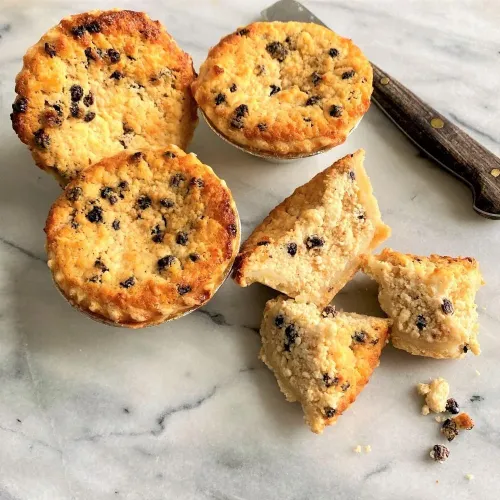
At its simplest, a Yorkshire curd tart is a shortcrust case filled with fresh curds — the soft, damp solids left when milk is acidified and strained — beaten together with butter, sugar and eggs, then studded with currants and scented with nutmeg or rosewater. The result sits somewhere between a cheesecake and a custard tart: slightly grainy from the curds, gently rich, mild rather than sharp.
The filling depends on curds that are fresh and well-drained. Too wet and the tart never quite sets; too dry and you lose the soft denseness that distinguishes the Yorkshire version from anything in a patisserie window. The nutmeg is not decorative — it cuts through the dairy as it does in a rice pudding or a béchamel, grounding what would otherwise be a very gentle flavour.
Why Whitsuntide
The tart belongs to a specific moment in the agricultural year. Whitsuntide — the weeks following Whit Sunday, seven weeks after Easter — falls in late spring, when grass grows fast and cows produce their best milk. For households that kept a house cow or bought surplus milk from a neighbouring farm, this was the season when cream was plentiful and home cheesemaking was practical. Curds were a by-product almost by default.
Making a curd tart was partly a way of using something that would otherwise spoil. Eggs, too, were abundant in spring. Sugar and currants were bought in; everything else came from the land around the kitchen. The Yorkshire curd tart could not have become what it is in a different season or a different landscape — it was shaped entirely by its conditions.
Like many festival foods, it became associated with the holiday itself rather than merely coinciding with it. Whitsuntide meant walks, feasts and the tart as a fixed point of the table. That ritual role is why it survived long after the home dairy vanished from most households.
How it differs from similar tarts
The Yorkshire curd tart is not a Richmond Maid of Honour. Those Surrey tarts — discussed in a separate piece — are smaller, puffier and more delicate in construction. The Yorkshire version is a proper open tart, homelier in appearance and considerably denser in the eating.
Nor is it a modern baked cheesecake, even though the logic is similar. Commercial cream cheese behaves differently to fresh curds; the texture and flavour are both smoother and less interesting. A genuine Yorkshire curd tart has a slight unevenness — currants breaking the surface, filling colouring where it catches the heat — that a supermarket cheesecake simply does not.
Where to find it now
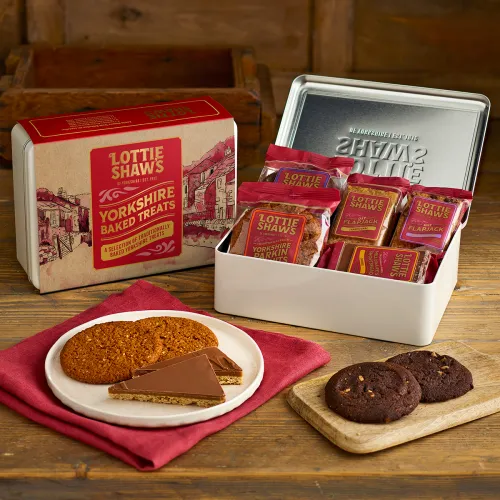
The tart never went national as a Bakewell pudding or an Eccles cake did, which is probably why it has retained its character. There is no mass-produced version on the motorway services shelf. In Yorkshire itself, particularly in market towns where the tradition of baking for the weekly stall has kept older recipes alive, independent bakeries still make it properly.
It is not a fashionable bake — no sourdough crust, no miso caramel topping. That conservatism is part of what makes it worth seeking out: it still tastes more or less as it has for generations, which is rarer than it sounds. Eat it at room temperature, with nothing alongside. The filling is substantial enough to need no accompaniment.
A bake shaped by thrift
The Yorkshire curd tart represents a way of thinking about ingredients that has largely been lost. The dairy calendar dictated what you made and when. Surplus became centrepiece. The tart was never conceived as a treat for its own sake — it was the intelligent use of what spring had produced, and the treat followed from that.
There is something worth holding onto in that logic. Not as nostalgia, but as an honest account of where good regional food actually comes from: not from chefs or trends, but from the accumulated decisions of people working with what they had.