A shore with deep roots
The waters off Whitstable are unusually shallow and nutrient-rich, swept by tides that have made the beds here among the most productive on the English coast for millennia. Roman settlements in the area left behind evidence of oyster consumption on a considerable scale, and the trade never really stopped. Through medieval fisheries, through the Victorian appetite for cheap shellfish, through periods of near-collapse and patient recovery, Whitstable has remained the name most closely associated with the native oyster in Britain.
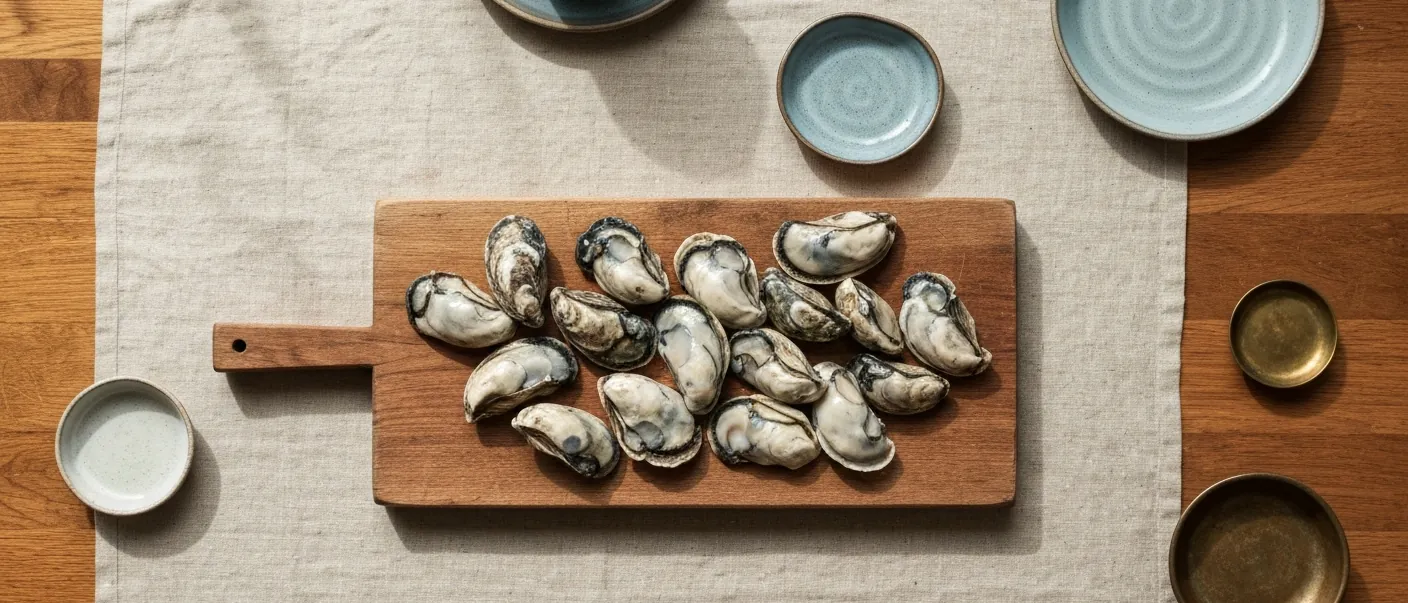
The native species — Ostrea edulis, sometimes called the flat oyster or European native — is a different animal from the Pacific oyster that now dominates most British menus. It grows more slowly, demands cleaner, colder water, and produces a flavour that regular eaters describe as coppery and complex, with a long mineral finish. The shells are rounder and flatter. The flesh is smaller. Almost everything about it suggests patience.
What the water does
Whitstable sits on the north Kent coast where the Thames Estuary opens into the wider North Sea. The estuary carries particular mineral qualities — salinity levels, temperature fluctuations, plankton populations — that oyster growers argue leave a direct mark on flavour. This idea, borrowed from wine, goes by the French word merroir among enthusiasts: the taste of where something was grown.
Oysters from different beds do taste different, and the beds around Whitstable have been producing a recognisable flavour profile for long enough that the town's name functions as a quality signal in itself. The native oyster season runs through the colder months — traditionally those containing the letter R, meaning September through to April. Oysters spawn in warmer water and are considered thin and milky through summer, but the restriction also reflects a conservation ethic that predates modern regulation by centuries.
The festival and the town
Whitstable's oyster festival is usually held in July — check the official festival website for this year's dates before planning a visit. The timing falls deliberately outside the native oyster season, so stalls and events tend to serve Pacific varieties, though the occasion is firmly about celebrating the town's longer relationship with the shellfish.
The town rewards a quieter visit outside peak season. The harbour remains a working one, the old fishermen's huts along the shingle have largely survived, and the independent seafood restaurants and shack-style stalls around the waterfront give a reasonable impression of what the trade has always looked like here. Eating oysters at the harbour, looking out across the flat grey water, feels connected to something older than the branding.
How they are traditionally eaten
Native oysters need very little done to them. A squeeze of lemon, a few drops of Tabasco or a teaspoon of shallot vinegar: these are condiments, not disguises. The point is to taste the oyster as it is.
They are served raw, on the half shell, usually on crushed ice or seaweed, with brown bread and butter alongside — a plain backdrop rather than a competitor. The idea that you must swallow an oyster whole is a myth that deserves to die quietly; chewing actually releases more of the flavour.
Cooked preparations exist — grilled with butter and breadcrumbs, or incorporated into a traditional oyster loaf — but these tend to use Pacific oysters. The native is generally considered too fine and too costly to subject to heat.
Buying and quality
Native Whitstable oysters are available through specialist fishmongers and direct from producers during the season. Freshness is the only thing that matters: the shell should be tightly closed, or close immediately when tapped. Any shell that stays open should be discarded. A clean, oceanic smell — nothing sour, nothing sulphurous — is the sign you want.
The native oyster is rarer and typically more expensive than its Pacific counterpart, partly because of slower growth and partly because the beds require careful management to prevent the over-harvesting that caused serious collapses in the past. Buying from reputable sources and eating in season is the most straightforward way to support what has been, against considerable odds, a survival story.