What a kipper actually is
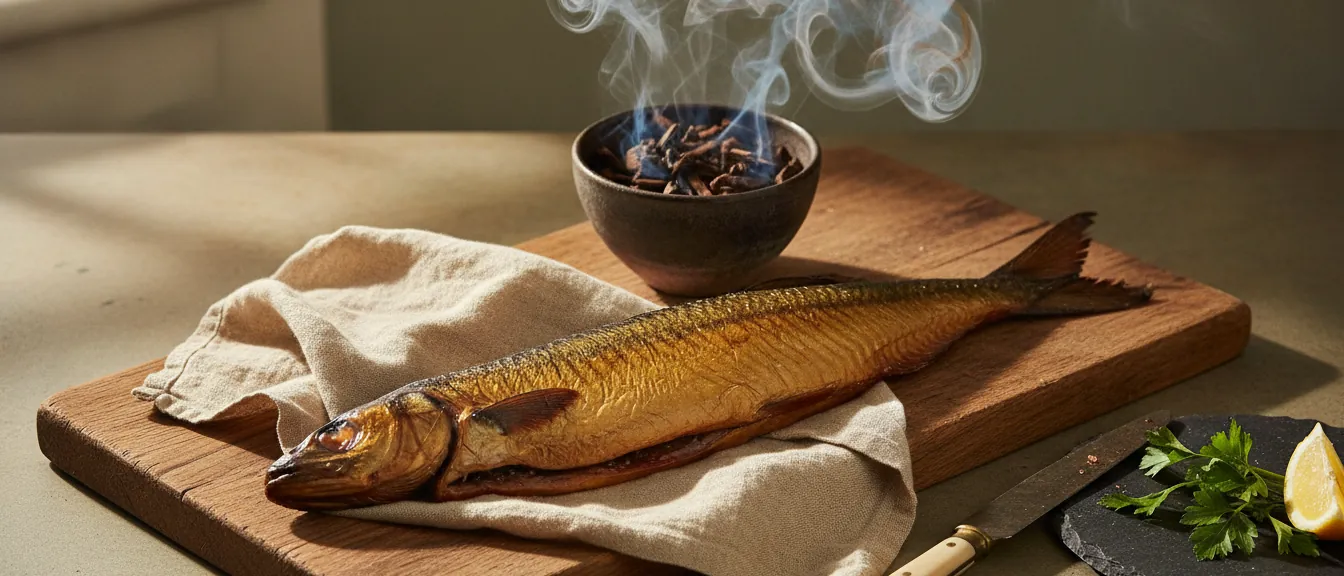
The word gets used loosely, but a kipper is something specific: a whole herring, split open along the back, brined, and cold-smoked until the flesh turns deep amber and the fat begins to carry the flavour of the wood. No liquid smoke, no shortcuts dressed up as tradition. The process is slow and the result unmistakable — a fish that is intensely savoury, faintly sweet from the smoke, and rich in a way no other breakfast ingredient quite matches.
Oak is the traditional smoking wood in Whitby, and it matters. Different woods produce meaningfully different results. Oak gives a clean, deep smoke — less resinous than pine, less sweet than cherry — which suits oily herring well. The brine before smoking draws out moisture, firms the flesh, and seasons the fish all the way through rather than merely on the surface.
Whitby's place in the story
Whitby has been a working fishing port for centuries, and the herring trade was once central to the town's economy. Fleets would return heavy with silver fish, and smoking was the practical answer to preservation — a way of extending the life of a perishable catch long before refrigeration existed. What began as necessity became craft, and then became identity.
The smokehouse continuing this tradition operates from a Victorian building, which means the physical infrastructure — the smoke pits, hanging racks, the particular dimensions of the curing chambers — is itself part of the method. Old smokehouses develop their own character over decades. The walls absorb generations of smoke; the airflow is known and trusted. Replicating that in a modern facility is possible, but it produces a different thing.
Why provenance matters here
Whitby kippers do not currently hold a protected designation in the way that Arbroath Smokies do under UK geographical indication rules. The name alone is no legal guarantee of origin or method. When buying, a kipper produced in Whitby's surviving traditional smokehouse is a genuinely different product from one that simply carries the town's name as a selling point.
The straightforward answer is to buy directly from the smokehouse, or from a retailer who can name their source. Mail-order kippers, properly vacuum-packed, travel well and are a reasonable way to access the real thing without visiting North Yorkshire in person.
How they are traditionally eaten
The classic Whitby kipper appears at breakfast, grilled or jugged — steeped in a jug of boiling water, which heats the fish gently without the smell that grilling can produce in an enclosed kitchen. Served with brown bread and butter and perhaps a wedge of lemon, it is a combination that resists improvement through complication. Some add a poached egg alongside; others find that unnecessary.
Kippers also have a longer history as a high-tea dish, eaten in the late afternoon with bread and strong tea. That tradition has faded in most households, but it was once entirely ordinary along the Yorkshire coast, where the fishing day set different rhythms from the farming or industrial calendar. The fish was sustaining, affordable, and available — practical virtues that have since been reframed, fairly, as pleasures.
Storing and buying well
Fresh kippers should be eaten within a day or two of purchase. Vacuum-packed kippers keep considerably longer and lose surprisingly little in quality, making them one of the more forgiving traditional smoked fish products to buy by post. Frozen kippers are a perfectly respectable option — the texture holds better than with most fish, owing to the structural effect of the smoking and curing process.
If you are visiting Whitby, buying directly from the smokehouse is the obvious choice. Watching the process — rows of split herring hanging above oak smoke — gives context that no amount of reading quite substitutes for, and the town's producers reward that kind of direct engagement.