A cheese built for hard work
Caerphilly began as practical food. Welsh miners carried it underground because it was dense enough to be filling, mild enough not to overpower tired palates, and salty enough to replace what was lost in a long shift. That last point matters more than it might sound — the light but deliberate salting was functional as much as it was about flavour. The cheese became associated with the coalfields of South Wales in a way that shaped how it was made and what it was expected to taste like.
What the miners were eating was young Caerphilly, and that is still how most people encounter it. Fresh from the press, it is pale, slightly moist and genuinely crumbly — not in the dry, aggressive way of an aged Lancashire, but with a softer, more yielding break. The flavour is clean and milky with a faint lactic sharpness. It is one of the more restrained British cheeses, and that restraint is part of the point.
What PGI protection means in practice
Caerphilly holds Protected Geographical Indication status, which means cheese sold under the name must meet defined standards tied to its origins and production methods. PGI sits one rung below the stricter PDO designation — it requires a genuine link to the place but allows some flexibility in where individual stages of production happen. For the buyer, it is a reasonable assurance that you are getting something made to a recognisable standard rather than a supermarket approximation with the name borrowed for convenience.
The town of Caerphilly, a few miles north of Cardiff, gives the cheese its name and the surrounding region its character. The damp Welsh climate and the dairy farming it supports are inseparable from the cheese's history, even if production has spread more widely over time.
Farmhouse ageing and the breakdown layer
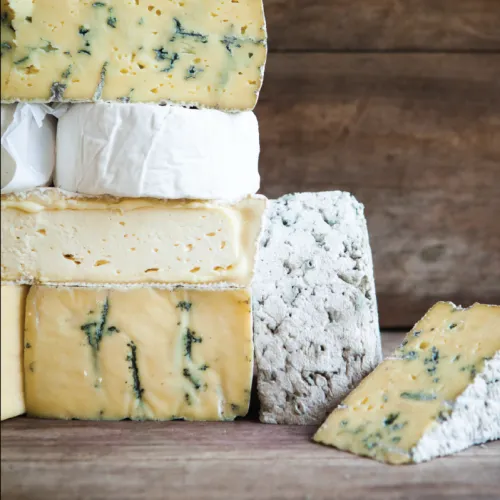
Most commercial Caerphilly is sold young, within a few weeks of making. Farmhouse producers who age their wheels longer reveal something the fresh version only hints at. As the cheese matures, a soft, almost creamy layer develops just beneath the rind — the paste breaks down gradually from the outside in, creating a marked contrast between the chalky, open interior and that yielding outer zone.
This aged style is less common and considerably more interesting to eat. The rind can develop a natural grey-white mould coat, and the flavour deepens — still mild by the standards of a washed-rind or a blue, but with more complexity than the fresh version offers. Seek it out from farmhouse cheesemakers if you want to understand what the cheese can become given time and attention.
How it is traditionally eaten
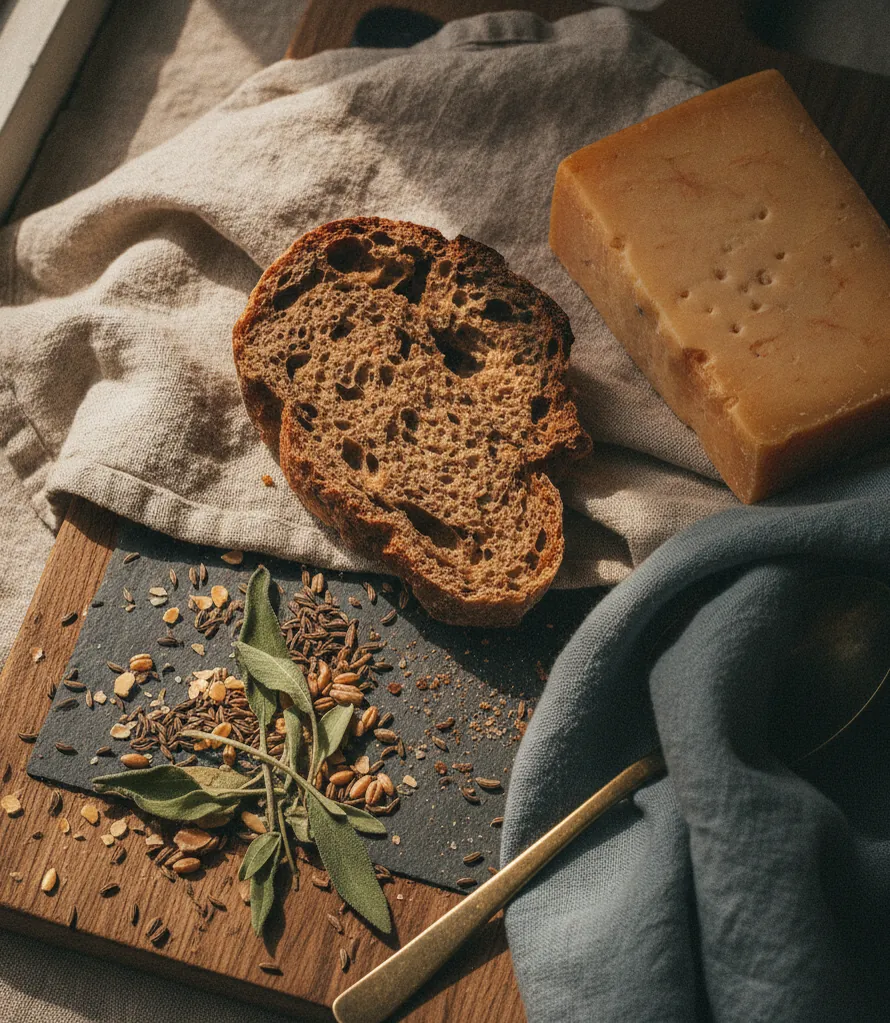
In Welsh households, Caerphilly has always been practical rather than ceremonial. It goes onto bread or oatcakes without fuss, and it sits on the cheeseboard as the lighter, fresher option alongside stronger, aged cheeses. Crumbled over salads or leeks, it holds its shape without disappearing, which makes it useful in ways a softer cheese would not be.
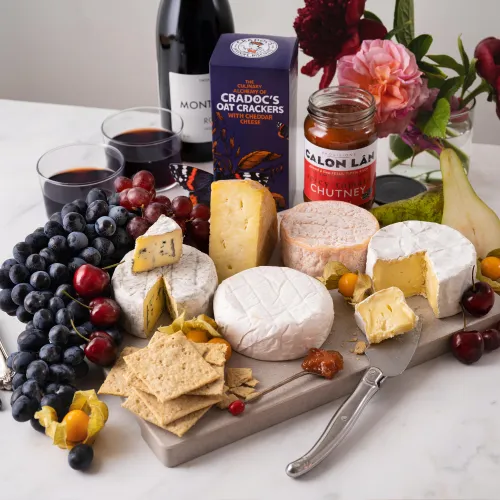
The classic pairing is something with a little acidity or sweetness to play against the salt — a sharp chutney, pickled walnuts, a slice of apple. The cheese is open-grained enough to absorb flavour from what surrounds it, so it rewards some thought about what sits alongside it on the board.
Finding the real thing
The gap between traditional Caerphilly and the block versions found in most supermarkets is significant. Supermarket versions tend to be denser, rubbery and noticeably less complex — serviceable for cooking but not representative of what the cheese actually is.
For farmhouse or artisan versions, Welsh specialist cheesemongers and independent online retailers are the more reliable route. Farmers' markets in Wales, particularly those in the south, often carry wheels from smaller dairies that age their cheese longer than the industrial norm. Ask whoever is selling it how old the cheese is and whether it comes from a farmhouse producer — those two questions will tell you most of what you need to know before you buy.