Not bread at all
The name is the first thing that throws people. Laverbread contains no bread, no flour, no leavening of any kind. It is, at its simplest, seaweed cooked down into a smooth, intensely savoury purée — dark green-black in colour, with a mineral depth unlike anything else in the British larder. The word bara in Welsh means bread, and the leap into English has left behind something that sounds more familiar than it is.
The seaweed in question is laver (Porphyra umbilicalis), gathered from the rocky shores and estuaries of the Welsh coastline. It is the same species the Japanese call nori — the thin, papery sheets used to wrap sushi — but the Welsh tradition takes it somewhere quite different. Rather than drying and pressing the fronds, the laver is slow-cooked for many hours until it collapses into a soft, almost gelatinous mass. The result is concentrated, briny, and rich in a way that rewards those willing to meet it on its own terms.
How it is eaten
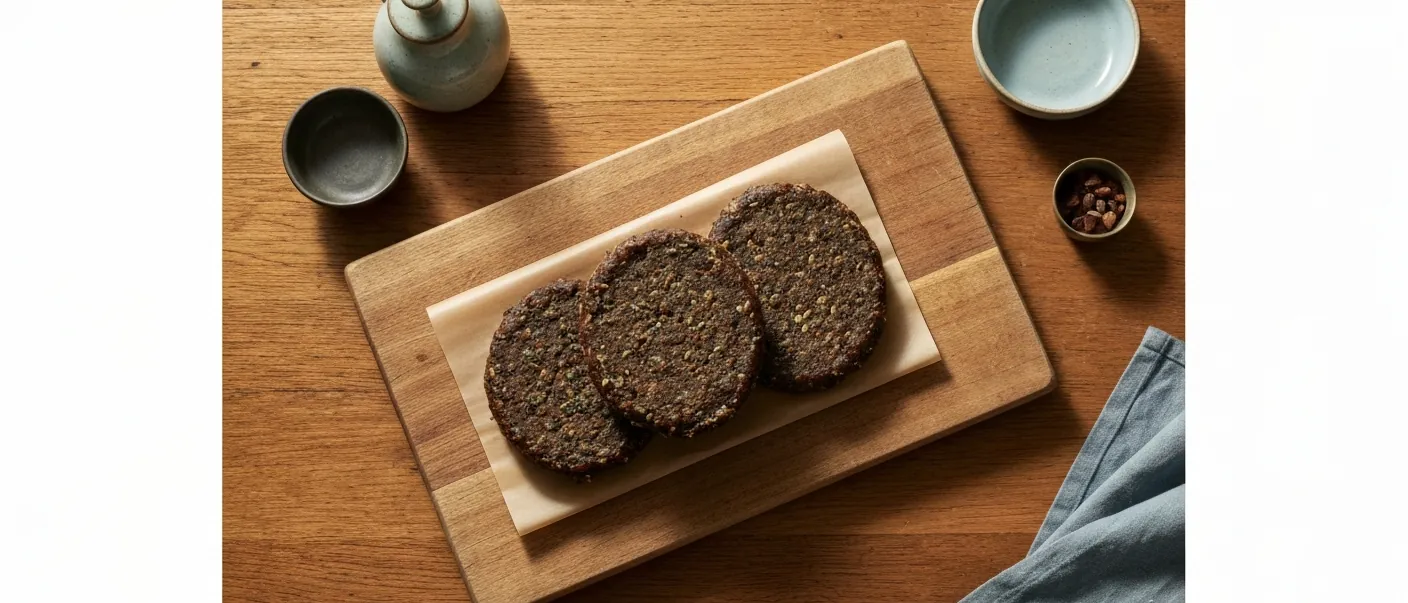
The traditional preparation is straightforward: the purée is rolled in fine oatmeal, formed into small flat cakes, and fried alongside bacon on a griddle or in a pan. The oatmeal crust gives just enough texture to contrast with the soft interior, and the bacon fat provides salt and richness that balances the seaweed's natural bitterness. Cockles often appear on the same plate — another coastal staple that has long kept company with laverbread.
Outside the breakfast context it turns up spread on toast, stirred through lamb dishes, or used in ways that reflect how deeply embedded it is in Welsh domestic cooking rather than restaurant fashion. It has never needed dressing up.
Protected status and why it counts
Laverbread holds Protected Geographical Indication status — the same certification that protects Champagne, Parma ham, and Stilton. PGI recognises that a product's character is tied to its place of origin: laver gathered and processed in Wales, according to the traditions of that coastline. The designation distinguishes Welsh laverbread from any generic seaweed product a manufacturer might otherwise label similarly, and it matters practically as well as symbolically.
Laverbread has never had the international profile of some other protected British foods, and that relative obscurity is partly what keeps it interesting. It is still largely bought from markets, fishmongers, and specialist grocers rather than mainstream supermarket shelves — though that is slowly changing.
The 'Welshman's caviar' comparison
The nickname gestures at the intensity of flavour — that concentrated, oceanic depth — without quite capturing what makes laverbread its own thing. Caviar is a luxury defined by scarcity; laverbread has historically been working-class food, eaten because the Welsh coastline offered it in abundance and because it was nutritious and filling.
What both share is the quality of tasting unmistakably of where they come from. Eat laverbread and you are eating the Welsh coast in a fairly direct sense: the tidal waters, the particular mineral composition of those shores, the slow accumulation of the sea's character in a plant that spends its life at the water's edge.
Finding and trying it
Good laverbread is sold ready-cooked, usually in tins or vacuum-sealed pouches, and is best sought from Welsh producers or specialist food shops with a serious approach to British regional ingredients. Markets in South Wales — particularly around Swansea, where the tradition is especially strong — remain the most reliable source.
For anyone approaching it for the first time, the oatmeal-and-bacon route is the sensible one. It is how laverbread has been eaten long enough to count as tradition, and tradition in this case is also just good judgement about what works.