What the PGI actually means
Both Traditional Welsh Cider and Traditional Welsh Perry carry Protected Geographical Indication status: the names are legally defined and geographically anchored. The rules are strict in the ways that count. Fruit must be grown in Wales, the cider or perry must come from the first pressing only, and fermentation relies on wild yeasts present on the fruit and in the environment. No concentrate. No added colouring. What ends up in the bottle is a pressed record of a particular Welsh harvest.
That vintage-variable quality is not a flaw to be engineered away — it is the point. A cool, wet summer produces something leaner and sharper; a warm dry one brings more body and residual sweetness. Drinkers used to industrial cider, blended to taste identical year on year, sometimes need a moment to adjust. Those who do tend not to go back.
Orchard country along the borders
The tradition is strongest in the south-east of Wales and along the Welsh borders, where the landscape shades into the same orchard country as Herefordshire and Gloucestershire. Old farmhouse orchards, gnarled and untidy by commercial standards, are where much of the best fruit still comes from. The varieties grown here — bittersweet and bittersharp cider apples in particular — are largely unknown outside this world, selected over generations not to eat but to press, with tannin levels and acid balances that suit fermentation rather than the fruit bowl.
Perry pears go further still. Off the tree they are effectively inedible — mouth-puckeringly tannic, gritty, astringent. The trees themselves are extraordinarily long-lived, and many old varieties survive only in scattered farm orchards, some no longer commercially managed. Losing one of these trees can mean losing a variety entirely. Perry made from them is correspondingly rare, and genuinely unlike anything produced from fruit grown for volume.
Still, cloudy and nothing like the mainstream
Traditional Welsh cider and perry are typically still or very gently sparkling, and often cloudy — the result of minimal filtration and natural sediment. The flavour profile leans dry, with a complexity that rewards slow drinking: earthy, almost farmyard notes sit alongside orchard fruit, and the finish tends to be long and drying rather than sweet and clean.
This puts them at odds with what most of Britain understands cider to be. The industrial version — pasteurised, filtered, carbonated, often sweetened — is efficient and consistent. Traditional Welsh cider operates by different logic, closer in spirit to a natural wine or an unfiltered farmhouse ale than to anything sold in a branded pint glass.
How it is traditionally drunk
Locally, these ciders are often served straight from the barrel at farm gates, farmers' markets and specialist Welsh food events. A glass that narrows slightly at the rim does allow the aromas to concentrate, but the tradition is informal rather than ceremonial.
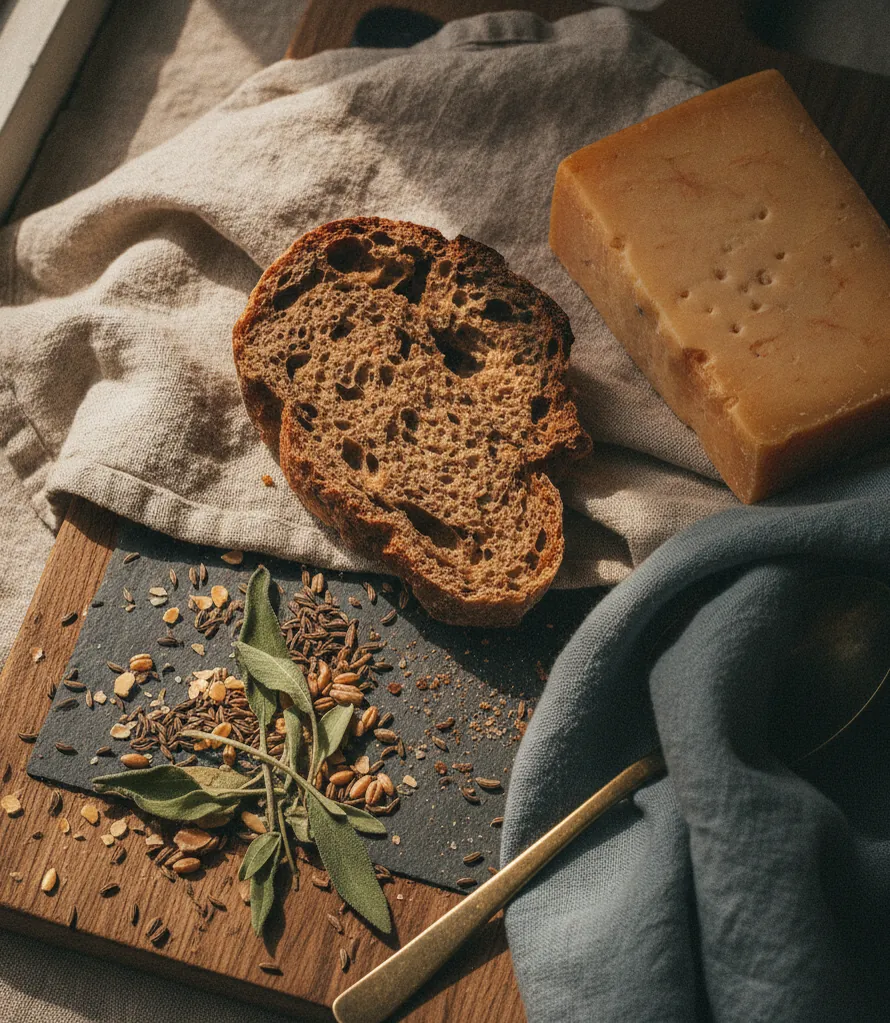
Perry is worth drinking lightly chilled but not cold: too low a temperature mutes the more delicate floral notes, which can suggest pear blossom or quince as much as ripe fruit. It pairs well with strong hard cheeses and charcuterie — the drying tannins cut through fat in a way a sweeter drink cannot manage.
Why it is worth seeking out
The PGI status matters practically as well as symbolically. It gives producers a framework for defending what they make against imitation, and it signals to buyers that certain corners have not been cut. For perry especially, where the raw material is genuinely scarce and production volumes are small, that protection is not trivial.
Underneath the legal designation, Welsh cider and perry represent an agricultural tradition that very nearly disappeared. The orchards producing the fruit are not decorative heritage features — they are working farms whose survival depends on there being a market for what they grow. Buying a bottle is a fairly direct act of support for a landscape as much as a drink.