What it actually is
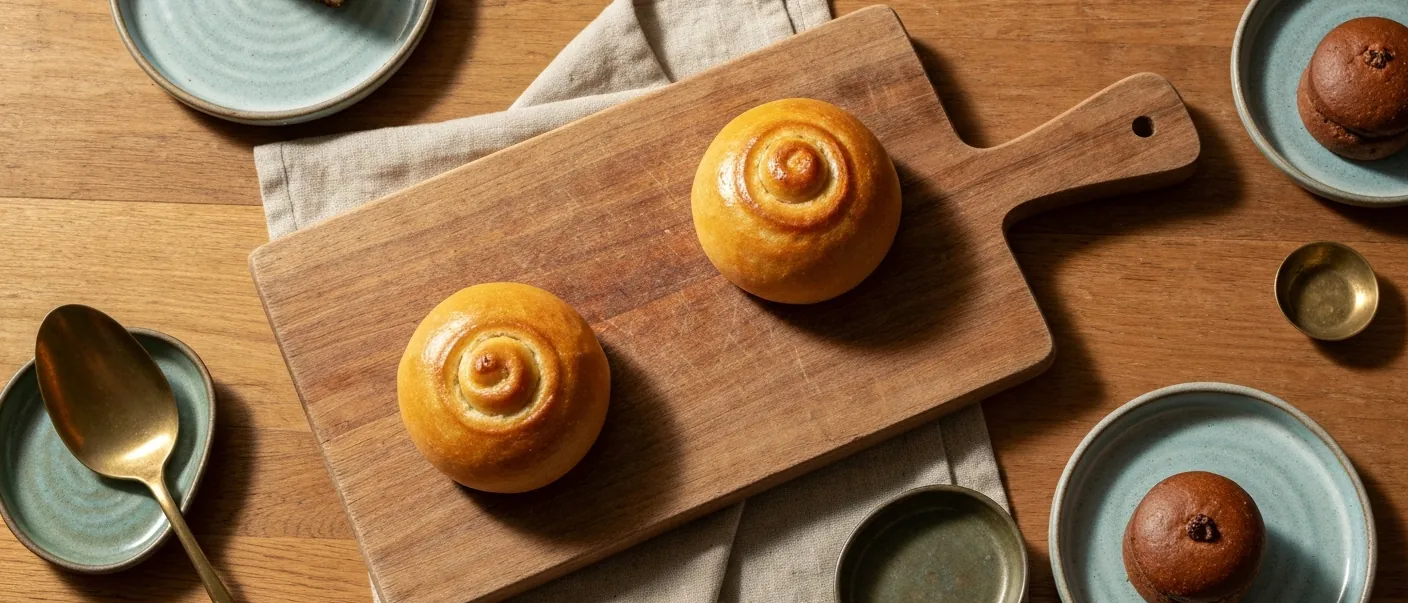
The saffron bun is a yeasted fruit bun — closer in character to a soft, enriched dough than to a scone or a tea bread. The saffron is steeped before baking, turning the crumb a deep, unmistakable gold and lending a faintly floral, almost honeyed scent that no other spice replicates. Currants or mixed dried fruit are folded through. The result is something specific to Cornwall, not a regional variation on something made elsewhere.
Saffron's flavour is gentle rather than assertive. In a good saffron bun the spice sits in the background — warming rather than perfumed — with the fruit providing sweetness and the enriched dough giving body. The colour is the first thing you notice; the flavour rewards closer attention.
How saffron came to Cornwall
Nobody knows with certainty. What has been passed down is a tradition of trade: that Cornish tin and copper merchants brought saffron back from the Mediterranean and Middle East through the county's busy ports, and that the spice became woven into local baking as a result. It is the kind of story that sits at the edges of record and memory, told as part of a place's character rather than its documented history — repeated here as exactly that, tradition rather than verified fact, because it belongs to how Cornwall understands itself.
What is certain is that saffron took hold in Cornish baking in a way that never quite happened elsewhere in Britain. While saffron appeared occasionally in grand English cookery, Cornwall made it domestic and incorporated it into everyday baking. The bun became a staple of the county's bakeries and home kitchens alike.
Still made, and made properly
The saffron bun is not a heritage curiosity kept alive by one or two specialists. Bakers across Cornwall still make them — in market towns, fishing villages, and high streets where the display cabinets have changed very little over the decades. You will find them in bakeries that produce them daily alongside pasties and splits, treated as a matter of course rather than a local speciality for tourists.
That ordinariness is the point. The bun has survived because it remained part of the regular repertoire, not because it was preserved under glass. Real saffron — the dried stigmas of Crocus sativus, among the most expensive ingredients sold by weight in any food shop — is non-negotiable in an authentic version. Any bun coloured with turmeric or artificial colouring is a different thing entirely, and any Cornish baker worth their flour would tell you so.
How to eat one
Tradition is straightforward: split and spread with good butter. Clotted cream works too. The bun is good on its own, particularly still slightly warm from the oven, the fruit plump and the crumb soft enough to pull apart. It keeps reasonably well, and a day-old saffron bun lightly toasted and buttered is not a lesser experience — different, but its own thing.
In Cornwall it tends to appear at communal occasions — funerals, harvest teas, church gatherings — where food is unpretentious and plentiful. That tells you something about its place in the culture.
What to look for when buying
The colour is your first indication. A proper saffron bun should be golden through the crumb, not just gilded on the surface by egg wash. The fruit should be well distributed and the dough rich enough to feel substantial without being heavy. If the ingredient list on a packaged version does not include saffron — actual saffron — put it back.
Buying from a Cornish bakery directly, whether visiting the county or ordering by post from one of the producers who ship nationally, is the most reliable route to the real thing. Market days in Cornish towns are a good hunting ground; the saffron bun is a reliable presence wherever local bakers set out a stall.