A biscuit with a very particular address
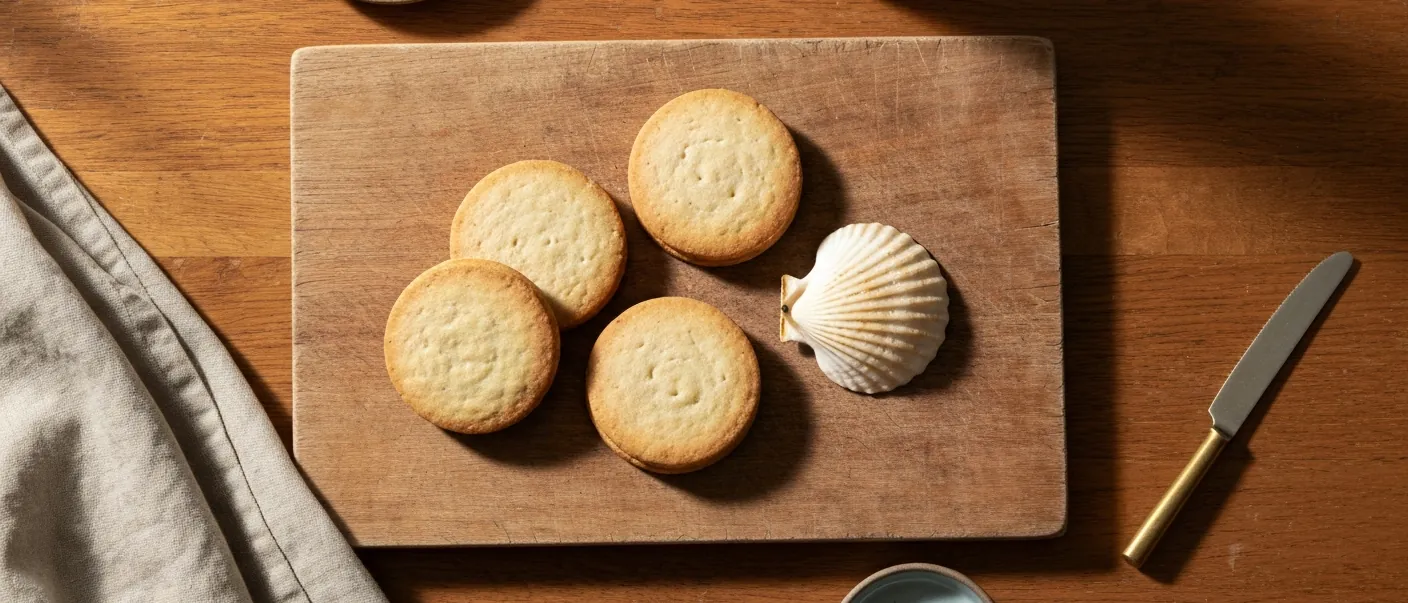
The village of Aberffraw sits on the south-western coast of Anglesey, quiet now, but historically significant as the seat of the Princes of Gwynedd. It lends its name to one of the most distinctive biscuits in the British Isles — small, sandy-textured, and marked on one side with the ridged impression of a scallop shell.
In character, it sits close to shortbread: a butter-rich dough with a crumbly bite and a clean, lightly sweet flavour. What sets it apart is not the ingredient list but the shaping. Traditionally, a piece of raw dough is pressed into the cup of a real scallop shell, which gives the finished biscuit its fluted pattern and slightly curved form. Turn it out, bake it, and you have something that looks genuinely unlike anything else on a plate.
Why the scallop shell
The shell connection is more than decorative. Aberffraw's coastline is scallop country, and the shells would have been abundant and free — a ready-made mould for a domestic bake. Local tradition holds that the biscuit is among the oldest of its kind in Britain, though this is a claim passed down through community memory rather than documented record. What it suggests is a long, unbroken relationship between a place, its landscape, and what people made to eat there.
The scallop shell also carries its own symbolism. It is the emblem of the pilgrim route to Santiago de Compostela, and Anglesey was a staging point for pilgrims crossing to Ireland. Whether that connection shaped the biscuit's history or is simply a pleasing coincidence, nobody can say with certainty.
What makes it worth seeking out
At its best, an Aberffraw biscuit should be pale gold, with the shell impression cleanly defined. The texture is the thing: short enough to crumble when bitten, but with enough structure to hold its shape in the hand. Butter quality matters more here than in most baked goods, because there is so little else in the dough to mask it.
It is traditionally eaten as it comes — no topping, no accompaniment required, though it sits well alongside a cup of strong tea or a glass of something sweet and fortified. The simplicity is the point. This biscuit has never needed to be more than it is.
Finding them today
Aberffraw biscuits are not widely exported, which is part of what makes them interesting. A handful of Welsh food producers and bakeries keep the tradition going, and they appear at farmers' markets, food festivals, and independent food shops across Wales. Anglesey itself is the most reliable place to find them — local shops and producers on the island often stock or make them, particularly around the village.
If you are visiting Anglesey, ask specifically for biscuits made to the traditional scallop-shell method rather than simply shaped to resemble one. The difference in result — and in connection to the original craft — is worth caring about.
A protected name in progress
There is ongoing interest in securing a protected geographical indication for the Aberffraw biscuit, which would mean that only biscuits made in the traditional way, in the appropriate area, could legally carry the name. Whether or not that status has been formalised by the time you read this, the principle matters: some foods belong to a place in a way that deserves formal acknowledgement, not just affectionate reputation.
Wales has a growing number of protected foods — from Halen Môn sea salt, also from Anglesey, to Welsh lamb — and the Aberffraw biscuit fits naturally among foods whose character is inseparable from where and how they are made.