Not what the name suggests
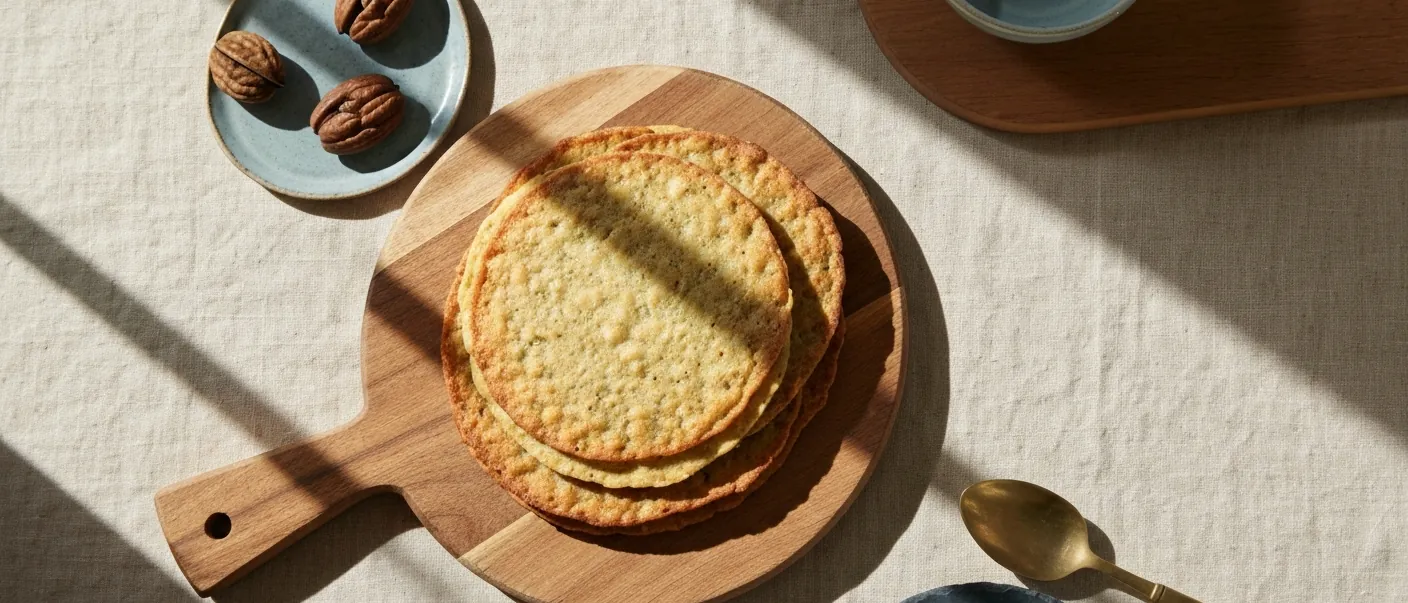
If you grew up outside the Potteries, the word "oatcake" probably conjures something hard and dry from a cellophane packet. Forget that. The Staffordshire oatcake is a soft, pliable, almost lacey pancake made from oatmeal batter, cooked on a griddle, and best eaten warm with something melting inside it. The two things share a name and an ingredient, and that is where the resemblance ends.
One is a crisp cracker. The other folds, flops, and yields. The confusion is understandable and almost comic.
A food with a postcode
Few foods in Britain are as genuinely localised as this one. The Staffordshire oatcake belongs to the area around Stoke-on-Trent — the cluster of towns historically known as the Potteries — with a specificity that goes beyond regional preference into something closer to civic identity. Ask someone from Stoke what they miss when they move away and oatcakes come up quickly.
That attachment has everything to do with how they were traditionally sold. Rather than bakeries or market stalls, oatcakes were made and sold from front-room shops — ordinary terraced houses where the front room had been given over to a griddle and a hatch. You knocked, or called through, and came away with a paper-wrapped stack. Domestic in scale, embedded in the neighbourhood. Some such shops survive today, though their numbers have thinned.
This hyper-local model meant oatcakes never really travelled. There was no reason to export them, no infrastructure to do so, and no demand from outside because nobody outside knew they existed. That insularity kept the tradition intact, and is part of what makes them feel so particular on first encounter.
What goes into them, and why it matters
The batter is built on oatmeal — not rolled oats, not oat flour, but coarse-ground oatmeal — combined with a little plain flour and yeast. The yeast matters. It gives the oatcake a faint fermented quality, a subtle depth that plain batter lacks, and produces the slightly open, irregular surface that holds fillings without going soggy.
Cooked on a flat griddle, the oatcake emerges with a pale, matte top and a lightly freckled underside. It is not sweet, nor aggressively savoury — more neutral and earthy, with a gentle oat flavour throughout. The texture is what really sets it apart: soft enough to fold without cracking, substantial enough not to dissolve under a warm filling.
The classic filling
Cheese and bacon is the traditional combination, and it works well enough that it has never been displaced. Melted cheese — typically a strong Cheddar — soaks slightly into the oatcake's surface, while bacon adds salt and a little resistance. Folded over, the whole thing sits somewhere between a wrap and a filled pancake: hand-held and deeply satisfying without being complicated.
Egg is a common addition. Some prefer just cheese, or add baked beans. The oatcake accommodates almost any filling you would put in a breakfast sandwich without asserting itself too strongly — which is presumably why it caught on as a morning staple in a town built on industrial labour.
Why it matters beyond Stoke
Britain has plenty of regional foods, but not many that remain so genuinely unknown outside their home territory. The Staffordshire oatcake has not been absorbed into a national food narrative the way Cornish pasties or Yorkshire puddings have. It sits outside the usual heritage-food conversation — a problem or a distinction, depending on your view.
For anyone interested in how food and place become inseparable, the oatcake is a compelling case. It was shaped by its geography — the pottery industry, the terraced-house urban fabric, the particular culture of the Potteries — and it retains that shape now. Eating one in Stoke, bought from a shop that has been doing this for generations, is not a nostalgic experience so much as a living one. The food has not been preserved; it has simply continued.
Seek them out. They are not hard to find in the Stoke area, and a small number of suppliers post them further afield. They travel reasonably well if eaten quickly. They are best, though, as they have always been best: warm, folded around melted cheese, eaten standing up without much ceremony.