A cheese with deep roots
Britain's territorial cheeses — defined by county, local milk, methods passed down through generations — tend to attract either fierce loyalty or complete ignorance. Staffordshire cheese has historically suffered the latter. Overshadowed by neighbours like Cheshire and Shropshire Blue, it disappeared from commercial production for much of the twentieth century, surviving mainly in food history books. Its revival and subsequent PDO designation make it one of the more quietly significant stories in British artisan cheesemaking.
The origins are monastic. Like many of England's older food traditions, the cheese is thought to have developed under the influence of religious communities who farmed the county's pastures and understood the value of preserving milk. The discipline and patience of long-form dairy work fits the rhythm of community life rather well, and that thread runs through a surprising number of territorial cheeses.
What PDO actually means here
Protected Designation of Origin status is not simply a badge. For Staffordshire cheese, it means the product must be made within the county using local milk, produced to a defined method that preserves its characteristic style. The protection exists to prevent imitation and keep the cheese anchored to its place of origin — a meaningful guarantee for a cheese that was once at genuine risk of vanishing entirely.
Staffordshire's pastures and dairy herds shape the milk that goes into the cheese, and the PDO ensures every wheel carries a genuine connection to that landscape. It is the same principle that protects Stilton or West Country Farmhouse Cheddar, and carries the same weight.
Texture and character
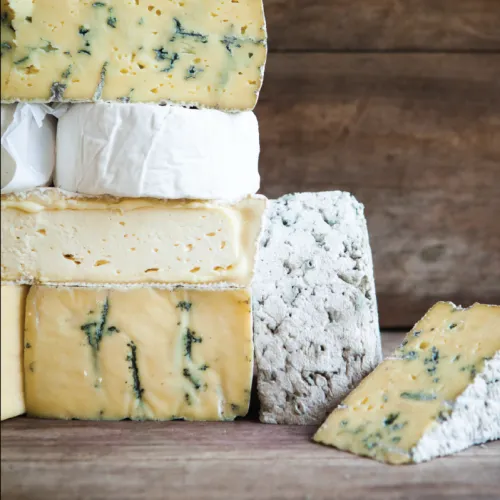
Staffordshire cheese occupies an interesting position on the territorial spectrum. Young and fresh, it is crumbly in the manner of a good Cheshire — loose-grained, slightly acidic, breaking cleanly rather than smearing. Left to mature, the texture shifts towards something more supple and yielding, with a mellow, buttery quality that sets it apart from the sharper northern territorials.
Neither version is a lesser product; they are different expressions of the same cheese at different stages. The flavour runs mild and milky when young, developing more depth with age, though it rarely reaches the assertiveness of a mature clothbound Cheddar or a washed-rind style. That range means it behaves quite differently at the table depending on when you encounter it.
Buying and eating it well
Production remains small and geographically restricted, so Staffordshire cheese is not always easy to find outside the county. Specialist cheesemongers with a strong British territorial selection are the most reliable source; some regional markets and farm shops in the Midlands stock it when supply allows.
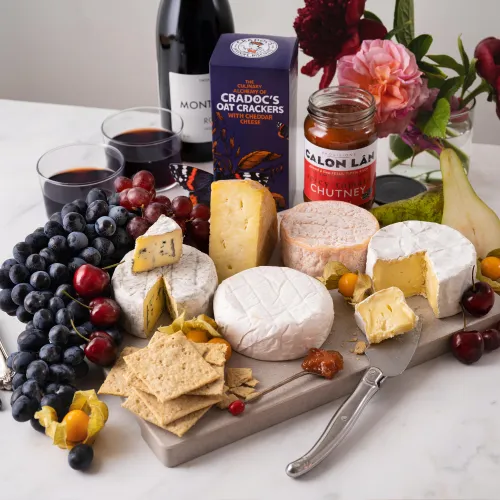
The younger, crumbly version works well alongside pickled walnuts or a sharp fruit chutney — the acidity in the cheese appreciates something that pushes back a little. The more mature, supple form suits a cheeseboard where contrast without confrontation is wanted: it sits comfortably between something bold and something mild, never demanding attention but rewarding it when given.
Serving it at room temperature rather than straight from the fridge is worth the small effort of planning. Cold cheese keeps its flavours locked away.
Why it matters beyond Staffordshire
The revival of Staffordshire cheese is part of a broader pattern across British food. Regional products that came close to extinction as industrialisation and consolidation reshaped dairy farming have been gradually brought back by producers willing to work at small scale with traditional methods. PDO status supports that recovery by giving producers a legal framework to protect their work and a recognised identity to market.
For anyone interested in British territorial cheese as a category, Staffordshire is a useful reminder that the map is far from complete. The famous names — Cheddar, Stilton, Red Leicester — represent only a fraction of what this country once produced. The quieter revivals, Staffordshire among them, are gradually filling that map back in.