What it actually is
Somerset cider brandy is an apple spirit made by distilling cider — proper, tannic, fermented Somerset cider — and then ageing the distillate in oak. The result sits somewhere between a young eau-de-vie and a long-aged brandy, depending on how long it has spent in barrel. What you get is a spirit that carries the orchard in every glass: the dry, slightly earthy character of traditional cider apple varieties, concentrated and then mellowed by wood.
It holds Protected Geographical Indication (PGI) status, which means that to carry the name, the apples, the cider, and the distillation must all take place within Somerset. That boundary matters. The county's orchards are planted with bittersweet and bittersharp apple varieties — old, often gnarled trees producing fruit that would be frankly unpleasant to eat raw but that ferments into cider of real complexity. That complexity is what the still captures.
How Somerset's apple tradition feeds the spirit
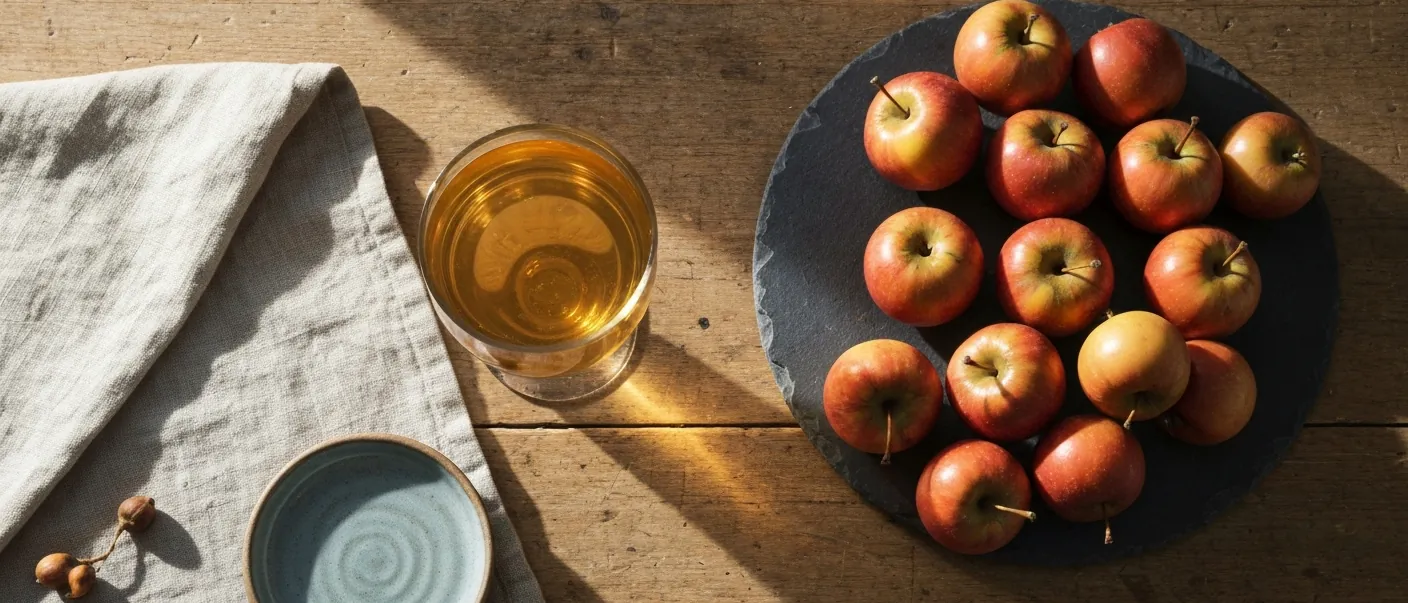
Somerset has been an orchard county for centuries. The same cider-apple culture that sustained farmworkers through harvest — paying wages partly in cider was once widespread — is the foundation on which this spirit stands. These are not dessert apples selected for sweetness. Varieties grown for cider have high tannin levels and relatively low sugar, which means the fermented juice has a backbone that survives distillation and gives the spirit its dry, slightly resinous quality.
Oak ageing softens that intensity and introduces vanilla, dried fruit and spice notes over time. Younger expressions retain more of the raw apple and fermentation character; those aged longer shift towards something richer and more rounded. Neither is more correct — they are different stages of the same process.
Protected status and what it guarantees
PGI protection does not guarantee a single house style, but it does guarantee origin and process. Every bottle labelled Somerset cider brandy must meet the conditions of the specification: Somerset cider apples, fermented and distilled in Somerset, aged in oak. Producers cannot source their base cider from elsewhere, cannot distil outside the county, and cannot skip the oak altogether.
This matters most for small-scale producers who might otherwise be undercut by cheaper imitations with no genuine connection to the land. For the buyer, it means the name is a reliable signal of where and how the spirit was made — more useful, in practice, than most marketing claims on a label.
How it is traditionally enjoyed
Somerset cider brandy is drunk much as any aged apple spirit: neat, at room temperature or very slightly warmed in the hands, so the aromas open properly. Chilling it blunts a lot of what makes it interesting. It also sits well alongside strong cheese — the dry, tannic quality cuts through richness in a way that many grain spirits do not — and it has a long history on the Somerset table as a digestif after a substantial meal.
Some producers release younger, lighter expressions that suit mixing, but aged versions are best appreciated without distraction. A small measure in a tulip-shaped glass, given a minute or two to breathe, is the most straightforward way to understand what you are drinking.
Finding and choosing a bottle
Because production is geographically restricted and largely in the hands of small, independent producers, Somerset cider brandy is not something you will stumble across in every off-licence. Farm shops within Somerset often stock local producers directly, and a growing number of specialist drinks retailers carry it online. If you have the chance to visit a producer, most offer tastings — the difference between a younger and a longer-aged expression side by side is instructive in a way that reading about it simply is not.
Age statements and orchard provenance on the label are usually a good sign that a producer is taking the spirit seriously. Beyond that, it comes down to personal preference: lighter and more apple-forward, or darker and more complex from extended oak contact.