A cheese with strict rules
Single Gloucester carries Protected Designation of Origin status, meaning only cheese made to specific standards in Gloucestershire can carry the name. That much is true of many British cheeses. What sets Single Gloucester apart is the additional requirement that the farm must actually keep Gloucester cattle — a rare breed that nearly disappeared in the twentieth century — and that the milk from those animals must be used in production. This is not common in PDO legislation. It ties the cheese directly to the survival of a particular animal, making the two inseparable in a way that goes well beyond geography.
The consequence is a cheese produced in very small quantities by a handful of farms. You are unlikely to find genuine Single Gloucester in a supermarket. Specialist cheesemongers and farmers' markets in and around Gloucestershire are your best chance, and even then availability depends on the season and the herd.
How it differs from its more famous cousin
Double Gloucester is the version most people encounter — firm, richly coloured, with a smooth, slightly waxy texture and a flavour that lingers. Single Gloucester is a quieter proposition. It is lower in fat, because it is traditionally made with a mixture of whole and skimmed milk rather than entirely full-fat milk. The texture is closer and slightly more crumbly, and the flavour is milder and fresher, with a gentle creaminess that doesn't push forward in the way Double Gloucester does.
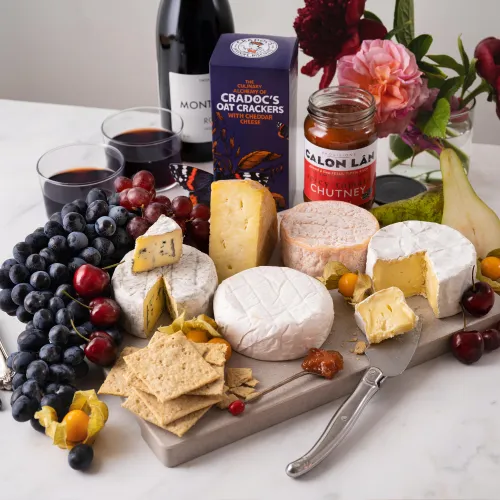
This isn't a lesser cheese — it's a different one. Where Double Gloucester suits a cheeseboard that wants a bold centrepiece, Single Gloucester works well alongside something sharper or more pungent, its quietness giving other cheeses room. It is also well suited to eating simply, with good bread and perhaps a little chutney, where nothing competes with its delicate character.
The Gloucester cattle question
Gloucester cattle are a native breed, dark brown with a distinctive white stripe along the back and a white tail. They fell to critically low numbers before dedicated conservation efforts — supported in part by the cheese's PDO rules — helped bring the breed back from the edge. The connection between the cattle and the cheese is not incidental. Gloucester cows produce milk with particular characteristics that suit the traditional making process, and the breed's continued existence is now partly dependent on there being commercial reason to keep them.
This is one of the more direct examples in British food of a protected designation doing conservation work as well as culinary work. Buying genuine Single Gloucester supports a rare breed as much as it supports a cheesemaker.
Finding and enjoying it
Because production is so limited, Single Gloucester is worth seeking out specifically rather than hoping to stumble across it. Specialist cheese shops with strong regional British ranges are a good starting point. Gloucestershire itself — its farmers' markets, farm shops and agricultural shows — is the most reliable source, and if you are in the county, it is worth asking directly at farms with Gloucester cattle herds.
The cheese is typically sold young and is best eaten without too much ceremony. Its mild flavour means strong accompaniments can easily overwhelm it, so plain crackers or a simple white bread tend to serve it better than heavily flavoured alternatives. It pairs naturally with cider — another Gloucestershire tradition — and sits well alongside fresh, un-oaked English white wines that share its lighter character.
Single Gloucester is one of Britain's rarest protected foods, not because nobody wants to make it, but because the rules governing it are unusually demanding. That strictness is precisely what makes the cheese worth finding.