Not one plant but two
Ask for samphire in a fishmonger's and you will almost certainly receive marsh samphire — bright green, succulent, tasting of the sea. Ask a botanist or an Elizabethan cook the same question and they would picture something else entirely: rock samphire, a shrubby, aromatic herb with yellow flower heads and a strong, almost medicinal scent. Both are real, both are British, and both have legitimate claims to the name. The confusion is centuries old.
The two plants are unrelated in any culinary or botanical sense that matters at the table. They grow in different habitats, taste quite different, and have followed entirely separate paths through British food culture. Knowing which is which changes what you do with them.
Marsh samphire: the one you will eat
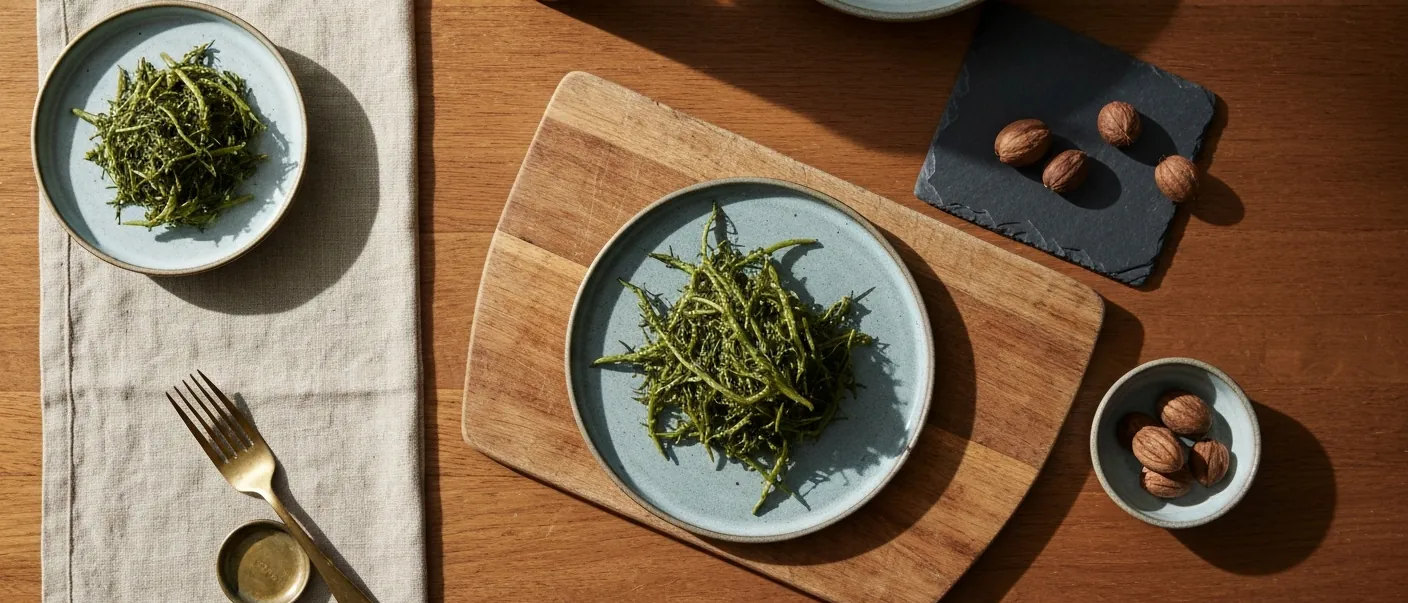
Marsh samphire — Salicornia europaea and its close relatives — grows on tidal mudflats and salt marshes around the British coastline. Norfolk is its heartland. The marshes there, cut through by tidal creeks and exposed twice daily to the North Sea, produce some of the finest wild growth in the country, and the plant has long been gathered by hand at low tide.
It is a summer plant with a short season. What arrives in shops outside that window is likely to have been grown commercially or imported — decent enough, but different from wild-gathered at its peak. The stems are crisp and intensely salty, with a clean green flavour that carries the mineral quality of the sea air it grows in. Blanch briefly in unsalted water — it needs no salt added — and serve alongside fish or seafood, where it functions less like a side dish and more like a seasoning in vegetable form.
It is sometimes called glasswort, a reference to its historical use in glassmaking: the plant's ash was once burned to produce soda. That history is easy to overlook when eating it with grilled sea bass, but it is a reminder that coastal communities found uses for this plant long before it appeared on restaurant menus.
Rock samphire: the older story
Rock samphire, Crithmum maritimum, is a different creature entirely. It clings to sea cliffs and rocky coastal ground, preferring well-drained limestone or chalk to the waterlogged mudflats that marsh samphire favours. The flavour is far more assertive — aromatic, pungent, with a quality some find compelling and others find overpowering. Shakespeare mentioned its harvest on the cliffs of Dover in King Lear, describing it as a terrifying occupation, which gives some sense of how seriously it was once taken.
For a period, rock samphire was widely pickled and sold as a condiment, considered something of a delicacy. Its fortunes have since reversed sharply. Today it is rarely found in commerce and not much eaten, though it still grows wild on suitable stretches of the British coast and is occasionally foraged by those who know what they are looking for. Its decline is partly a matter of changing tastes and partly, perhaps, that marsh samphire arrived to occupy the same cultural space with a friendlier flavour.
Foraging, buying and what to look for
Wild marsh samphire can still be foraged on accessible salt marshes during the summer season, and in some coastal areas this remains a local tradition rather than a fashionable activity. Take only what you will eat, rinse thoroughly to remove mud, and be certain you are picking from clean, unpolluted ground. The plant is also available from good fishmongers, farm shops and some supermarkets during its season — the freshest specimens will be firm, brightly coloured, and smell of the coast.
Rock samphire, by contrast, is not something you are likely to encounter for sale. Foraging it requires reliable identification — it resembles other members of the carrot family, some of which are toxic — and the kind of local knowledge that a field guide photograph cannot replace.
When buying marsh samphire, the season is your best guide to quality. Early summer growth tends to be tender and mild; later in the season the stems can become woodier and more fibrous, with stronger saltiness. If you want it at its most delicate, buy early.