What makes a Pembrokeshire Early
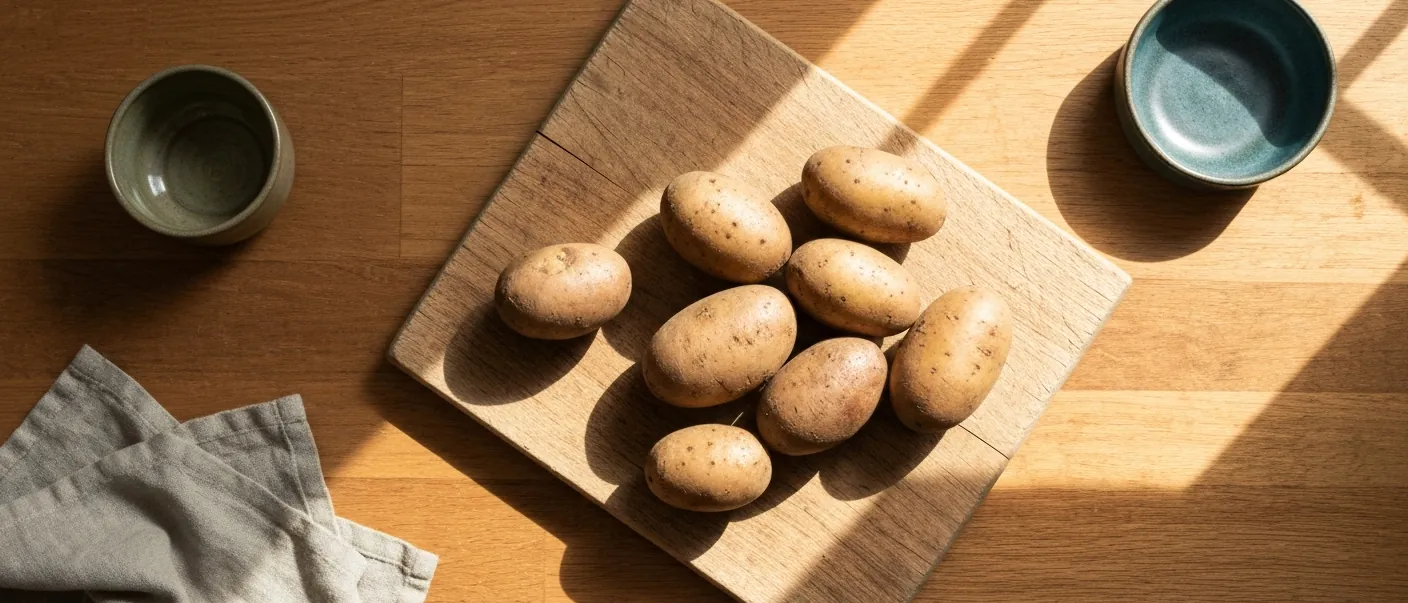
Not every new potato is a Pembrokeshire Early. These are the first home-grown new potatoes to reach British tables each year — small, thin-skinned, and carrying the Protected Geographical Indication mark that ties them to a specific stretch of the Welsh coast. That PGI status is not decorative. It means only potatoes grown within the designated Pembrokeshire area, meeting defined standards, can carry the name.
The county sits at the far south-west tip of Wales, where the Gulf Stream keeps winters unusually mild and early frosts rare. Growers can get seed into the ground weeks before most of Britain, which is precisely why the season opens here and nowhere else. The potatoes are waxy, pale-fleshed, and covered in that characteristic fine skin that rubs off with a thumbnail — the mark of a genuinely fresh new potato rather than a stored one.
Why the place itself does the work
Pembrokeshire's coastal fields are light and free-draining, which matters for a potato that needs to develop quickly without sitting in cold, heavy ground. The sea air keeps temperatures even through late winter and spring, giving an early planting window that inland Welsh or English growers simply do not have.
Farmers in Pembrokeshire have been exploiting these conditions for generations; PGI recognition formalises something already well understood locally. When you see the designation on a bag, it tells you that geography — the terroir, to borrow a word usually reserved for wine — did genuine work here. Place is an ingredient.
The season, and why it's short
Pembrokeshire Earlies are a seasonal crop in the most literal sense. The window runs for weeks rather than months, and once it closes, it closes. There are no stored Pembrokeshire Earlies sitting in a warehouse in autumn; the whole point is that they are harvested young and sold quickly, at their most tender and sweet.
That brevity shapes their reputation. Scarcity sharpens attention, and anyone who has eaten them in season understands the loyalty they attract. The flavour is clean and slightly earthy, with a creaminess that comes from freshness rather than variety alone. Left a few days, they are still good. Eaten the same day they come out of the ground, they are something else entirely.
They typically appear in late spring, but the precise start shifts with the weather each year. Watch for them at independent greengrocers, farm shops, and farmers' markets — or through suppliers who source directly from Pembrokeshire growers.
How they're eaten
The traditional approach is straightforwardly simple: boiled until just tender, finished with butter and a little fresh mint. That is not a failure of imagination — it is a recognition that a potato this fresh needs very little done to it. The mint lifts the earthiness without competing with it.
They also hold up well cold, dressed lightly once cooled, in a way that floury or stored potatoes do not. Their waxy texture stays intact rather than crumbling. Some Pembrokeshire growers pair them with local crab or mackerel — two things at their seasonal peak, neither overshadowing the other.
Finding them outside Wales
Pembrokeshire Earlies do travel, and their PGI status means the name is protected wherever they are sold in the UK. Larger supermarkets sometimes stock them during the season, clearly labelled, though farm shops and independent retailers tend to receive them earlier and in better condition thanks to shorter supply chains.
When buying online or at a market stall, look for the PGI mark or explicit mention of Pembrokeshire provenance — not simply "new potatoes" or even "Welsh new potatoes". The designation is specific. A grower or retailer who knows their stock will tell you exactly where the potatoes were grown and when they were lifted.