A plate with its own language
Before anything else, sort out the naming muddle that trips up visitors every time. The neeps are not turnips — not in the pale, round, English sense. What Scots call a turnip is what the rest of Britain calls swede: that hefty, yellow-fleshed root with the purple-green skin, dense enough to take real effort in the bashing. The word neep comes from the old Scots neip, rooted in the Latin napus. South of the border, the same vegetable gets sold as swede. Same thing; entirely different name. Ordering one and receiving the other is a genuine disappointment.
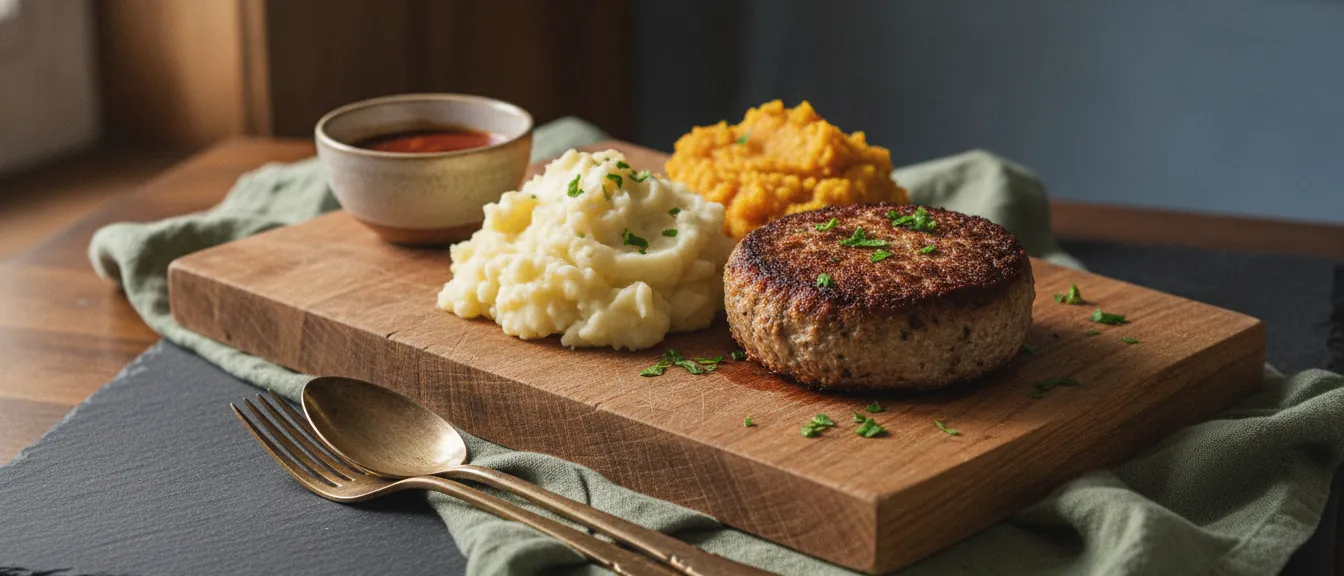
The tatties are simply potatoes — champit, meaning mashed. Not the airy, cream-laden kind fashionable in restaurant cooking, but something more direct: floury potatoes worked until smooth with butter and a little milk. The texture is the point. It should hold its own on the plate rather than pooling.
Why swede and not something else
Swede is a winter root, hardy, cheap and storable, and Scottish agriculture has long suited it well. Its flavour is earthy and faintly sweet — strong enough not to disappear beside haggis, which brings an assertive combination of oats, offal and spice. That contrast is the reason the pairing stuck. The slight bitterness at the edge of bashed neeps cuts through the richness of haggis in a way a gentler root simply would not.
The cooking tradition calls for the neeps to be boiled until completely tender, then beaten with butter and black pepper — sometimes a whisper of nutmeg. Nothing elaborate. Each element on the plate should speak clearly, and the swede does so in a low, grounding register.
The whisky sauce question
Whisky sauce is less ancient than it might seem, though it is now thoroughly established as part of the Burns supper spread. A cream sauce reduced and finished with Scotch, it adds richness that makes the whole plate feel celebratory rather than merely filling. Whether it goes over the haggis alone or brings all three components together depends on who is serving it. There is no single correct answer.
Good whisky sauce lives and dies by balance. Too little whisky and it is just a cream sauce; too much and the alcohol dominates rather than complements. The Scotch itself matters — a lighter, less peaty expression tends to work more gracefully than something heavily smoky.
The vegetarian tradition
Vegetarian haggis has been part of the Burns supper for decades — an established tradition in its own right, not a recent concession. Made typically from pulses, oatmeal, nuts and vegetables, it shares the spiced, oaty character of the original and holds up to neeps and tatties just as well as the meat version. A dairy-free whisky sauce makes the plate fully plant-based, which is straightforward enough; the swede and mash are naturally so. What matters is that the balance of flavours — earthiness, spice, richness — remains intact.
The vegetarian version is not simply a substitute. Many people who eat meat choose it on its own merits, and it appears on Burns supper menus across Scotland as a first-class option rather than an afterthought.
Burns Night and beyond
The Burns supper is usually held in late January — check the official site for this year's dates — but there is no law that says neeps and tatties must wait for it. Haggis is sold year-round in butchers and supermarkets across Scotland, and the accompaniments are straightforward winter cooking in any case. The combination of swede and floury mash works alongside game, lamb and sausages equally well. The Burns supper framing gives it ceremony, but the food itself is simply good Scottish winter eating.
For those coming to it for the first time, the address to the haggis — Burns's poem, spoken before the meal — is part of what makes the occasion feel unlike any other. The food does not need the theatre to be worth eating, but the theatre does make the food taste better. That is a trick very few meals manage.