What makes these shrimps different
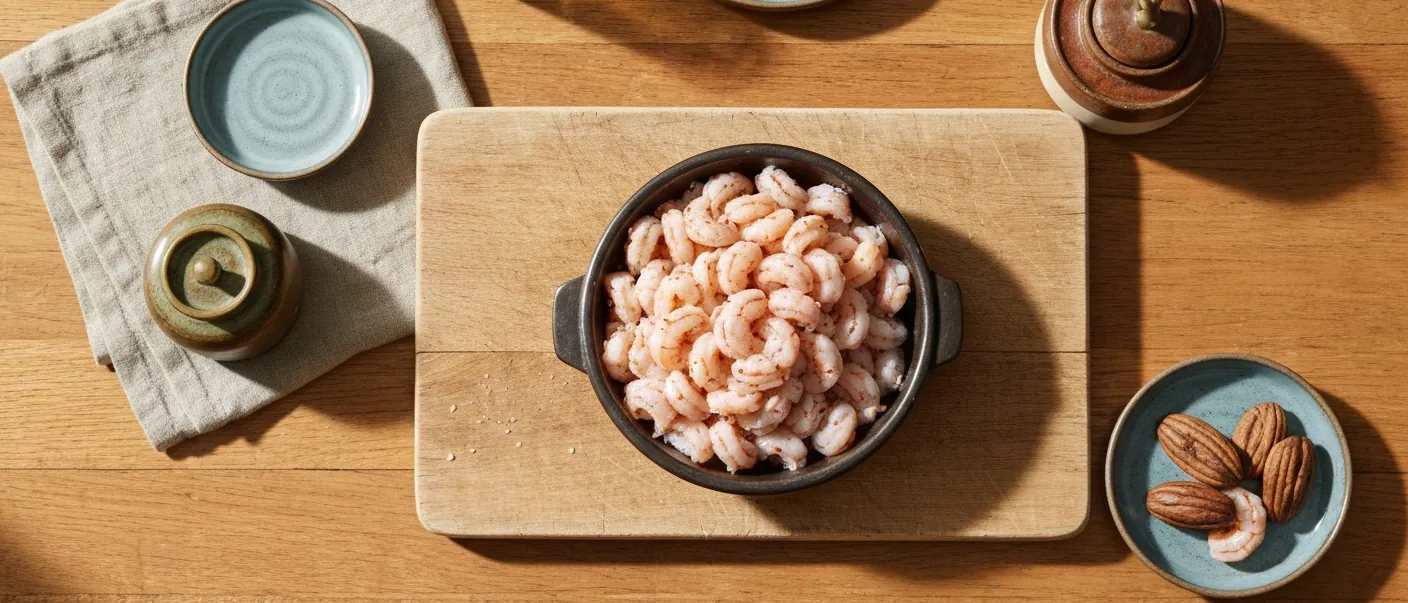
The shrimps in question are brown shrimps, Crangon crangon, small enough to sit in a teaspoon. They're caught in the shallow, sandy waters of Morecambe Bay on the Lancashire coast, where conditions suit them particularly well. Brown shrimps are sweeter and more intensely flavoured than the larger prawns most of us are used to, with a firm, almost snappy texture that holds up well once potted.
What separates a Morecambe Bay potted shrimp from any other is that combination of place and process. The shrimps are boiled shortly after landing, then layered into pots and sealed under clarified butter warmed with a blend of spices — mace and cayenne are traditional, though each producer keeps their own proportions close. The butter sets firm and pale, forming a lid that excludes air and preserves the shrimps beneath. It's a method that predates refrigeration by centuries and remains essentially unchanged.
A Lancashire tradition
Potted shrimps from this bay have been part of Lancashire's food culture for generations. The trade was once conducted by horse and cart across the sands — a crossing that was, and still is, genuinely treacherous without a guide. Today the shrimping boats work the bay in the traditional way, and the potting is done by a small number of family firms that have been at it for generations. There's no industrial shortcut available: the shrimps are too small to be peeled by machine, so every pot is shelled by hand. That keeps the whole operation necessarily modest in scale.
Scarcity is part of why these shrimps retain the character they have. They aren't produced to supermarket volumes, and the flavour — sweet, buttery, warm with spice — comes directly from what's in the pot, not from any process designed to smooth out inconsistency.
How they're traditionally eaten
On toast. Hot toast, specifically — the butter should soften and begin to melt into the bread as you spread the shrimps across it. Whether you prefer brown or white, thick-cut or thin is a matter of personal preference, but the principle holds: the contrast between the cold-set butter and warm toast is where the dish comes alive. A squeeze of lemon is optional. Potted shrimps also appear as a starter on restaurant menus, often with bread alongside, and work well with thin plain crackers. The spiced butter is good — it shouldn't be scraped away.
Protected status and what it means
Morecambe Bay potted shrimps carry a Protected Geographical Indication, the designation that Britain has continued to maintain since leaving the EU. To use the name, a product must be made using shrimps from Morecambe Bay and follow the traditional method in the recognised area. It's the same class of protection that applies to Stilton cheese or Cornish clotted cream — a legal guarantee that the name on the pot corresponds to something specific, not a style that could be replicated anywhere with any shrimps.
For the small firms who produce them, that protection matters. It draws a clear line between what they make and cheaper, often imported alternatives. For the buyer, it's a reliable signal: if the label says Morecambe Bay potted shrimps and the producer is legitimate, the shrimps genuinely came from that bay.
Finding and keeping them
Good fishmongers, independent delis and a number of online retailers stock them, often sourced directly from producers. The butter seal acts as a preservative, so they keep well under refrigeration — longer than fresh shellfish, though they should always be treated as perishable and eaten within any date guidance on the pot. Once opened, eat promptly; the preservation relies on the seal remaining intact.
If you're buying for the first time, keep the accompaniment simple. Toast and nothing else will tell you more about the shrimps than any elaborate presentation would.