What the tart actually is
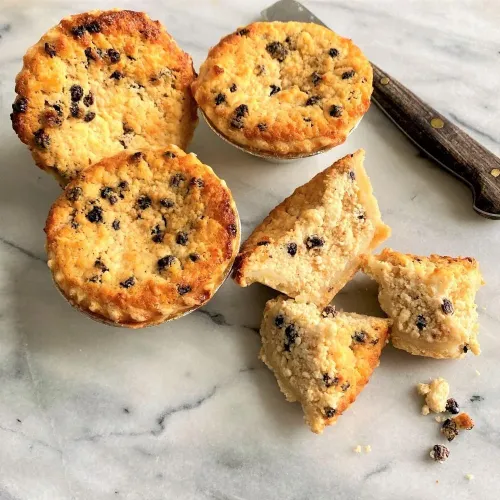
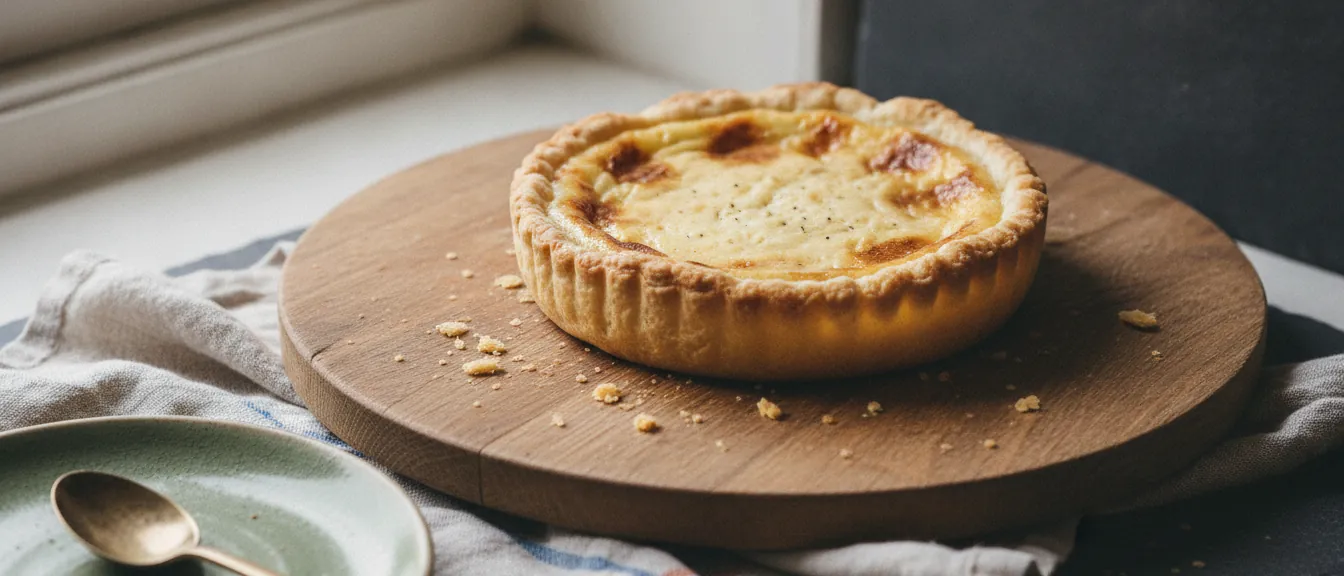
Strip away the royal story and you are left with something worth eating on its own terms: a short pastry case filled with a set mixture based on fresh curd cheese, the flavour sitting between a cheesecake and a custard tart — richer than the latter, lighter than the former. A slight tartness keeps it from being cloying, and the pastry should be crisp enough to hold its shape when lifted.
The tart is small, palm-sized — the sort of thing once served at a formal tea table rather than eaten on the move. That proportion still feels right. One is satisfying; two is a decision you make consciously and without regret.
The legend, honestly told
The story attached to Maids of Honour involves Henry VIII discovering the tarts being eaten by the maids of honour attending his queen, and being so taken with them that he had the recipe locked away for his exclusive enjoyment. It is a good story. It is almost certainly not history in any verifiable sense.
What can be said with confidence is that the connection between these tarts and Richmond, Surrey — where a royal palace once stood — is old enough that the legend has become part of the bake's identity. The royal origin may be embroidered, but it points at something real: this was the kind of delicate, expensive-ingredient confection that circulated in wealthy households, and Richmond was a place where those households clustered. A bake that has been associated with a particular place and story across centuries, regardless of whether the story is literally true, is more worth understanding than one that simply has a confirmed founding date.
Richmond and the tea house tradition
What keeps the Maid of Honour from being a mere historical footnote is that it has never entirely stopped being made and sold in Richmond. A tea house in the town has been associated with the tarts for generations and continues to bake them. That kind of unbroken local production — a specific product tied to a specific place, passed on through practice rather than documentation — is exactly what makes British regional food worth paying attention to.
The tart carries no protected designation in the manner of Stilton or Melton Mowbray pork pies, but its identity is no less rooted in place for that. Visiting the tea house to eat one there, rather than buying a box to take away, is the version of the experience that makes the most sense historically and practically.
Where it fits in British baking
The Maid of Honour belongs to a category of British bake that has largely disappeared from everyday life: the small enriched tart made with fresh or set dairy, once common across different regions under different names. Curd tarts still appear in Yorkshire, and relations are scattered through older recipe collections across the country. What distinguishes the Maid of Honour is not a dramatically different filling so much as the persistence of its name, its geography and its story.
Most regional British bakes from the Tudor period exist only in archives. This one is still being made, still sold warm from a bakery counter, still occasioning small pilgrimages from people who have read about it and want to see whether the reality matches the reputation. In our experience, it generally does — partly because the tart itself is good, and partly because food eaten with a sense of its own history tastes different from food eaten without one.
How they are eaten
Maids of Honour are best eaten fresh and at something close to room temperature, when the pastry is at its most yielding and the filling has settled. They are not improved by refrigeration or by being eaten in a hurry. A pot of tea alongside is not an affectation — the slight bitterness cuts the richness of the curd in a way that works.
If you are visiting Richmond with the tarts in mind, the tea house operates on hours that suit a traditional tea room rather than a modern café. Checking ahead before making a special journey is sensible.