What lardy cake actually is
Strip away the name, which does it no favours, and you find something remarkable: a yeasted dough folded repeatedly with lard, sugar and dried fruit until the layers caramelise from the inside out during baking. The result is sticky, rich, faintly crisp at the edges and deeply savoury-sweet in a way that modern baking rarely achieves. It is not a cake in the sponge-and-icing sense — it sits somewhere between an enriched bread and a pastry, and that ambiguity is part of what makes it interesting.
The fat renders into the dough as it bakes, creating a glossy, almost translucent crumb. Eaten warm, it pulls apart in soft, glistening sheets. Left to cool, it firms and slices more cleanly — though most people who grew up with it would argue the warm version is the only version worth considering.
Where it comes from
Lardy cake belongs to the southern counties of England — Wiltshire, Oxfordshire and Hampshire among them — and the question of who owns it most legitimately is one that bakers in those counties have never quite settled. Each county has its own variation: the proportions of lard to sugar, the type of dried fruit, how many folds the dough receives, whether spice makes an appearance. These are not trivial differences to the people who make them.
Consistent across the tradition is its origin as a harvest-time food. This was the kind of baking that made sense when communal ovens were still lit for bread day, lard was the everyday cooking fat in farmhouse kitchens, and a calorific, sustaining treat was earned by people doing physical work outdoors. Lardy cake was abundance food, made when grain had been brought in and there was reason to bake generously.
The craft behind it
Making lardy cake well is not complicated, but it requires patience and a feel for dough that takes practice. The layering process — working fat and sugar into the dough in stages, folding and resting repeatedly — gives the finished bake its characteristic texture. Rush it and the layers collapse into a greasy mass. Get it right and the fat distributes evenly, the sugar partially caramelises against the tin, and the fruit plumps throughout.
Lard is not negotiable in a traditional lardy cake. Butter produces something different — pleasant, certainly, but without the particular savouriness that animal fat brings to the crumb. The revival of interest in traditional British baking has brought lardy cake back into a small number of independent bakeries, where the willingness to work with lard marks a baker out as genuinely committed to the original.
How it is eaten
Lardy cake is best eaten the day it is baked, ideally still slightly warm from the oven. It needs nothing alongside it — no butter, no jam — though a strong cup of tea is the traditional companion. In the counties where it originates, it would once have appeared at the harvest table to sustain workers through the afternoon.
It does not keep well. The crumb tightens as it cools, and by the following day the magic has largely gone. This is, in a sense, the point: lardy cake is not designed to sit on a shelf. It is baking made to be eaten immediately, shared, finished in one sitting. In an age of long-life packaging and ambient snacks, that perishability feels almost radical.
Finding it today
Lardy cake is not widely available outside its home counties, and even within them it can be difficult to track down. Supermarket versions exist but rarely capture what makes the original worth seeking out. The better approach is to look for independent bakeries in Wiltshire, Oxfordshire or Hampshire that bake to traditional methods — the kind of places where the baker knows exactly how many folds the dough needs and is not tempted to substitute vegetable shortening for lard.
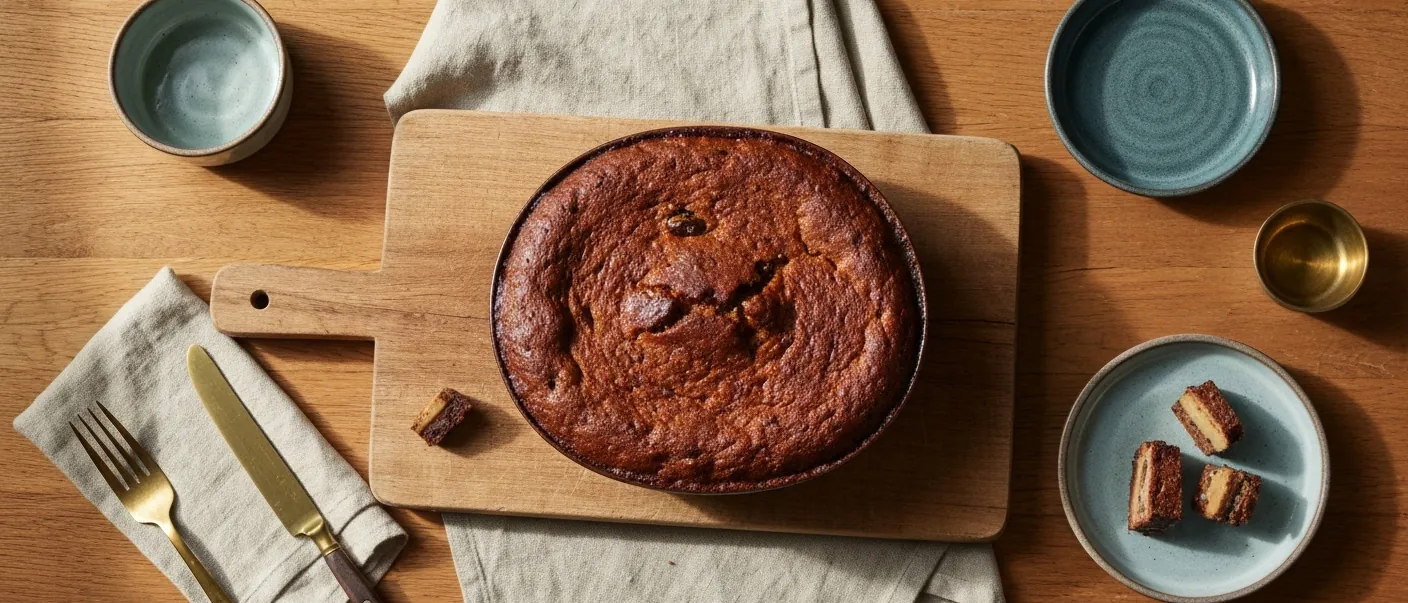
Farmers' markets and county food fairs in the southern counties are often the most reliable places to find it, made by bakers who understand the tradition rather than simply reproducing a shape. A properly made lardy cake has a dark caramelised base and a crumb that glistens when pulled apart. That is the real thing.