A county built around the hop
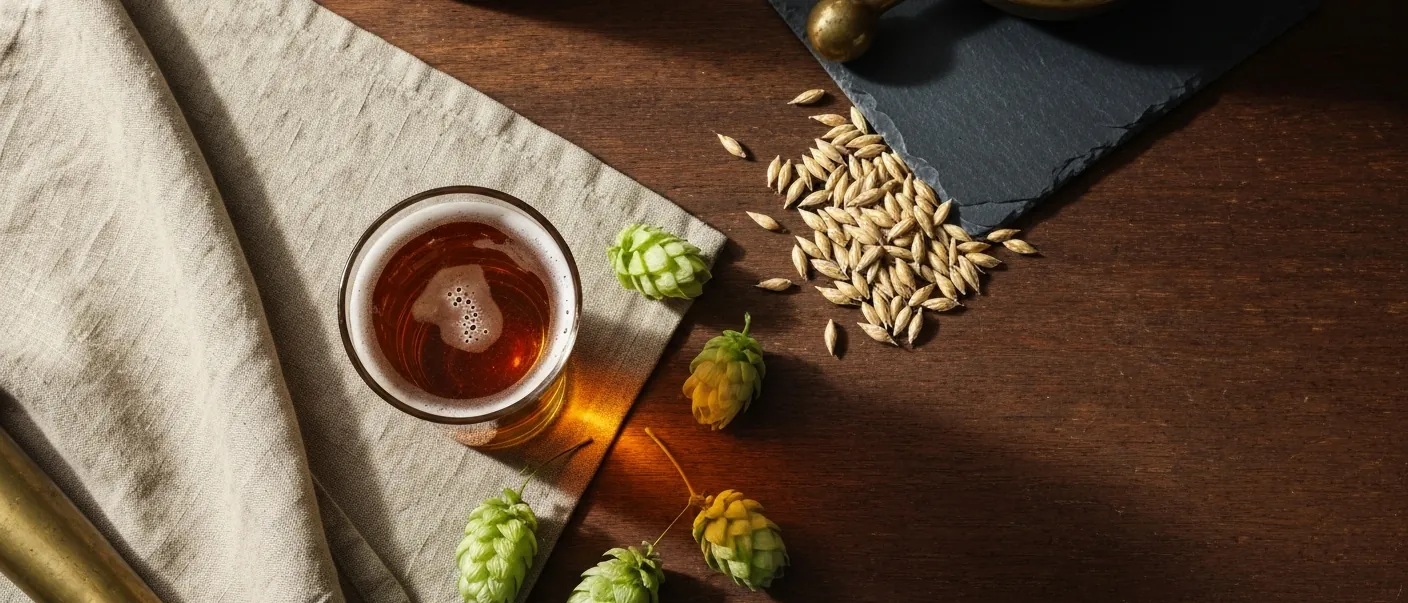
Kent's relationship with hops is written into the landscape. The distinctive oast houses — roundels topped with white cowls — were purpose-built for drying freshly harvested hops, and they punctuate the Kentish countryside in a way that makes the county's brewing heritage impossible to ignore. Hop gardens spread across the Weald and the North Downs, and at harvest time Londoners would travel south in their thousands to pick them. The connection between this county and the bitter, floral character of British ale runs very deep.
It is no accident, then, that Kentish ale and Kentish strong ale both carry Protected Geographical Indication (PGI) status. That designation is not a marketing badge; it is a legal guarantee that the beer bearing the name is brewed in Kent, using local hops, in a way that respects the regional tradition. The same framework protects Champagne and Melton Mowbray pork pies. Here, it protects a style of pale, hoppy ale that has been part of Kentish life for generations.
What PGI means for the drinker
Protected Geographical Indication means the link between the product and its place is recognised in law. For Kentish ale, the key requirement is geographic and agricultural: the hops must come from Kent, where the crop has been grown and refined over hundreds of years. A brewer elsewhere cannot simply call their beer Kentish ale because they admire the style.
That matters because it gives the name a fixed meaning. When you buy a bottle or pull a pint labelled Kentish ale, you are getting something genuinely tied to the soil and microclimate of a specific corner of England — not a loose interpretation produced anywhere that fancies the association. The protection also covers Kentish strong ale, a fuller-bodied variant that shares the same geographical and hop-driven identity.
East Kent Goldings — the hop with its own protection
Among the varieties grown in the county, East Kent Goldings stands apart. This hop carries its own Protected Designation of Origin (PDO) — a stricter form of protection than PGI, requiring not just that the product comes from the region but that it is produced there according to defined methods. PDO status for a hop variety is genuinely unusual. It signals that East Kent Goldings grown outside the designated area of eastern Kent are legally a different thing from the real article, however similar they might look.
The variety is prized for a soft, floral, slightly spicy quality — what brewers often describe as a classic English hop character. It has been cultivated in this part of Kent for a very long time, shaped by the particular combination of soil, rainfall and light the area provides. Using it in a Kentish ale is not tradition for tradition's sake; it produces a flavour that cannot be replicated elsewhere by substitution alone.
How to approach Kentish ale
Kentish ale tends to be pale to amber in colour, moderately bitter, with a hop aroma that is subtle rather than aggressive — quite different from the assertive citrus notes that define many modern craft ales. It is made for drinking at the table or in the pub garden rather than for close analysis. Paired with the county's own produce — hard cheese, a pork pie, cold cuts — it makes a straightforward kind of sense that over-complicated pairings rarely achieve.
Kentish strong ale follows the same broad character but with more body and higher strength, making it better suited to slower drinking and richer food. Both styles reward buying from producers who take the PGI seriously and name their hop varieties on the label; that information tells you something real about what is in the glass.
Why it is worth seeking out
Protected status alone does not make a beer worth drinking, but in the case of Kentish ale it reflects something genuine: a regional brewing tradition shaped by a remarkable agricultural legacy. The oast houses are still there. The hop gardens, though fewer than at their historic peak, continue to produce some of the most sought-after varieties in British brewing. East Kent Goldings still grows in its designated patch of the county, under its own legal protection. For anyone interested in where British food and drink actually comes from — not as an abstract idea but as something you can taste — Kentish ale is one of the more direct answers available. The geography is in the glass.