Why Herefordshire
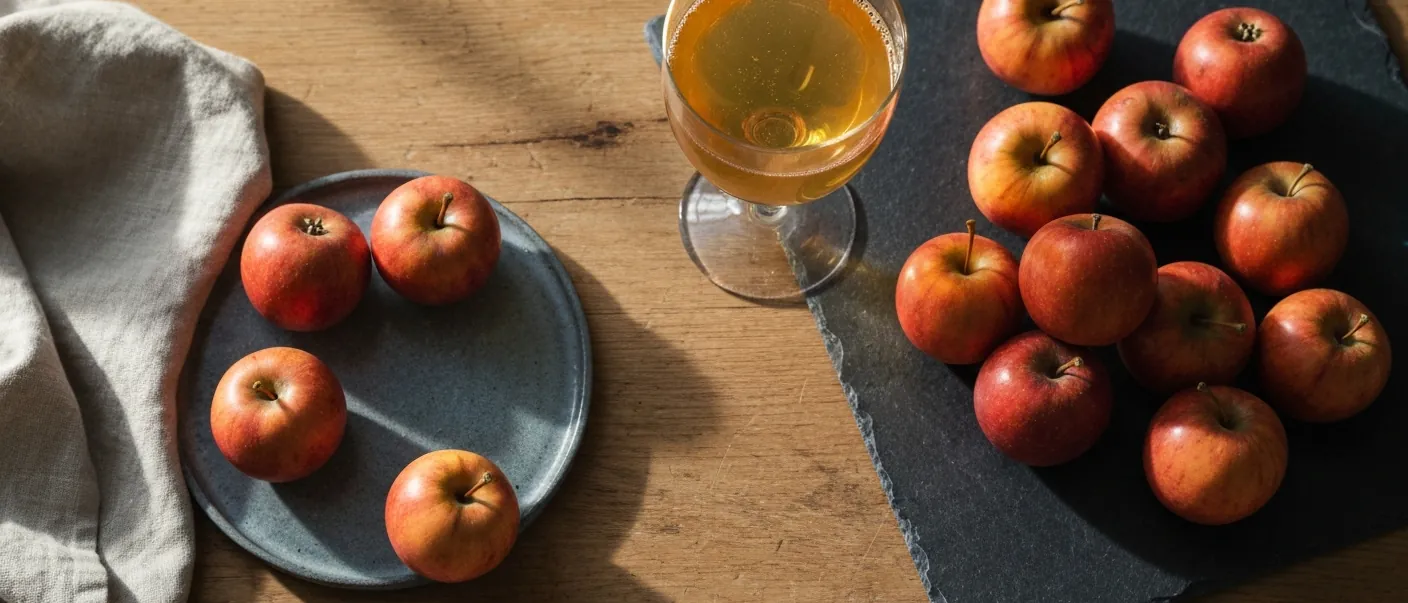
Stand in a Herefordshire orchard in late autumn and the ground tells you everything: windfalls of small, deeply tannic apples that no one would dream of eating fresh, lying in the red-soiled grass beneath trees shaped by generations of the same enterprise. The county's mild, damp climate and well-drained soils suit bittersweet and bittersharp apple varieties particularly well — and those varieties produce juice with the complexity that serious cider requires.
That combination of place and practice has earned Herefordshire cider and perry Protected Geographical Indication status, the same European-derived designation that protects Champagne and Parmigiano-Reggiano. The label is not merely ceremonial. Cider carrying the Herefordshire name must be made from fruit grown in the county, tying the product legally and transparently to the land behind it.
The Varieties That Define the County
Cider made from culinary or dessert apples tends to be thin — pleasant enough, but lacking grip. The bittersweet varieties that fill Herefordshire's traditional orchards are a different proposition. High in tannins and relatively low in acid, they give cider its body, its colour and that dry, slightly astringent finish that lingers as it should.
Dabinett is among the most widely planted of the county's classic varieties — a compact, reliable tree producing fruit with pronounced tannin and a mild sweetness that blends well. Yarlington Mill, named after a Somerset mill where the original tree was reportedly found growing from a wall, took deep root in Herefordshire orchards and has become firmly associated with the county's character. Both are classed as bittersweet: the bitterness comes from tannin, the sweetness from natural sugars in the juice before fermentation begins.
Many makers work with a blend of varieties, balancing the heavy tannin of one apple against the sharper, more acidic character of another. Others press single varieties to show what Dabinett or Yarlington Mill can do alone. Neither approach is more authentic; they reflect different ideas about what the county's cider should express.
Perry: The Quieter Tradition
Herefordshire's PGI status covers perry as well as cider. Perry — fermented pear juice, made from perry pears rather than dessert or conference varieties — has a smaller following than cider but a tradition in the county that is at least as old. Perry pear trees are notably long-lived, some thought to be several centuries old, and the fruit they produce is even more aggressively tannic than cider apples when eaten raw. Fermented, that tannin becomes structure.
Good Herefordshire perry is quite different from the commercial pear ciders that dominate supermarket shelves. It tends to be drier and more complex, sometimes slightly hazy, with a floral quality that is difficult to pin down but immediately recognisable once encountered. It is an acquired taste — and one that rewards the acquiring.
Reading the Label
The PGI designation gives buyers a straightforward tool. Cider or perry carrying the protected Herefordshire name must originate in the county, which removes some of the guesswork that can dog artisan food shopping. Beyond that mark, a few things are worth noting on any bottle. Keeved cider — made through a traditional process that naturally arrests fermentation — will often be lower in alcohol and retain residual sweetness; producers who use it tend to flag it. Bottles labelled with specific orchard or farm names generally indicate a maker interested in transparency about fruit sourcing.
Draught cider from a farm or local pub in Herefordshire remains one of the most direct ways to encounter the county's output: unfiltered, often still or only lightly sparkling, and served at cellar temperature rather than fridge-cold, which is how the fuller flavours of bittersweet varieties show best.
The Orchard as Landscape
Traditional Herefordshire orchards carry an ecological argument alongside the gastronomic one. Old standard orchards — tall, widely spaced trees with grazed grass beneath — support significant biodiversity: mistletoe, lichens, and species of birds and invertebrates that depend on mature fruit trees. Commercial pressure to replace old orchards with bush varieties or other crops has been real, and the survival of traditional orcharding in the county depends partly on whether the cider those orchards produce remains worth making. Buying Herefordshire cider connects to something beyond the glass.