A place name as quality signal
Goosnargh sits a few miles north of Preston, and most people outside Lancashire would never have heard of it had it not started appearing on restaurant menus. The name carries genuine weight in the trade without any legal framework behind it — no PDO, no PGI, no geographical indication of any kind. What exists instead is a long, consistent record of supplying chefs with birds that behave differently from commodity poultry.
This is how informal provenance works in Britain, and Goosnargh is one of the cleaner examples. A supplier builds a reputation, chefs trust the supply, the name goes on the menu, and eventually the place name becomes shorthand for a set of characteristics rather than a location. It is a fragile kind of quality signal — entirely dependent on continued consistency — but it can mean more than a certification badge covering a wide geographic area and a range of production methods.
What slow-rearing actually does
The distinction between Goosnargh-style poultry and supermarket birds is not primarily about breed, though heritage breeds are part of the picture. The more important variables are time, finish, and what happens after slaughter.
Slow-reared ducks and chickens reach slaughter weight over a longer period than intensively reared birds. That extra time allows intramuscular fat — the kind running through the muscle tissue rather than sitting beneath the skin — to develop gradually. A bird killed young has not had the chance to build it. The result is meat with more flavour and a texture that holds up to cooking rather than drying out.
Dry-plucking separates traditionally reared poultry from the standard. Most commercial birds are scalded in hot water before plucking, which loosens feathers quickly but partially cooks the skin. Dry-plucking is slower and more labour-intensive; it leaves the skin intact and dry — better for crisping, better for hanging. Hanging, the practice of resting an unchilled, undrawn bird for a period of days after slaughter, allows enzymes to begin breaking down proteins and deepening flavour in the same way dry-ageing works for beef. The fat renders differently, the meat firms and concentrates, and you get something a chef can build a dish around rather than simply not ruin.
The duck in particular
Duck benefits from this approach more visibly than chicken, which is perhaps why Goosnargh duck appears on menus more often than Goosnargh chicken, though both are produced there. Duck has a naturally higher fat content, and slow-rearing amplifies it — more fat in the leg, a richer breast, skin that crisps to something approaching lacquer in the pan. The legs reward long, slow cooking in a way that a younger, faster-reared bird simply does not; there is more to work with.
Goose from the area carries the same principles further. Geese are slower-growing by nature, more seasonal, and almost entirely absent from the mass market — which means the gap between one reared in this tradition and a commodity bird is enormous.
The village beyond the poultry
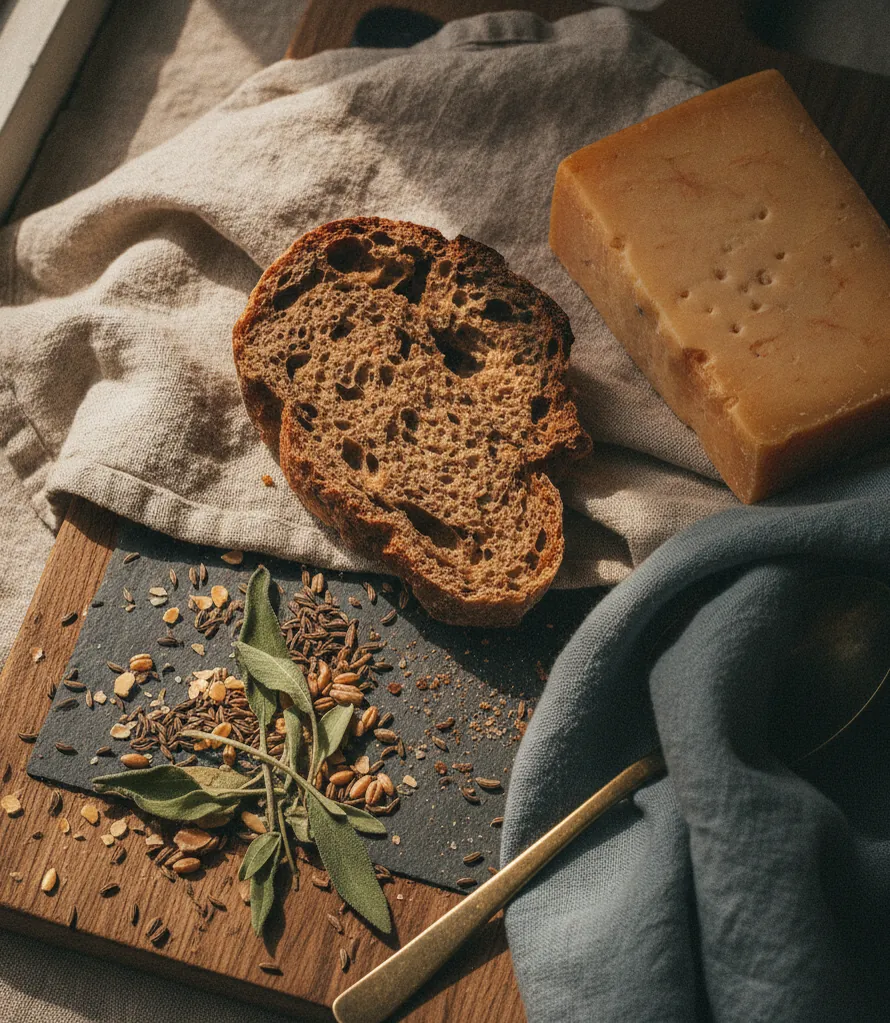
There is another Goosnargh speciality that most people who have seen the duck on a menu have never encountered: the Goosnargh cake. It is a caraway-flavoured shortbread, dense and lightly sweet, originally baked for wakes week — the annual holiday common across Lancashire mill towns, when families marked the period with specific foods. The cakes carry no registered recipe and no formal protection, but a handful of local bakers still produce them. They are a genuine piece of regional food culture rather than a reinvention for visitors.
The poultry and the cake share more than geography. Both are examples of how a food tradition sustains itself through use and habit rather than official designation. The caraway cake survived because local people kept making it for local occasions. The poultry reputation survived because chefs kept buying it and putting the village name on their menus. Neither required a governing body.
Finding it
Outside restaurants, Goosnargh poultry is available through independent butchers, farm shops, and a small number of online mail-order suppliers — demand for geese and larger birds peaks around Christmas. It costs more than standard free-range; the slower rearing and more labour-intensive processing make that inevitable. What you are paying for is the fat, the texture, and the flavour that time produces.
_jpgq80.webp)