Two drinks, one protected designation
Gloucestershire cider and Gloucestershire perry both hold Protected Geographical Indication status, which means only producers working within the defined area and meeting the production criteria can use those names. The cider side of that designation is relatively easy to grasp — cider is made across much of Britain, and Gloucestershire's tradition fits into a broad national story. Perry is different. It is a drink so tied to a specific place and a specific fruit that understanding what PGI protection actually guards here matters rather more.
What perry pears actually are
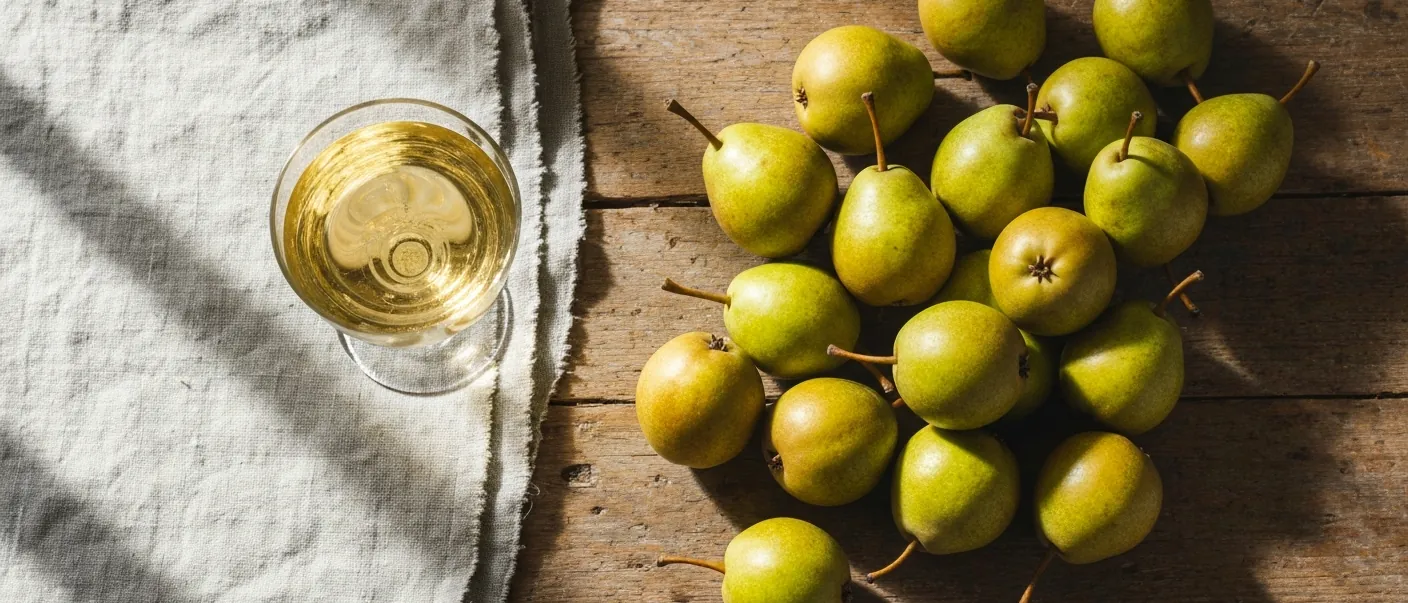
Perry is fermented from perry pears, and perry pears are not culinary pears, not dessert pears, not the kind of thing you would find in a fruit bowl. They are small, often misshapen, deeply astringent when raw, and loaded with compounds — tannins, sorbitol, and acids — that make them almost inedible fresh but extraordinary once fermented. Many varieties have been grown in the same orchards for generations; perry pear trees are famously long-lived, and a mature tree can be a couple of centuries old or more.
The flavour a perry pear produces in the glass depends heavily on its variety. Some give floral, delicate results with a gentle fizz; others are tannic, dry, and almost wine-like in their complexity. This is not a category where one product tastes much like another.
The world around May Hill
May Hill — the distinctive rounded summit on the Gloucestershire-Herefordshire border, recognisable by its crown of trees — sits at the geographical heart of perry pear country. The counties that cluster around it, taking in parts of Gloucestershire, Herefordshire, and Worcestershire, represent almost the entire global range of traditional perry pear cultivation. These varieties are grown virtually nowhere else in the world in any meaningful quantity. The soils, the climate, and above all the accumulated human knowledge of which variety suits which slope and soil type have concentrated here over centuries.
That concentration is precisely what PGI status is designed to acknowledge. It recognises that Gloucestershire perry is not a style that could be replicated anywhere with the right technique — it is the product of a particular landscape and the particular fruit that landscape sustains.
Why this distinction matters for buyers
The perry market is complicated by the widespread use of the word to describe drinks made from pear juice concentrate — products that bear little relation to what is produced in the orchards around May Hill. Mass-market pear drinks are often sweeter, lighter, and made from dessert pear varieties or imported concentrate. Traditional Gloucestershire perry, by contrast, can be bracingly dry, quite tannic, and noticeably different between producers and even between harvests from the same orchard.
The PGI designation gives buyers a reliable way to find the real thing. When you see Gloucestershire perry on a label, the designation tells you that the drink inside came from the right place, made in a way that respects the protected tradition. That is not a guarantee of any particular style — producers vary considerably in their approach to sweetness, carbonation, and whether they work single varieties or blends — but it is a guarantee of provenance and seriousness.
How it is traditionally drunk
Perry is most often served lightly chilled, and it pairs well with the kind of food the region has always produced: aged hard cheeses, cold meats, and simple bread. It is not a drink that needs elaborate food around it. At the orchards and small producers who make it, you will frequently find it offered still or gently sparkling, at a range of sweetness levels depending on the maker's preference and the character of the harvest. The best approach, if you are new to it, is to try a few different producers before deciding what you prefer — the variation between them is genuinely wide.