What a fat rascal actually is
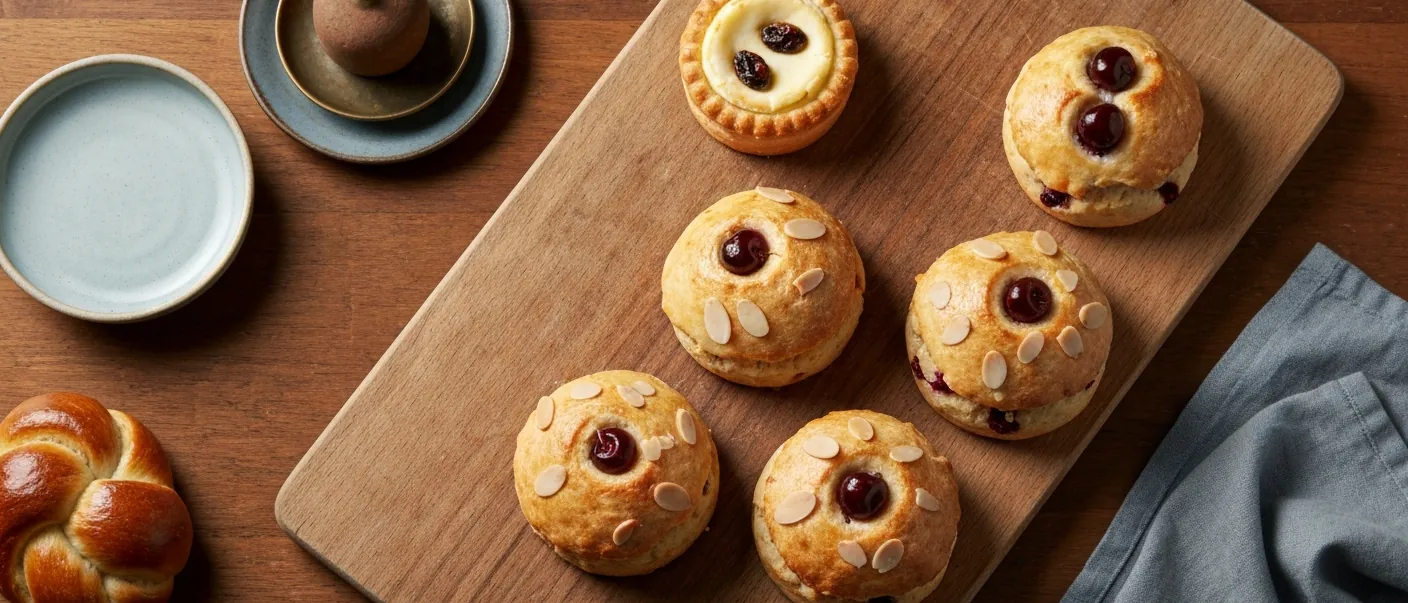
The name invites a smile before you've even tasted one. A fat rascal is a generously sized, rounded bake — heavier and richer than a scone, more refined than a standard rock cake — studded with dried fruit and finished on top with a face made from glacé cherries and blanched almonds. That face is not decoration for decoration's sake; it is what marks a fat rascal out on a bakery shelf or tea-room plate, and it makes the bake unmistakably Yorkshire.
The texture sits in interesting territory: crisp on the outside, dense and slightly short within, with the fruit providing bursts of sweetness against a backdrop that leans more towards buttery pastry than bread. It is meant to be eaten warm, ideally with nothing added — though a spread of butter is rarely turned away.
The Harrogate connection
One famous Harrogate tea house has trademarked its own version, which tells you something about how seriously Yorkshire takes the thing. Harrogate, with its grand spa-town architecture and well-practised tradition of afternoon tea, is arguably the spiritual home of the bake as it exists today — presented on tiered stands, served with proper loose-leaf tea, in rooms that have not changed enormously in the better part of a century.
That trademarked version has become the benchmark against which most people measure a fat rascal, which is an unusual situation for a regional bake. Usually these things remain resolutely local and informal. The Harrogate association has given the fat rascal a degree of visibility that comparable regional bakes have never quite achieved.
The broader Yorkshire tea table
The fat rascal does not stand alone. Yorkshire has one of the richer tea-time baking traditions in Britain, built around substantial, unfussy bakes that made sense in a county where working days were long and delicate pastries would have seemed beside the point.
The Yorkshire tea cake is perhaps the most widely known — a soft, lightly spiced, yeasted bun with currants running through it, split and toasted and eaten with butter. It is a different creature from the tea cake found in other parts of Britain, where the word is often used loosely. In Yorkshire, it means something specific.
Then there is parkin, the dark, sticky oat-and-treacle gingerbread particularly associated with Bonfire Night. Parkin improves considerably with a few days' keeping, becoming stickier and more cohesive as the treacle works through the oats — a quality that made it practical long before anyone thought about it in those terms.
The Yorkshire curd tart is another thing entirely: an open pastry case filled with curd cheese, egg, currants and a gentle hand of spice. Related to the cheesecake family in the broadest sense, it is lighter and less sweet, with the curd giving a clean, faintly sour note that stops it becoming cloying. It turns up at village fêtes and farm shops, and at its best it is one of the more underrated pastry traditions in the country.
Moggy, a simple gingerbread made with black treacle, appears in some corners of the county, though it is less commonly found now than it once was. Part of what makes regional baking interesting is that it shifts — some things get picked up and championed, others quietly recede.
Why these bakes have lasted
There is no great mystery to it. These bakes were made with what was available — oats, lard, dried fruit, treacle, dairy — and shaped around the rhythms of working life. Tea was the meal that punctuated the day, and something substantial was needed to go with it. The fat rascal, in that context, is not whimsy. It is sustenance with a sense of humour.
What has kept them going is partly tradition and partly the fact that they are genuinely good. The Yorkshire tea room is a real institution, not a pastiche of one, and the bakes served in it have survived not because they are old but because people keep wanting to eat them. That is the only test that matters.
For anyone travelling through the county, seeking out a proper fat rascal in a Harrogate or York tea room is worth the effort — not as an exercise in heritage tourism, but because there is something straightforwardly satisfying about eating a warm, cherry-faced bake in the place it belongs.