A cheese tied to one corner of Scotland
The village of Dunlop sits in Ayrshire, in the green south-western lowlands. It lends its name to a cheese that has been made in this part of Scotland long enough to have earned Protected Geographical Indication status — the EU-derived designation, still recognised in UK law, that binds a food's identity to its place of origin. You cannot call a cheese Dunlop unless it genuinely belongs to Ayrshire.
Dunlop is not a flashy cheese. It does not arrive at the table demanding attention. What it offers is quiet reliability: a clean, sweet flavour with very little sharpness, a smooth, close texture, and a mildness that makes it one of the more approachable territorial cheeses produced anywhere in Britain.
What whole milk does to flavour
Dunlop is made with whole milk, and that detail matters. Whole milk retains its natural fat content through the cheesemaking process, giving the finished cheese a fuller mouthfeel and a rounder, creamier flavour than a leaner milk would produce. The sweetness Dunlop is known for — not sugary, but gently rounded — comes partly from this fat content, partly from the mild acidity developed during the make, and partly from Ayrshire milk itself.
Ayrshire cattle have long been associated with milk that is well balanced in fat and protein, and the region's dairy farming tradition runs deep. Whether any individual producer uses milk from Ayrshire-bred cows will vary, but the PGI anchors both milk and making to this geography.
Scotland's answer to mild cheddar — with caveats
The comparison to a mild cheddar is reasonable shorthand. If you know what a young, unaged cheddar tastes like, Dunlop sits in broadly similar territory. Both are pressed, whole-milk cheeses with a smooth, firm body and a mild, lactic character. Both work well sliced cold or melted.
The comparison should not be pushed too far, however. Cheddar — even mild cheddar — carries a distinct acidity and slight bite that comes from its specific production method and, often, extended maturation. Dunlop is genuinely sweeter and more placid. The two cheeses share a family resemblance but are not interchangeable in the way two supermarket cheddars from different dairies might be. Dunlop has its own register, its own protected identity, and producers who make it are committing to something particular — not simply producing a mild cheddar-style cheese under a local name.
How it tends to be eaten
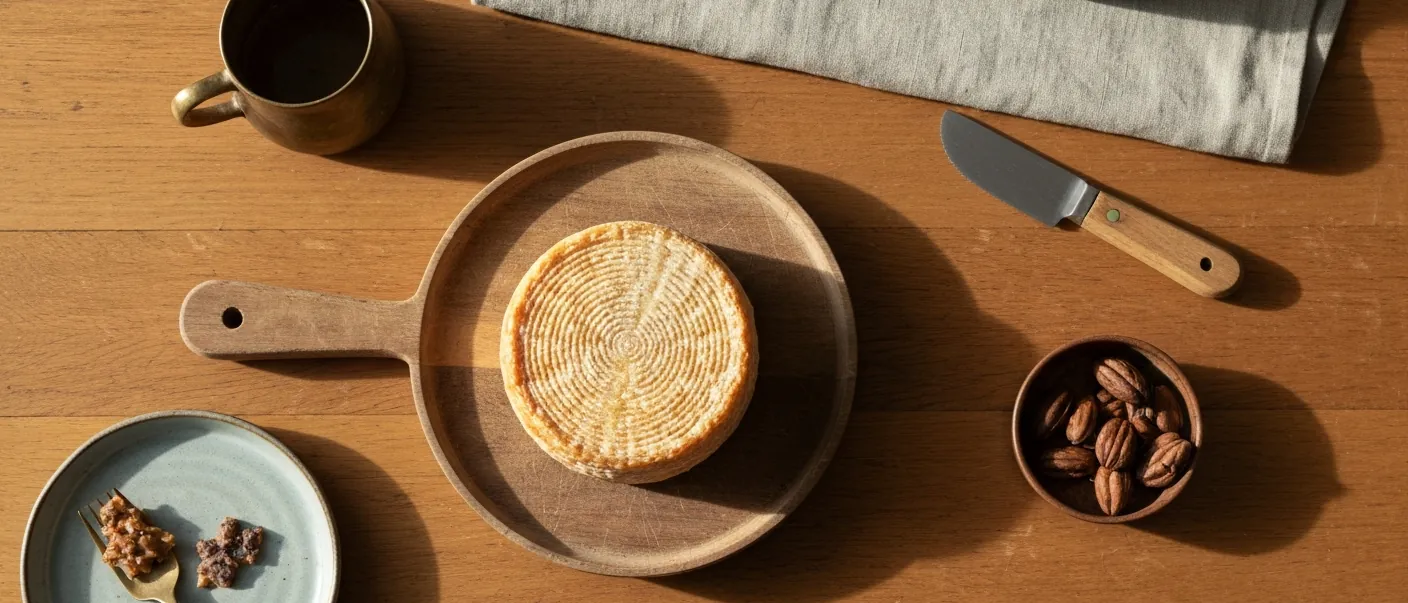
Because Dunlop is mild and melts cleanly, it has traditionally found its place in everyday cooking as much as on the cheeseboard. It sits well alongside oatcakes and Scottish accompaniments — a dark fruit chutney, pickled onions, something with a bit of sharpness to balance the cheese's sweetness. On a board with stronger cheeses, it offers a point of calm between more assertive flavours.
Melted, it behaves well: it softens without becoming greasy or separating, which makes it a sound choice in traditional Scottish dishes where a cheese sauce or gratin needs to be smooth and mild rather than sharp. It earns its place through usefulness and dependability rather than spectacle.
Finding and choosing Dunlop
Because of its PGI status, Dunlop is not produced in large quantities by a wide range of makers — the geographical restriction keeps it relatively contained. Specialist cheesemongers with a focus on British or Scottish producers are the most reliable places to find it. Some Scottish farm shops and deli counters carry it as a matter of regional pride.
Look for a smooth, pale ivory paste without dryness or cracking at the edges — signs the cheese has been stored well. Dunlop does not need to be aged to the point of developing a rind or strong aroma; its appeal lies in freshness and mildness rather than complexity built over time. Buy it in a size you will use within a few days, wrap it in waxed paper, keep it in the cooler part of the fridge, and let it come to room temperature before eating.