What makes Cromer crab different
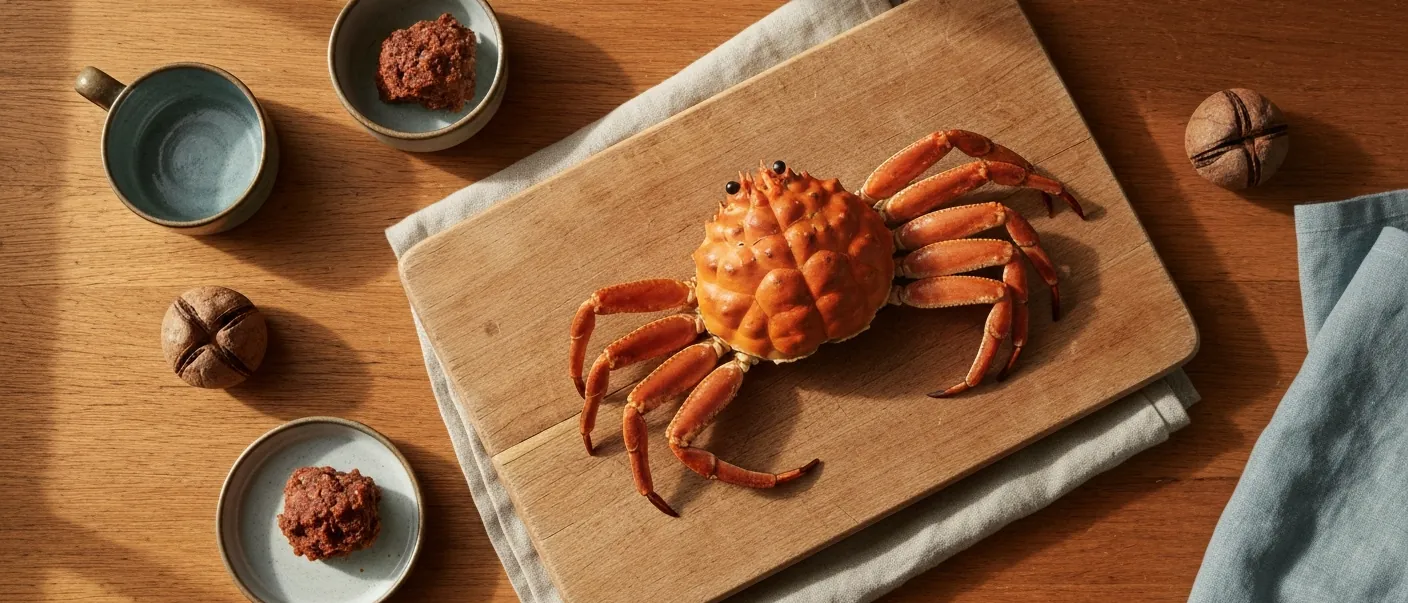
The brown crab is caught all around the British coastline, but crabs landed at Cromer, on the north Norfolk coast, have long been considered something apart. The white meat from the claws and body is noticeably sweet and fine-textured. Local fishermen and cooks have credited this for generations to the chalk reef running offshore — the thinking being that the reef shapes the habitat and, through the crab's diet, the flavour of the meat itself. It is an explanation passed down rather than proven in a laboratory, but it carries the weight of long observation.
What's also distinctive is the ratio. Cromer crabs tend to yield a generous proportion of white meat relative to their size, and they're often smaller than crabs pulled from deeper, cooler waters. Smaller does not mean lesser. It means a different balance — one that many who know their crab well actively prefer.
A small-boat fishery
The Cromer crab fishery is, and has always been, a small-boat operation. Crabbers work close to shore, setting and hauling pots in waters they know intimately, with knowledge passed between fishing families over generations. No large trawlers are involved. The catch comes in fresh, is usually dressed the same day, and the chain from sea to table is short enough that freshness is near-guaranteed if you buy well.
Crab deteriorates quickly once caught. Because Cromer's fishery has never industrialised — partly geography, partly tradition — the product reaching the fishmonger or the beach café is almost always handled with care and sold fast. It is not sitting in a cold store for a week before it reaches you.
How it's traditionally eaten
A dressed Cromer crab — white meat kept separate from the darker, richer brown meat — served cold with good bread and a little lemon, is about as direct an expression of the coast as British food gets. The brown meat is stronger and more mineral; it works well spread on toast or stirred through a dressing. The white meat is delicate enough that anything too assertive will overpower it.
In Cromer itself, dressed crabs are sold from fishmongers and seafront stalls throughout the season. Eating one there, with the North Sea in front of you, is less a ritual than simply the obvious thing to do.
Buying it well
Outside Norfolk, Cromer crab is sometimes used as a loose label rather than a guarantee of origin, so it is worth asking questions when you buy. A crab that genuinely comes from the Cromer boats will usually be flagged as such by a fishmonger who knows their suppliers. If you're buying dressed crab, the white meat should smell clean and sweet — any ammonia or fishiness is a sign the crab was not fresh when dressed.
The season runs broadly through the warmer months, though precise timing shifts year to year. If you're planning a trip to north Norfolk to buy direct, check with local fishmongers before you go rather than assuming supply. The fishery is small by design, and availability reflects that.
Why provenance matters here
A crab from a specific stretch of the Norfolk coast commands attention for reasons that have nothing to do with marketing. The combination of a particular reef, a particular fishing tradition, and a particular way of handling the catch produces something genuinely difficult to replicate elsewhere. The chalk reef is not off Whitby or Hastings. The family boats working those waters are not interchangeable with larger commercial operations. Provenance, in this case, is the product.
Anyone who has not eaten a properly fresh Cromer crab should treat it as a priority the next time they're near the Norfolk coast. It recalibrates what you expect from seafood — not because it is exotic, but because it is so precisely itself.