What PDO status actually means here
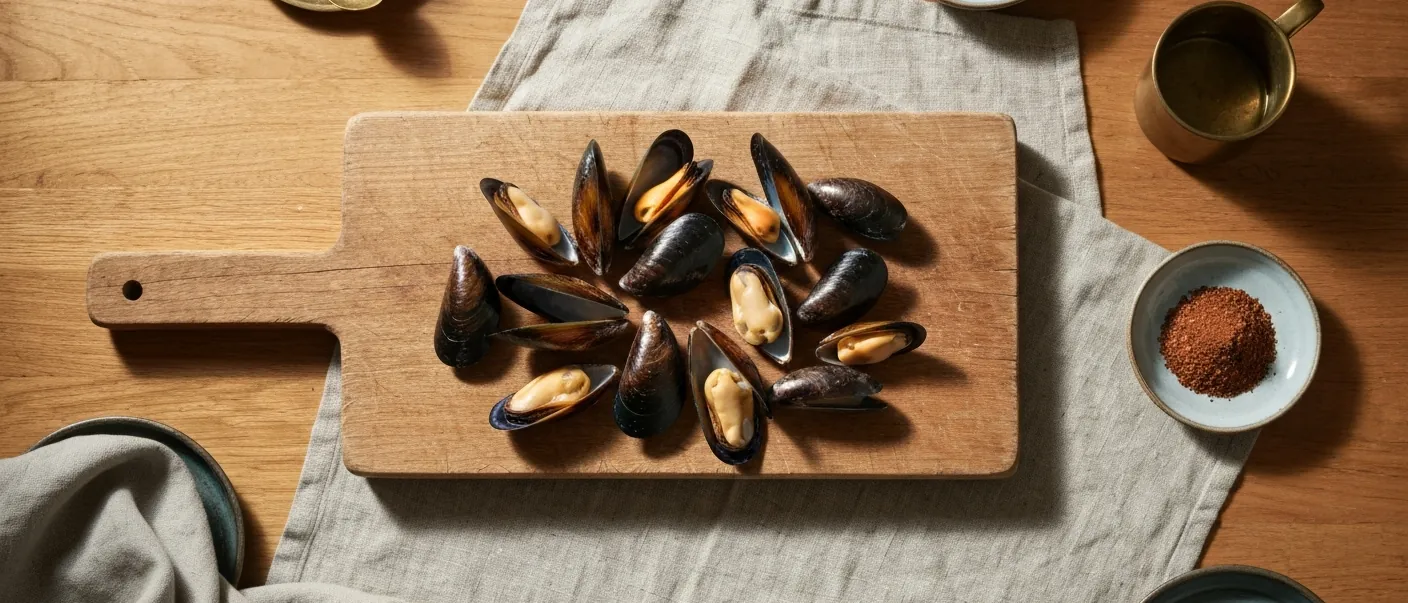
Conwy Mussels hold Protected Designation of Origin status, which ties the name legally to a specific place and a specific method. You cannot label a mussel from elsewhere as a Conwy Mussel, any more than you could call a sparkling wine from Kent a Champagne. The protection exists because the combination of the Conwy estuary's water, its tidal rhythms, and the traditional gathering method produces something genuinely distinct and worth protecting.
PDO foods often get lumped under vague notions of heritage, but here the designation has practical teeth. It keeps the fishery small, keeps the methods honest, and gives buyers a reliable signal that what they are getting is the real thing.
The estuary and what it does to the shellfish
The Conwy estuary cuts through the northern edge of Snowdonia, where fresh river water meets the tidal push of the Irish Sea. That brackish mixing shapes the flavour of everything grown in it. Conwy mussels tend to be plump and deeply savoury, with a sweetness that reflects the clean, cold water they filter.
Cold water is central to their quality. Mussels feed by drawing water across their gills and extracting phytoplankton; in colder months their condition improves — they become firmer, fuller, richer. Conwy mussels are at their best from autumn through to early spring. The old rule about eating shellfish only in months containing an 'r' is imprecise, but the underlying logic holds: warmth diminishes them, cold concentrates them.
Hand-raking as a working method
What distinguishes Conwy from most commercial mussel production is the refusal to mechanise. The mussels are gathered by hand-raking — a slow, physically demanding process with a long history on this estuary. Dredging, the industrial standard elsewhere, is faster but indiscriminate; it disturbs the seabed and pulls up mussels regardless of size or condition. Hand-raking allows fishermen to be selective, leaving juvenile mussels to grow and avoiding damage to the estuary floor.
The fishery is small. That is a structural reality, not a romantic detail, and it shapes everything from availability to where you can buy them. Conwy mussels do not appear in supermarkets as rope-grown mussels from large aquaculture operations do. Finding them generally means going directly to the estuary, to a fishmonger with genuine links to Welsh suppliers, or to a market where provenance can be verified.
How they are traditionally eaten
In Conwy, the mussel has long been straightforward, unfussy food. Steamed open and eaten with bread to catch the liquor, or cooked simply with a little wine and aromatics — these are the preparations that let the shellfish do the work. The instinct to complicate them with heavy sauces is a mistake; the flavour is delicate enough to be obscured rather than improved.
The liquor left in the pan after cooking is often treated as an afterthought, but it concentrates the character of the mussel in a way that rewards attention. Soaking good bread in it, or using it as the base of a broth, is not a chef's flourish — it is simply the obvious thing to do.
Finding and buying them well
Because the fishery is small and the season concentrated in the colder months, availability fluctuates. A fishmonger who can tell you where their mussels came from and when they were landed is always a better bet than one who cannot. Mussels should be bought alive: shells tightly closed, or closing when tapped. Any that remain open before cooking, or stay shut after, should be discarded. This is not overcaution — it is how shellfish work.
The town of Conwy has a direct, long-standing connection to the trade, and the estuary is visible from the town walls. Buying close to the source is almost always the right instinct with a PDO product: the shorter the chain between water and plate, the better the mussel.