Same county, different pastry
Both are small, round, currant-filled pastries from the mill towns of Lancashire, and both are routinely mistaken for each other outside the county. The confusion is understandable. But they are built differently, eaten differently, and carry different expectations about what a currant pastry should be.
The Eccles cake — covered in more depth in our separate piece — is the showier of the two. Its pastry is puff: laminated, buttery, shattering when you bite in. The filling is deep and sweet, the top scored and scattered with sugar, and the parcel typically splits at the edges during baking, giving that characteristic caramelised seam. It is a pastry designed to be rich.
The Chorley cake does something quieter. Its pastry is shortcrust — shorter, plainer, less layered — and the overall effect is flatter and drier. The filling is currants rather than a spiced, sugared conserve, and there is less of it relative to the pastry. Less sugar on top, too. Where an Eccles cake announces itself, a Chorley cake asks you to pay closer attention.
Why butter — and why cheese
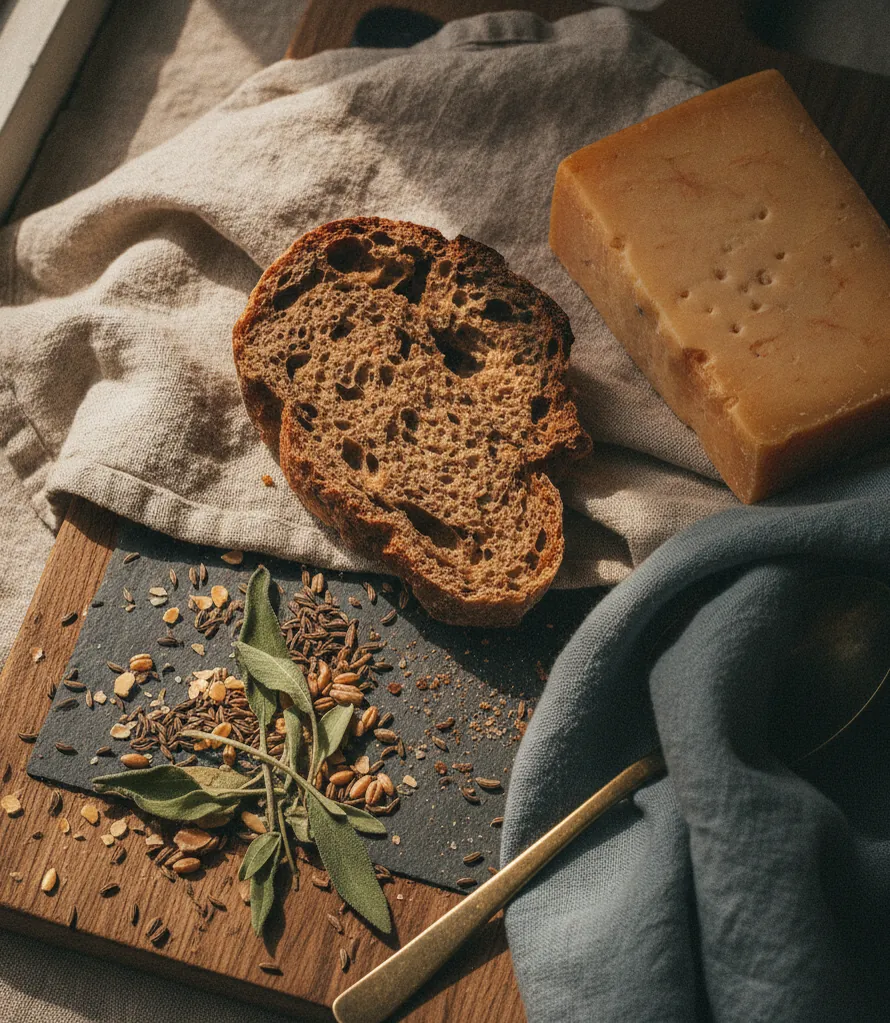
That comparative plainness is the point. A Chorley cake is traditionally eaten buttered, the warmth of a freshly baked one softening the butter into the shortcrust. That already puts it in a different register to the Eccles, which stands alone.
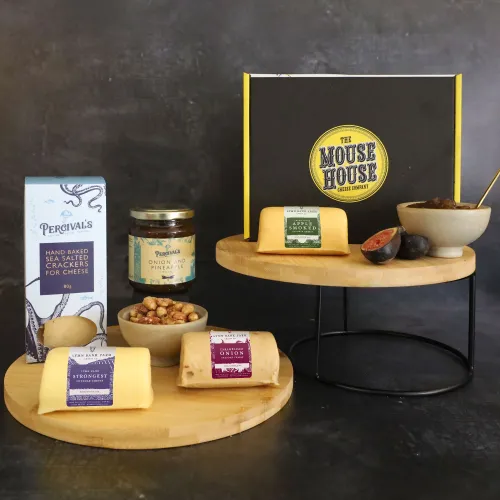
The more interesting habit — and the one that surprises people encountering it for the first time — is eating a Chorley cake with a slice of Lancashire cheese. A proper, crumbly, slightly sour Lancashire, the kind that breaks apart rather than slices clean. Set against the mild sweetness of the currants and the plain pastry, that sharpness and acidity makes a kind of sense that is hard to argue with once you have tried it.
This is not an eccentric local quirk so much as an expression of a wider northern logic about sweet and savoury. The same instinct explains why fruit cake with a wedge of Wensleydale is still eaten across Yorkshire — the fat, the salt, the tang of crumbly cheese cutting through dense sweetness and dried fruit. Balance by contrast rather than complement. Lancashire applies the same principle to a smaller pastry, and the result is one of the more quietly satisfying things in British food.
What this tells us about northern food traditions
There is a tendency in food writing to treat regional British food as a set of charming relics, oddities to be noted and moved on from. The Chorley cake and its cheese pairing resist that framing. The combination works because the flavours — short, lightly sweetened pastry, dried fruit, salty crumbly cheese — are genuinely complementary in ways that reward thinking about rather than simply celebrating.
Lancashire cheese itself is sold at different stages of maturity, with the youngest being mild and almost spreadable and the more aged being dry, crumbly, and distinctly sharp. For the cheese-and-Chorley-cake pairing, you want the drier, more mature end of that range — something with enough acidity to push back against the sweetness. Our Lancashire cheese piece goes into this in more detail.
The Chorley cake, then, is less a poor relation of the Eccles and more a different proposition entirely. One is a self-contained rich pastry; the other is an invitation to build something around it. Both deserve to be understood on their own terms, which means not treating whichever you encounter first as the standard and the other as a deviation.
Finding and buying them
Eccles cakes have travelled further — found in supermarkets across the country, with good versions appearing in artisan bakeries well beyond Lancashire. Chorley cakes are less widely distributed, and the best tend to come from bakeries within the county itself. If you are buying them to try the cheese pairing at home, look for a proper crumbly Lancashire rather than the mild, young version sold sliced for sandwiches. Eat the Chorley cake while it is still warm enough to melt butter.
A Chorley cake eaten cold and unaccompanied gives you a fraction of what it is meant to be — context is everything.