Two things, one town
Ask for a Bakewell in most British bakeries and you will receive a round shortcrust tart with frangipane, white icing, and a glacé cherry on top. That is a perfectly decent thing to eat. It is not, however, what Bakewell itself makes — or what the town's name originally meant in the context of baking.
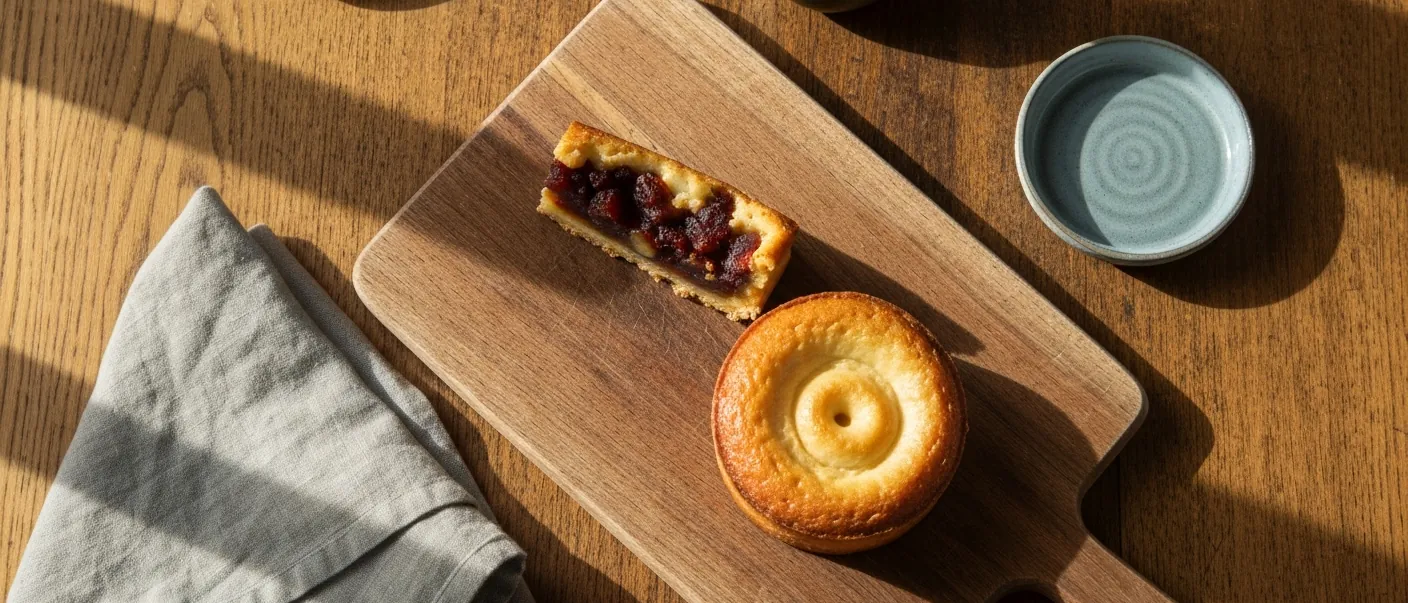
The Bakewell pudding is the older of the two. It is built on flaky or rough puff pastry, spread with a layer of jam, and topped with a filling that is mostly egg and ground almonds — looser and richer than frangipane, with a silkier, almost custard-like set. It wobbles slightly where a tart slice holds its shape. That difference in texture alone marks them as distinct recipes, not variations on a theme.
What the pudding actually is
Pastry, jam, eggs, almonds — in that order and in those proportions. The filling is generous with egg, far more so than the flour-based frangipane used in tarts, which gives it a yielding quality and a surface that catches colour in the oven rather than baking to a firm crumb. The jam sits underneath, melting into the pastry base during baking. The result is richer, more fragrant, and considerably less sweet than the iced version most people encounter elsewhere.
Several shops in Bakewell still bake the pudding to recipes they keep close. There is no single publicly standardised formula; variation between them is part of what makes the pudding a living local product rather than a heritage exhibit. Visit and you will find the shops make a point of the distinction — some with polite firmness, some with rather more emphasis.
The legend, told as legend
The story goes that the pudding came about by accident: a cook at a local inn misunderstood instructions and spread an egg-and-almond mixture over jam rather than incorporating it into the pastry, producing something unexpectedly good. It is a fine story. Whether it is true, embellished, or simply the kind of explanation that attaches itself to old recipes, nobody can say with certainty. It circulates widely enough that you should know you are hearing folklore rather than documented history.
What is clear is that the pudding has a long association with Bakewell in Derbyshire and that it predates the iced tart. The tart, in its modern form with shortcrust pastry, frangipane, and that signature cherry, came later — mass-produced, widely distributed, and eventually so ubiquitous that it colonised the name.
Why the distinction matters
The pudding and the tart taste different, use different pastry, and are made by different methods. Calling them the same thing makes it harder for people to seek out the original, which is the more interesting of the two.
Britain has a tradition of locally rooted recipes that become genericised over time, their regional character absorbed into industrial versions that carry the name but not the substance. The Bakewell pudding has so far resisted that fate — partly because the Bakewell shops actively maintain it, and partly because the product does not scale well. The egg-heavy filling is less forgiving than frangipane; the flaky pastry more perishable than shortcrust. What makes it distinctive is also what makes it difficult to replicate at volume.
If you have only ever eaten the tart, the pudding will not taste like a fancier version of what you know. It will taste like something else entirely — which is precisely the point.
How it is eaten
In Bakewell, the pudding is sold fresh and eaten at room temperature or gently warmed, sometimes with cream or custard, though the filling is rich enough to need neither. It does not travel especially well over long distances. That is itself a mark of authenticity: the things most worth eating are often the ones that require you to go somewhere.