Why the South West leads
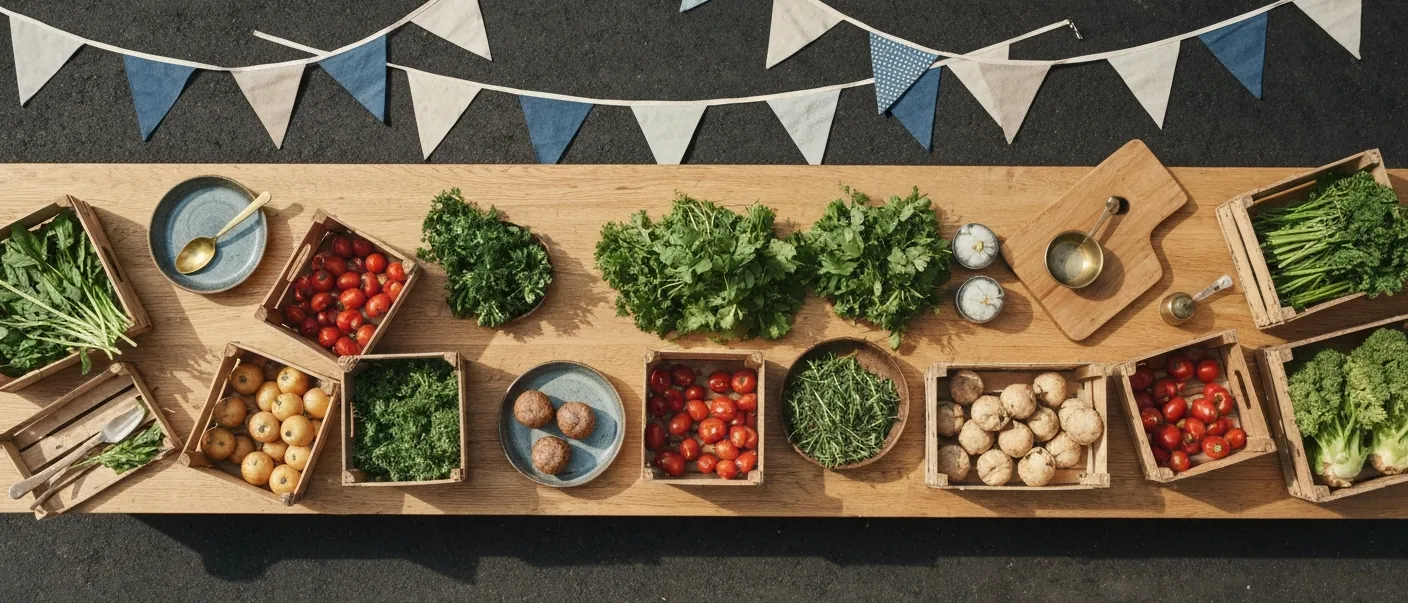
Productive farmland, strong fishing communities, and a stubborn regional pride make the South West particularly fertile ground for food markets. Producers here don't have to travel far to reach a crowd that knows what good food looks like. The result is a density of genuinely good markets difficult to match anywhere else in England.
What follows isn't a complete directory — it's the markets worth going out of your way for, where stalls reflect what the land and sea actually produce rather than re-selling wholesale goods in a prettier setting.
Bath and Stroud: the benchmarks
Bath has one of the longest-running dedicated farmers' markets in the country. It set an early standard — producers selling their own goods, a genuine connection between the person behind the stall and the thing being sold — and has maintained that integrity. Held in the city centre, it draws local shoppers and visitors who find it a far more honest introduction to the region's food than any gift shop could offer.
Stroud's Saturday market is a different proposition: larger, louder, with an almost festival-like atmosphere in good weather. The Gloucestershire countryside delivers well here — cheese, charcuterie, heritage vegetables, bread baked on-site by people who take fermentation seriously. It has the quality of a farmers' market and the energy of a street food event, and it is the standout choice on the Cotswold fringe.
Bristol's St Nicholas Market
St Nick's predates the modern farmers' market movement by a considerable margin, and that history shows. The covered market at Bristol's centre has a genuine mix of traders — independent food businesses, hot food stalls, produce vendors — rather than the curated, ticketed feel of newer urban markets. It operates through the week, functioning as part of the city's actual food supply rather than a weekend attraction alone.
The produce is real, the prices are honest, and the crowd is mostly people who want lunch or ingredients rather than an outing built around the act of shopping.
Exeter and Totnes
Exeter's market sits within a working city and pulls from the Devon hinterland — meat from farms within easy reach, fish from the southern coast, cheeses that rarely appear on supermarket shelves. Its character is quieter than Stroud or Bath, but the quality on the stalls reflects just how good the surrounding farmland is.
Totnes is a smaller town with an outsized commitment to independent food. Its market draws from a tight network of local producers, and the town's general attitude — sceptical of industrial shortcuts, enthusiastic about provenance — shows up in what you find on the stalls. It is the kind of place where you might buy something unfamiliar and find yourself thinking about it for weeks.
Cornwall: Truro and Falmouth
Cornwall's markets carry an extra layer of identity because the county's food culture is genuinely distinct. Truro, as the county's main city, hosts a market covering both produce and prepared food, with the Cornish larder — clotted cream, properly made pasties, seafood from nearby ports — well represented. It functions as a year-round resource rather than a purely seasonal affair.
Falmouth's market reflects its setting: a harbour town with strong connections to the sea. Fish bought here can have been landed that morning. Summer brings visitors, but a committed local following keeps it grounded. Cornwall's producers, particularly in dairy, fish, and baked goods, are among the most distinctive in Britain, and Falmouth is one of the better places to encounter them directly.
Between these six markets — and the smaller ones that dot the region's market towns throughout the year — the South West makes a strong case for being the most rewarding part of Britain in which to simply go shopping.
_9e2b-71_pngq80.webp)