Why the South East punches above its weight
Geography helps. Kent's orchards, Sussex's downland farms and Hampshire's river valleys all sit within reach of a Saturday morning drive, which means the markets here draw directly from their own counties rather than relying on middlemen. That proximity shows on the stall: you're more likely to be buying from the person who grew the thing than anywhere a lorry has to be involved.
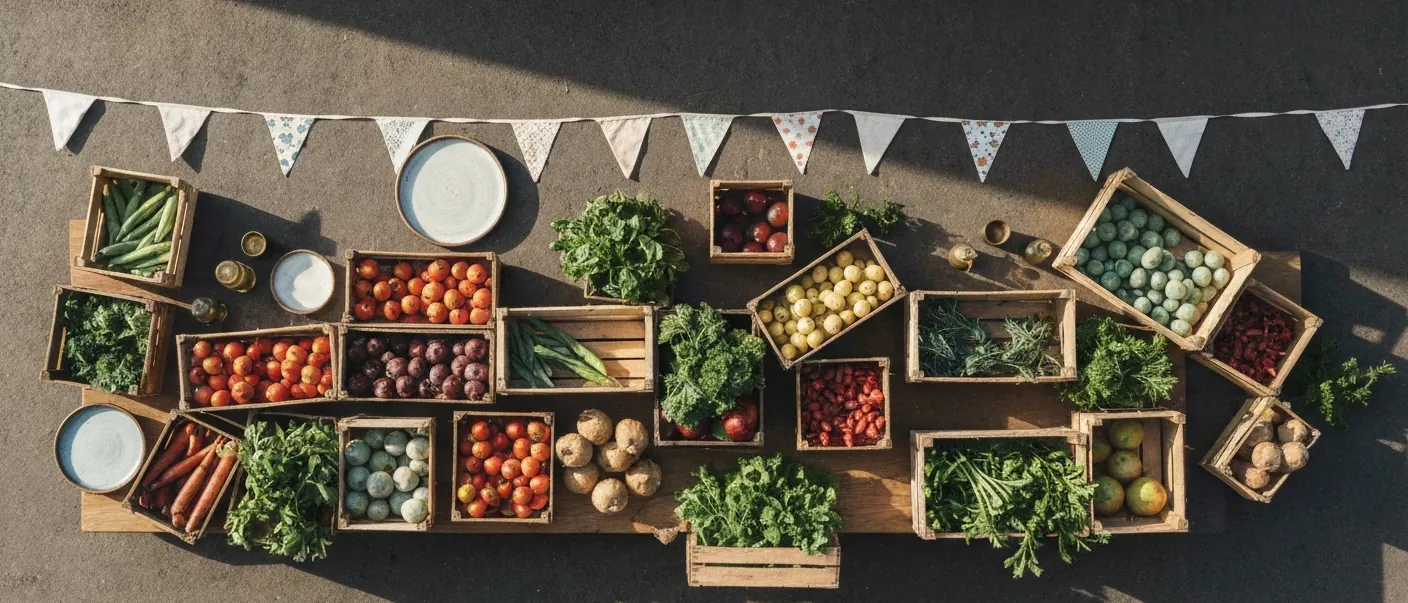
It also means that these markets shift with the seasons in a way that a supermarket never can. Asparagus in late spring, cobnuts in autumn, cider pressed from local apples — the calendar matters here, and regulars learn to shop accordingly.
Winchester sets the standard
Winchester's farmers' market is frequently cited as one of the largest in the UK, and it has built a reputation for quality alongside its size. Held in the city centre, it draws producers from across Hampshire and beyond, with a strong emphasis on meat, dairy and baked goods made at a scale where the producer can still tell you exactly what went into something. For anyone new to farmers' markets, Winchester is a useful benchmark — it shows what the format can look like when it's taken seriously by both organisers and stallholders.
Check the official site for current dates and any seasonal changes to frequency before making a special trip.
Sussex: Shoreham and Lewes
Lewes has a character all its own — independent-minded, slightly fierce about its local identity — and its food market reflects that. Producers here tend to be small and specific: a single cheesemaker, a baker working with heritage grains, a grower with an unusual variety of something. It rewards unhurried browsing.
Shoreham-by-Sea, just along the coast, is quieter but no less worthwhile. The market there has a strong local following, the kind that suggests the stalls are consistently good rather than occasional. Sussex as a county has invested seriously in its food and farming identity over recent years, and both markets are somewhere you feel that.
Kent: Rochester and Canterbury
Kent calls itself the Garden of England, and the markets at Rochester and Canterbury give you reasonable evidence for the claim. Soft fruit, heritage apple varieties, hops used in local brewing, fish landed not far from the coast — the range of what turns up reflects how genuinely productive the county is.
Rochester's market has the advantage of a dramatic setting, the castle and cathedral forming a backdrop that makes the whole thing feel slightly more cinematic than your average car park stall arrangement. Canterbury draws a broader crowd, partly because of the tourist footfall, but the food offering holds its own regardless. Both markets are worth checking against each other if you're spending a weekend in the county.
How to get the most out of any of these markets
Go early, but not obsessively so — the first hour tends to be the most competitive for the best bread and anything that exists in limited batches. Bring a cool bag if you're travelling any distance with fish, meat or cheese.
- Talk to the producers. Most of them are there because they want to, not because a company sent them, and they tend to know their products in detail.
- Don't assume you know what something is. A variety of tomato or apple you haven't encountered before is worth a question.
- Markets like these often have producers who also sell online or direct — it's worth asking how to find them between market dates.
Frequency varies — some run weekly, others monthly, and Christmas markets follow their own logic entirely. Always check the relevant market's own site for the current schedule rather than relying on third-party listings, which go out of date quickly.