A market that earns its reputation
Wales's largest indoor market is not a heritage attraction dressed up as a shopping experience. It is a working market, loud and practical, where stallholders have been selling the same things — and in some cases, the same family has been selling them — for generations. The produce at its heart has not changed.
For anyone arriving from outside Wales, the scale can come as a mild shock. This is not a weekend farmers' market with a handful of producers. It operates across a broad indoor floor, covers daily essentials alongside specialist Welsh goods, and draws a genuinely mixed crowd: locals doing their weekly shop alongside visitors who have come specifically for what cannot be found anywhere else.
Penclawdd cockles and the estuary behind them
The cockles are what people travel for. The Penclawdd cockle comes from the Loughor estuary on the north side of the Gower Peninsula, a stretch of tidal flats where cockle gathering has been practised for centuries. The work is tidal and physical — raked by hand at low water, then boiled and shelled, traditionally by women in the surrounding villages.
What you find on the stalls is the end point of that process: small, sweet, intensely saline cockles sold by the tub, already cooked and ready to eat. Cold, with a splash of vinegar and white pepper, is the standard approach, though they appear alongside breakfast or supper in many Welsh households. The flavour is cleaner and more delicate than cockles sold at English seaside stalls — the estuary conditions give them something distinct. The Gower estuary remains one of the few places in Wales where the harvest continues at any meaningful scale.
Laverbread: seaweed with a misleading name
Laverbread is not bread. It is cooked Porphyra umbilicalis — a dark, slippery seaweed gathered from Atlantic-facing rocks — reduced by long cooking to a dense, savoury paste with a briny, mineral depth unlike anything else on a British breakfast plate. The name comes from the Welsh bara lawr, where bara means bread in a loose, sustaining-food sense rather than a literal one.
At Swansea Market, laverbread is sold in tubs alongside the cockles, often at the same stall. The two are closely linked in Welsh kitchen tradition: laverbread is typically rolled in oatmeal and fried alongside bacon and cockles as part of a Welsh cooked breakfast, though it also works stirred through butter with a squeeze of citrus. The taste is strong and acquired — somewhere between miso paste and open sea — and it has very little in common with the dried seaweed snacks sold in supermarkets.
Outside Wales, fresh laverbread is genuinely difficult to source. It is produced in small quantities, does not travel easily, and rarely appears beyond the south Wales coast, which makes the market stalls here significant for anyone curious about it.
The wider market, and how to approach it
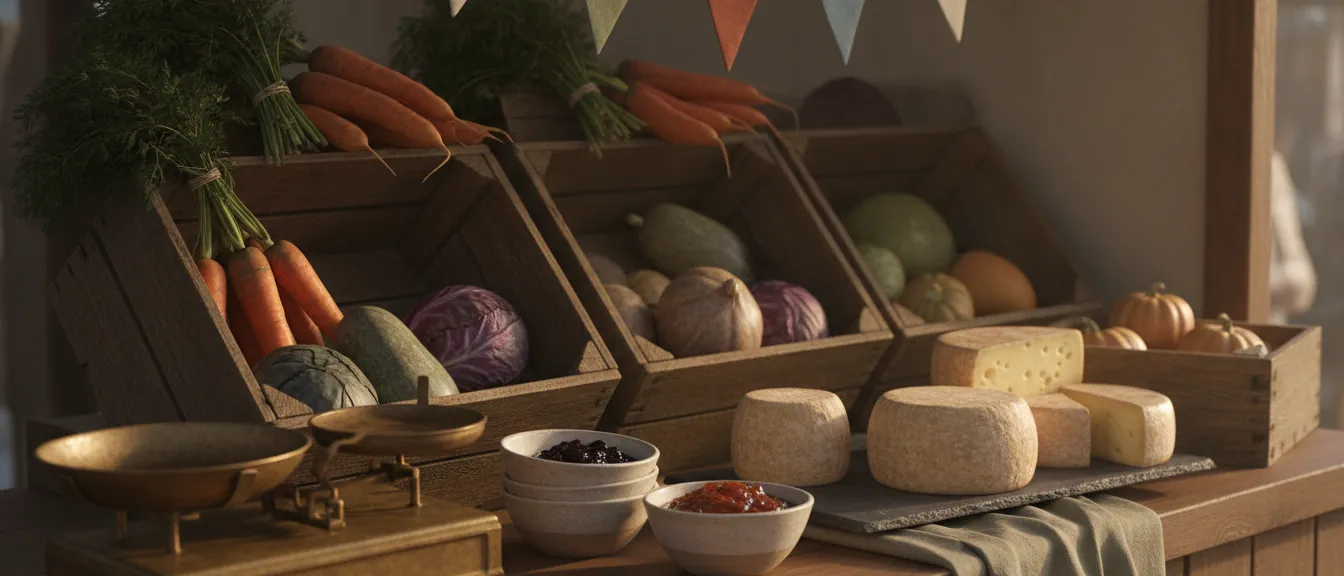
Cockles and laverbread are the draws, but the range is broader. Welsh cheeses, salt marsh lamb from the Gower, fresh fish, local honey, and produce from across south Wales all appear regularly. Arrive with time rather than a list.
The market runs most days of the week, though stall hours vary and the freshest shellfish tends to move early. Check the official market information before visiting if you are making a specific journey for the seafood stalls. Saturday mornings bring the fullest range of traders, but a midweek visit has a quieter atmosphere that many people prefer.
Swansea itself rewards more than a quick visit. The market sits close to the city centre, and the Gower Peninsula — Britain's first designated Area of Outstanding Natural Beauty — is within easy reach for anyone who wants to see the landscape that produced what they have just bought.
_9e2b-71_pngq80.webp)