Why Scottish markets feel different
The country's mix of fertile lowland farms, cold northern seas, island crofts and upland estates means that what arrives on a market stall can look genuinely unlike anything sold a few hundred miles south. A Saturday morning spent talking to the people who grew, caught or smoked what you're about to eat changes how you think about the food, not just how you spend your money.
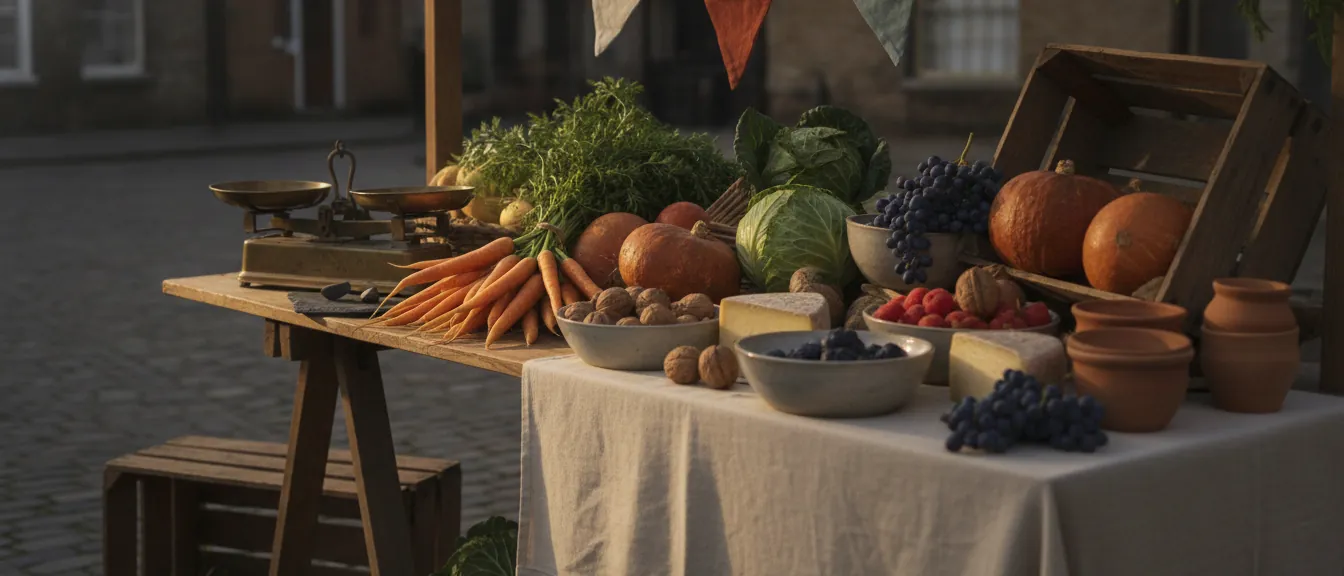
Farmers' markets here also tend to be smaller and more producer-led than the sprawling street food events that dominate English cities. Most markets require stallholders to have made, grown or reared what they're selling within a defined radius — a meaningful standard of provenance.
Edinburgh: two markets, two different moods
Stockbridge Market, held on Sundays in the New Town, draws a loyal neighbourhood crowd and has built a strong reputation for quality. Cheeses, charcuterie, fresh bread, seasonal vegetables and small-batch preserves sit alongside ready-to-eat food — the kind of market where you arrive for eggs and leave with a jar of something you didn't know existed. The residential setting keeps the atmosphere unhurried.
Castle Terrace, in the shadow of the castle esplanade, runs on Saturdays and pulls in a wider mix of visitors alongside regulars. The backdrop is dramatic but the market itself is grounded in practical shopping: meat direct from farms, root vegetables still carrying soil, Scottish seafood. Both markets reward visiting on their own terms rather than treating one as a substitute for the other.
Glasgow's neighbourhood markets
Glasgow has taken a different approach, with farmers' markets rooted in specific communities. Queen's Park Farmers' Market on the south side has a distinctly local feel — the surrounding area has a strong independent food culture, and the market reflects that, with producers who seem to know their regulars by name.
Partick, in the West End, follows a similar pattern: a market that serves the neighbourhood first and passing trade second. That community focus tends to mean better conversations with stallholders and, often, more interesting produce — people bring their best work when they know their customers will return.
Aberdeen and Perth: the market as civic institution
Aberdeen Farmers' Market operates in the city centre and has earned a solid reputation as one of the more dependable markets in the north-east. Given the region's agricultural strength — beef, lamb, root crops, dairy — the range of locally produced food is substantial. It's a good place to find Aberdeenshire beef sold by the farmers themselves rather than through an intermediary.
Perth Farmers' Market draws producers from Perthshire, Angus and Fife. Soft fruit in season, game in autumn and winter, local oatmeal and honeys — the market follows the agricultural calendar closely, so what's available shifts considerably through the year. A visit in summer and another in winter give a very different picture of what the region produces.
Island and remote producers' markets
Scotland's islands — the Hebrides, Orkney, Shetland — have food cultures shaped by what can be raised or caught in demanding conditions. Lamb grazed on machair grassland near the sea, smoked fish from small family operations, cheeses made in tiny quantities from island herds: these things rarely travel far. That's exactly why visiting island markets, or the mainland markets where island producers occasionally appear, is worth the effort.
Formats vary considerably — some are annual events tied to local agricultural shows, others are more regular. Check with local tourism organisations or the Scottish Association of Farmers' Markets for current schedules, as dates and locations can shift year to year. What you can usually count on is a short supply chain. The person selling you smoked mackerel very likely smoked it themselves.