Why the market still matters
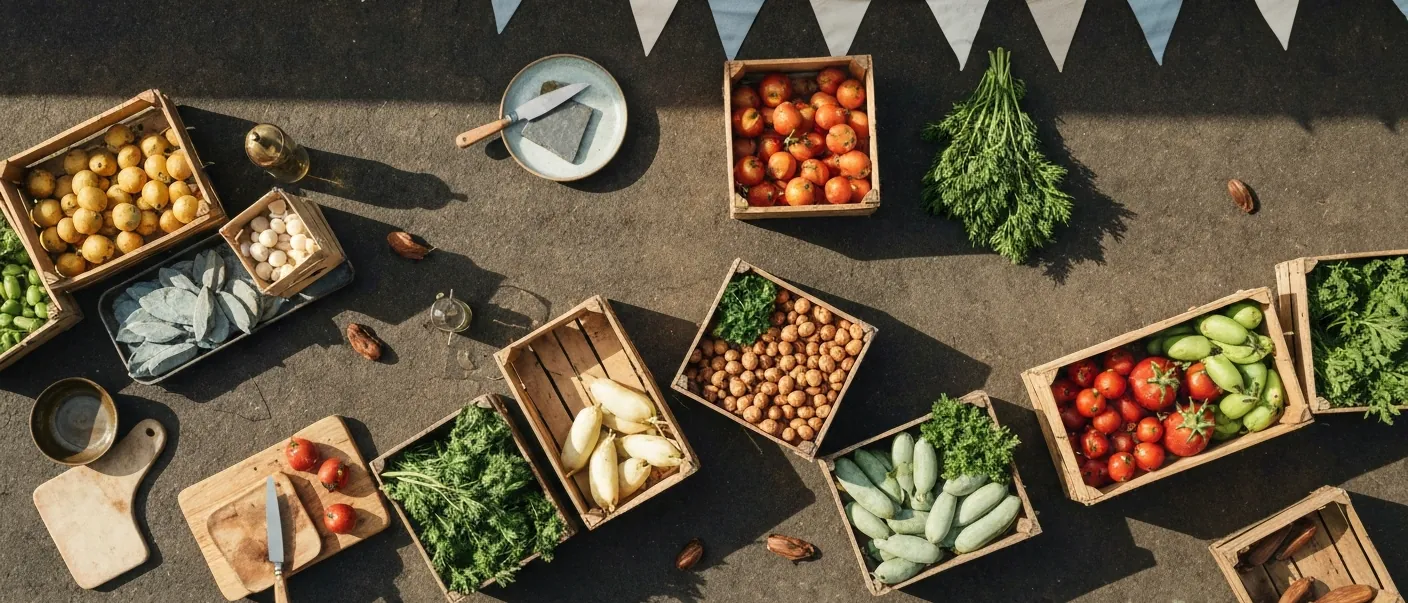
Supermarkets have never stocked more 'artisan' and 'local' produce, which makes it all the more useful to know what a genuine farmers' market actually offers. At its best, the person selling you a cheese made it, or milked the animal that provided it. The grower behind the muddy parsnips can tell you which field they came from. That directness — not the bunting or the street-food smell — is the point.
London has a spread of markets worth knowing, each with its own rhythm and character. None of them keeps perfectly stable hours, so treat any day listed here as a guide and confirm before you travel.
Borough and Broadway: the two institutions
Borough Market, on the south side of London Bridge, operates on a scale most markets can only envy. It draws both serious food professionals and tourists in roughly equal measure, which means the quality ceiling is very high and the crowds, particularly on Fridays and Saturdays, can test your patience. Go early, go with a list, and ignore the stalls aimed purely at passing trade — the wholesale and specialist producers dotted through the covered sections are where the real interest lies.
Broadway Market in Hackney has a different energy altogether. It runs along a single street in London Fields and has a strong local following, which keeps it honest. The range leans towards baked goods, small-batch preserves, and independently raised meat. It feels like a neighbourhood event that happens to have exceptional food in it, rather than a food event that happens to be in a neighbourhood.
Marylebone and Alexandra Palace: certified and considered
Marylebone Farmers' Market is one of the largest certified farmers' markets in the city — certification matters because it means producers must meet criteria about provenance and the distance goods have travelled. The market draws a loyal crowd of residents who shop there weekly rather than as a treat, which keeps the offer grounded and seasonal. You will find a solid cross-section of English cheeses, game in season, rare-breed meat, and serious fruit and vegetables.
Alexandra Palace Farmers' Market occupies the grounds of one of north London's grandest Victorian venues, but the atmosphere is more relaxed than that setting might suggest. It draws producers from the home counties and serves a patch of the city — the upper reaches of north London — that has fewer good market options than it deserves. Worth knowing if you are in that part of town on a Sunday.
Maltby Street and Brockley: south London's independent streak
Maltby Street Market began as a trade overflow from Borough and has grown into something with its own distinct identity. It occupies a stretch of railway arches in Bermondsey and operates at weekends, drawing a mix of small producers, street food operators, and independent importers. The atmosphere is deliberately low-key compared to Borough — less footfall, more browsing room, and a genuine sense that the people running stalls are there because they want to be rather than because it is the obvious commercial choice.
Brockley Market, in south-east London, is smaller still but has built a reputation for quality that outpaces its size. It is the kind of market where regulars know the producers by name and seasonal shifts are taken seriously. If you live south of the river and haven't found it yet, it rewards the trip.
How to get the most from any of them
A few things hold true across all of these markets. Arriving in the first hour is almost always worthwhile — not because the best things sell out instantly (though occasionally they do), but because producers are more likely to be talking, less likely to be rushed, and the whole experience is calmer. Cash remains useful at smaller stalls even where card readers are common. And shopping without a fixed list tends to produce better results than arriving with a rigid plan: the point is to see what is good that week, not to replicate last week's shop.
Each of these markets publishes its current trading days and hours on its own site or social channels — worth a quick check before setting out, as bank holidays and seasonal breaks can catch you out.