A market hall with serious geography behind it
The Victorian Market sits at the heart of Inverness — a covered arcade of cast iron and glass that was built when the city was confident in its commercial future and has lately rediscovered that confidence. Like the best of the market-hall revival we have written about elsewhere, it has kept its small traditional shops while weaving in independent food kitchens, so the atmosphere is layered rather than theme-park tidy. It is the northernmost example of that revival pattern in Britain, which feels right: there is something appropriate about the form reaching its farthest point in a place this close to a genuinely wild larder.
What makes it worth understanding is not the building alone but the producing landscape behind it. Inverness is where Highland geography compresses into a single city, and the food that flows through it reflects that. The Moray Firth to the north and east, the west coast sea lochs to the other side — between them they supply some of the country's finest shellfish and cold-water fish. The upland ground to the south and west carries red deer and the cattle breeds that thrive on rough grazing. Speyside, a drive east along the A96, is whisky country of the first order, a region we have covered in its own right. And the Moray coastal plain, sheltered and surprisingly mild, has long produced soft fruit and grain that you would not expect this far north.
What a food hall actually does here
Many visitors arrive in Inverness and leave quickly — heading for Loch Ness, the North Coast 500, or the Cairngorms. A food hall changes that calculation. It gives people a reason to stop for an hour rather than a photograph, and it concentrates the region's produce in one legible place. That matters when the alternative is driving past farms and fishing villages without knowing how to access what they make.
The independent kitchens in the Victorian Market cook from what is close. That is partly pragmatic — the supply chains are short — but it is also how these spaces build their identity. A bowl of Cullen skink, a plate of venison, a smoked fish that arrived from the Firth a day earlier: these are not things you need to hunt for across a city. They are gathered, and the gathering is the point.
For visitors passing through, this kind of food hall is not a formal restaurant. The rhythm is looser — counter service, shared tables, the possibility of eating a little from several places rather than committing to a menu. That informality suits a city that functions as a staging post as much as a destination.
The Highland baking tradition
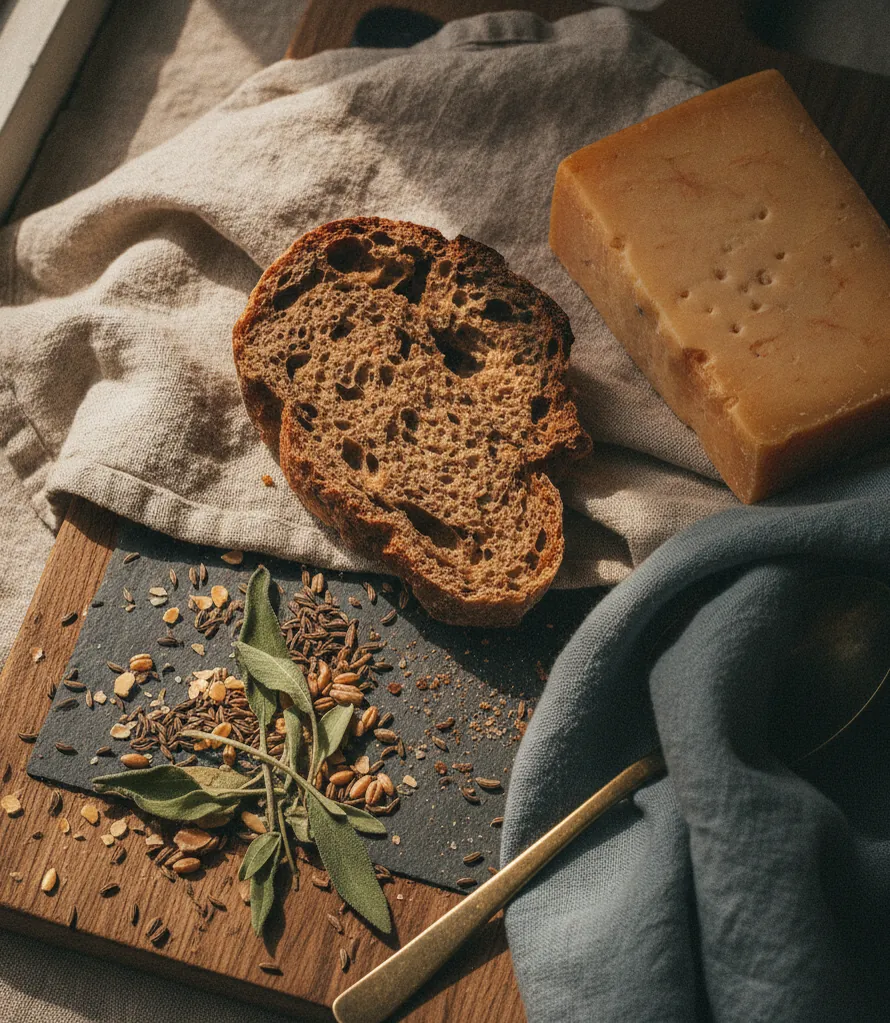
Scotland's baking heritage rarely gets the attention it deserves from visitors who associate the country primarily with whisky and game. The Highland tradition is particular: oatcakes ground from locally grown oats, shortbread made with proper butter, dense fruit-heavy tea bread that makes sense in a climate where something sustaining is required. Inverness has independent bakers working in this tradition, and the market provides a natural showcase. Eat one alongside a mass-produced alternative and the difference is immediate — oatmeal milled nearby has a texture that is difficult to describe precisely but impossible to miss.
How to use the market well
The Victorian Market is covered and central, which makes it useful in weather the Highlands produce without apology. Opening hours vary by trader — the arcade itself keeps standard retail hours, but individual kitchens set their own patterns, so check current times before making a special trip. Weekday mornings tend to be quieter; Saturday brings more traders and more energy.
For anyone stocking up before heading into remoter country — a self-catering cottage on the west coast, a few days walking in the Cairngorms — the market and its neighbouring independent shops are a better first stop than a supermarket. What you buy will travel well and taste of somewhere specific.
The connection to Speyside whisky is worth making deliberately. The distilleries east of Inverness are within easy reach for a day trip, and the whiskies from that region sit naturally alongside the smoked fish and aged cheeses that the city's independent food sellers carry. We have written about Speyside as a whisky region separately; the two articles are designed to work in tandem for anyone planning time in this part of Scotland.
Why it matters that this place exists
Market halls are not new — Victorian civic ambition built them across Britain. What is new is the decision to fill them again with makers rather than multinationals, with cooking rather than concessions. Inverness doing this at the northern edge of the British mainland signals that the appetite for local, independent food runs further than the obvious urban centres. It also means a city that could easily have become only a logistics hub for Highland tourism now has somewhere that reflects what its region actually produces — which is worth a detour, and quite often worth the trip itself.