What the show actually is
Held on the permanent showground at Llanelwedd, just outside Builth Wells in Powys, the Royal Welsh is commonly described as one of Europe's largest agricultural shows — and the scale makes that easy to believe. Hundreds of livestock classes, a showground that operates like a small town, and four days in late July; check the official site for exact dates each year.
Most visitors come for the judging rings, the heavy horses, the trade stands. For a food lover, the real draw is specific: the Food Hall, and everything immediately around it.
The Food Hall
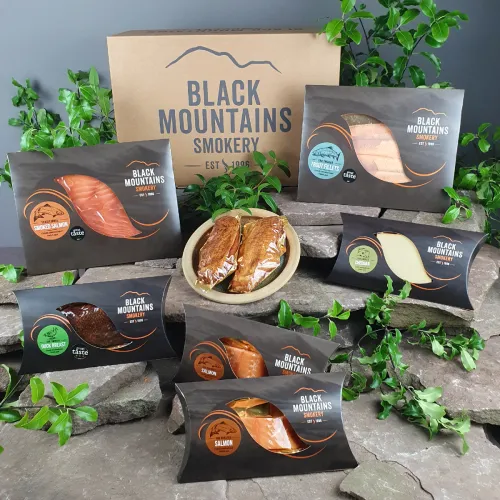
Welsh producers line the hall in a way that reads almost like a map of the country's larder. Cheeses sit near cured meats; honey producers are flanked by cider and perry makers; laverbread — that bracingly saline staple made from dried and stewed seaweed — appears alongside smoked fish and cockles. Many stalls carry championship rosettes from the show's own competitions, which gives you a reasonable shortcut for where to begin tasting.
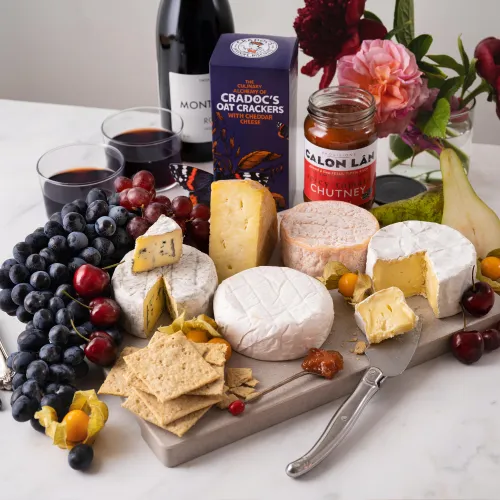
The cheeses deserve particular attention. Caerphilly, the crumbly, lightly acidic cheese that is as close to a Welsh national cheese as exists, turns up here in forms ranging from young and almost chalky to longer-aged versions with considerably more depth. Independent makers who are difficult to find outside Wales are well represented.
Welsh Black beef and salt marsh lamb are the other cornerstones. Welsh Black cattle are a native breed, hardy and slow-growing; the beef is darker and more mineral than most supermarket cuts. Salt marsh lamb, grazed on tidal grasslands in Pembrokeshire and the Llŷn Peninsula among other places, has a delicate, slightly herbal quality that comes directly from what the animals eat. Both appear at butchery and produce stalls, sometimes as ready-to-eat food from the catering around the hall.
Drinks are a serious part of the offer. Welsh cider — from traditional orchards in the border counties and beyond — sits alongside mead, craft spirits, and a growing range of Welsh wines. Tastings are commonplace; nobody expects you to buy without trying first.
Connecting the food to the livestock
The Royal Welsh lets you see the animals behind the food in a way no farmers' market can replicate. Welsh Black cattle classes and Welsh Mountain sheep judging run through the main arena across all four days. Watching a Welsh Black bull assessed in the ring — unhurried, enormous, the product of generations of careful breeding — gives you a different understanding of why this beef is treated with such respect. That context is freely available to anyone who wanders over from the Food Hall.
The shearing competitions are worth catching too. World-class shearers work at a pace that is almost impossible to follow with the eye, and the skill alone justifies the detour.
The cookery theatre and pacing yourself
A covered cookery theatre runs demonstrations throughout the show, typically featuring chefs working with Welsh produce from the very stalls you have just passed. Check the published programme before you arrive so you can plan around sessions that interest you rather than catching only the tail end.
The site is large and the Food Hall alone could absorb the better part of a morning. Arrive early — it is noticeably quieter before the main crowds build — and treat the livestock judging as a natural mid-day break rather than an afterthought. That rhythm works well.
Getting there and staying nearby
Builth Wells sits in the middle of Wales, which is part of what makes the show feel representative of the whole country. Builth Road station is close to the showground; car parking is on site. The road network in mid-Wales is mostly single carriageway, so journey times from most of England or South Wales run longer than a map suggests.
Accommodation catches people out. Mid-Wales has limited hotel stock and the show draws visitors from across Britain. Book months ahead, or consider staying in Brecon or Llandrindod Wells and driving in. Camping is popular and books out at similar speed.