A coast that still fishes
Crail, Pittenweem, St Monans, Anstruther — the names run eastward along the Firth of Forth, each village built around its harbour with the same practical logic: get the boats in, get the catch landed, get it sold. The architecture is Dutch-influenced, all crow-stepped gables and orange pantile roofs, a reminder that these ports once traded across the North Sea as fluently as they traded down the coast.
Fishing has shaped this corner of Scotland for as long as records exist. Herring was once the great driver — smoked, salted, barrelled and exported — and at its height the fleet here was substantial enough to matter to the whole regional economy. The herring boom is long gone, but the habit of working the sea hasn't gone with it. Crab and lobster are still hauled from creels in these waters, and local boats continue to land white fish. The industry is smaller and quieter now, but it's real.
Crab and lobster from cold water
Cold-water crustaceans grow slowly, and the result is firm, sweet meat that warm-water equivalents rarely match. Brown crab — the heavy, broad-clawed species most common here — yields two distinct things: the dense, rich brown meat from the body, and the paler, more delicate white meat from the claws and legs. Dressed crab, where the shell is cleaned and both meats are returned to it in separate portions, is the traditional way to make the most of both without letting either overwhelm the other. If you want to try it at home, our guide to dressing a crab covers the process in full.
Lobster from these waters tends to be the European native — darker and more intensely flavoured than the North American species common in restaurants. Landed live and sold the same day, it needs little done to it, and in the East Neuk it often isn't. Buying directly from a harbour-side seller, where the chain between sea and plate is as short as it gets in Britain, is one of the stronger arguments for making the trip.
The fish supper
Anstruther has a reputation for fish and chips that reaches well beyond Fife, and the queues outside harbour-front chip shops on a summer evening confirm that people travel specifically for it. The case rests on a few things: proximity to the source, a frying tradition that produces proper batter rather than a coating, and haddock — the preferred fish on this coast — at its freshest.
Whether the East Neuk produces the best fish supper in Scotland is an argument best had over the meal itself. What's harder to dispute is that a harbour view, sea air and decent fish give the whole experience a context that improves it. Eating outdoors by the water, paper on your lap, is as much a part of it as the fish.
Smoked fish and the older tradition
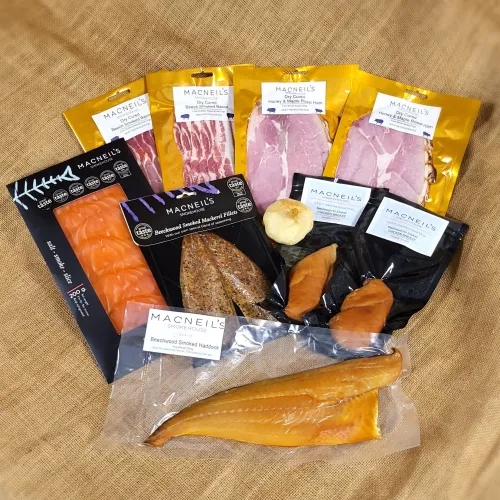
The decline of the herring fishery didn't end the smoking tradition. Smoked fish is still produced along this coast, and Pittenweem retains a working character that other fishing villages have partly lost to tourism. Cold-smoking — where fish is cured and exposed to smoke without being cooked — produces the concentrated, complex flavour that made Scottish smoked fish a serious export commodity. Hot-smoking cooks the fish through, giving a softer result and a more immediate, ready-to-eat product.
Smoked haddock from this region differs noticeably from dyed, factory-processed supermarket versions. Where colour appears, it comes from the smoking itself rather than artificial colouring — though it's worth checking the label if that distinction matters to you. Buying from a smokehouse or harbour-side stall, where provenance is direct and turnover fast, is the most reliable way to taste the difference.
The Scottish Fisheries Museum
Anstruther is home to the Scottish Fisheries Museum, which sits on the harbour and covers the full sweep of Scotland's fishing history — the boats, the gear, the communities built around the industry and the economic forces that shaped and sometimes destroyed them. The museum holds actual vessels alongside archives and artefacts. An hour here puts the food you eat afterwards in proper context. Check the museum's own website for opening times before you visit, as hours can shift across the year.