A long history behind a new address
Chester has been a market town since medieval times, and that continuity matters more than it sounds. Producers and traders around the city have had generations to settle into what the region does best. The modern hall, part of the Northgate development in the city centre, is purpose-built — a deliberate choice to give the market a permanent home rather than squeeze it into leftover space.
Inside, two logics coexist. There is a working produce market of the kind that once anchored every British town: grocery, everyday staples, stalls that serve the people who actually live here. Alongside that sits a food-hall element — independent kitchens, bars, small traders — the template most ambitious British market halls now follow. Chester keeps both under the same roof, and neither crowd has colonised the other.
Cheshire's larder on the doorstep
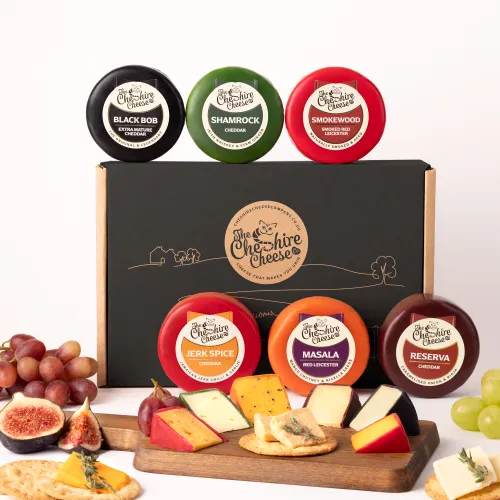
The city's geography explains the range of produce. Cheshire's dairy country lies in every direction from Chester, so the county's cheese tradition is not an import — it is the local product. A good Cheshire cheese is quite different from the factory-produced kind: crumbly but not dry, with a clean, lightly saline edge that owes something to the underlying geology. The Cheshire plain sits on one of Britain's oldest salt deposits, and the wiches — Nantwich, Northwich, Middlewich — were producing salt long before anyone wrote down how they did it. That salt shaped the local curing and preserving traditions as much as it shaped the cheese.
The Welsh border runs only a few miles to the west, pulling Welsh produce — lamb especially — into the same trading orbit. Border-country lamb, grazed on hill pasture, carries a depth of flavour that lowland-reared meat does not, and Chester has been one of its natural market points for centuries. When Welsh lamb or Welsh produce appears at a Chester stall, this is not a lifestyle addition: it is geography doing what it has always done.
What to look for on a visit
Go with specific things in mind rather than a vague plan to browse. The produce stalls reward people who want to cook. Real Cheshire cheese — look for a crumbly, slightly moist block rather than anything shrink-wrapped into uniformity — is the obvious starting point, and worth buying in a larger piece than you think you need. It keeps well.
Salt-related products from the Cheshire wiches occasionally appear at independent stalls: flavoured salts, cured meats, preserves that reflect local tradition rather than simply seasoning to taste. These are worth slowing down for. Welsh border produce — mutton as well as lamb, or cheeses from small Welsh dairies — tends to appear at the kind of independent stall that shifts seasonally rather than the permanent fixtures, so availability varies.
The food-hall side is better approached as somewhere to eat while you are there. Independent kitchens in market halls change, grow and occasionally disappear, so pointing to a specific operator by name would not serve you well. The category is reliable, though: small, focused menus, usually one cuisine done well, the kind of cooking that does not happen in a high-street chain.
Planning your visit
Market halls of this kind typically have a core of permanent traders open most days, with the full market — and the more interesting independent stalls — concentrated on specific days. Check directly with Chester Market before you travel, both for opening days and for any seasonal or specialist markets running alongside the regular schedule. The city also hosts periodic food events and producer markets in its wider public spaces; the official visitor pages are the reliable place to confirm what is on.
Chester's city walls — Roman in origin and the most complete circuit of any city in Britain — make the market easy to combine with a longer morning. The walls run close to the Northgate development, and the city's covered Rows, the medieval two-level shopping galleries genuinely unlike anything else in Britain, are a few minutes' walk away. The market is not a detour. It is a reason to stay longer.