
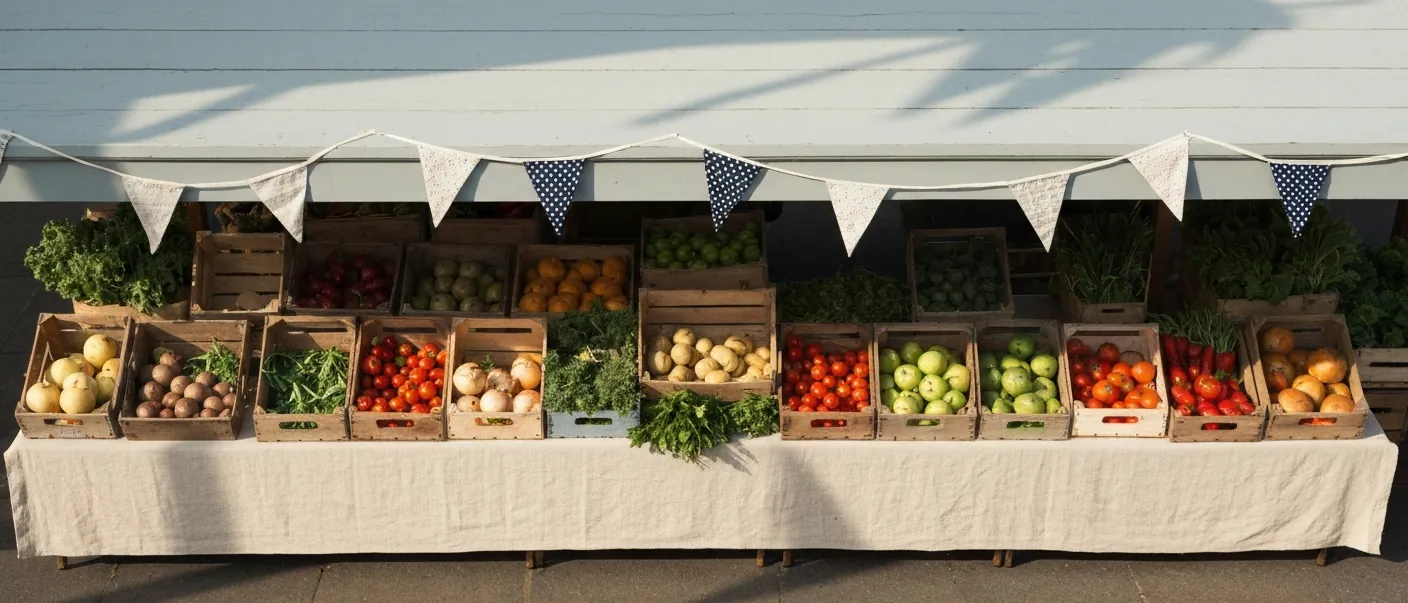
Why Borough Market matters
There are older markets in Britain and bigger ones, but Borough Market occupies a particular place in the story of British food. Beside London Bridge in Southwark, it has been a place of exchange and appetite for roughly a thousand years — a fact that sounds like marketing copy until you stand beneath its Victorian ironwork and consider how many hands have passed things across a counter on this exact patch of ground.
What makes it worth your time now is not the history. It's the density. A serious cheese counter might be two stalls from a baker pulling sourdough from a deck oven, which is next to a butcher who can tell you the breed and farm behind every cut on display. That concentration of knowledge and craft is genuinely rare, even in London.
What to seek out
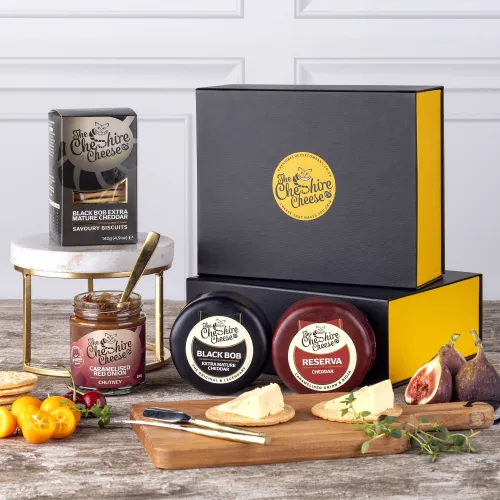
British cheese is one of the market's great strengths. The specialists here tend to stock things you will not find in a supermarket — raw-milk territorials, small-batch washed rinds, cheeses from farms that produce only a few hundred wheels a year. Go without a fixed shopping list and ask what's ready to eat that day.
The rare-breed butchers are similarly worth your attention. These are stalls where conversation about provenance is not performative; the staff generally know the farms and can explain practical differences between breeds in terms of fat cover, flavour and how the meat should be handled. It's a good place to buy a cut you've read about but never cooked.
Produce stalls vary considerably across the seasons, which is part of the point. Come in autumn expecting forced fruit from a heated polytunnel and you'll be disappointed. Come expecting the British growing season's actual rhythm — brassicas, squash, heritage apples, forced rhubarb in the earlier months — and you'll leave with things that taste like something.
How to move around it sensibly
The market gets crowded, and crowded means slow and slightly airless. The simplest advice: go early or arrive in the last hour before closing. Mid-morning on a Saturday is the least well-kept secret in London food; the stalls are full, the queues are long, and the experience becomes more scrum than browse.
Early arrivals get first pick and a chance to actually speak to the people selling. Late arrivals sometimes find reduced prices as traders clear perishables. Neither strategy is complicated, but both make a meaningful difference to how the visit feels.
Full trading days and hours change seasonally — the market's website is detailed and up to date. Check it before you go, not because opening hours shift dramatically, but because knowing which traders are present on a given day lets you plan rather than wander.
A few things worth knowing before you arrive
Borough Market is a working food market, not a food hall. There is no air conditioning, no curated layout, and no map that will stay accurate for long as stalls shift. The slight chaos is what keeps it honest, but it does mean arriving with comfortable shoes and realistic expectations.
Cash and card are both widely accepted, though individual trader policies vary. A good folding bag is more useful than a rigid basket; you will accumulate more than you planned to, and the walk back to London Bridge station with an awkward load is entirely avoidable.
Eating as you go is part of how the market works. The hot food traders — scotch eggs, grilled meats, pastries — are not a distraction from the shopping; they're what makes an hour's browsing feel like an occasion rather than a chore. Budget for it rather than treating it as an unexpected expense.
_jpgq80.webp)