A station with a second life
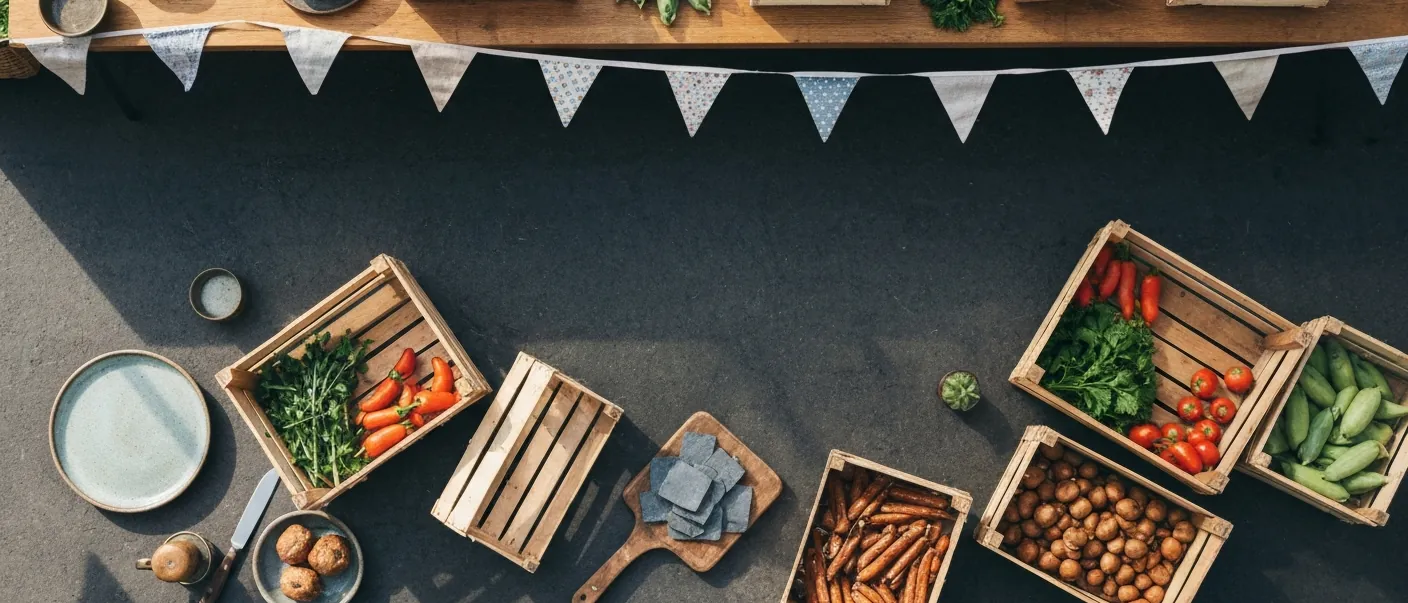
Green Park Station in Bath is a Victorian train shed that no longer sees trains. What it does see, most Saturday mornings, is a farmers' market with a fair claim to being the one that started everything. The ironwork and glazed roof make a good backdrop for stalls of muddy root vegetables and hand-thrown pottery jars of honey — nobody planned it that way. It simply turned out that an old station had exactly the kind of covered, civic space a market needs.
Bath's market is widely recognised as the first of its kind in the UK, founded in the late 1990s when the phrase "farmers' market" was still largely American. The idea — that producers should sell directly to the public, cutting out the middleman and keeping money closer to the farm gate — landed here and spread quickly. Within a few years, similar markets had opened across the country. Most people running one of those later markets will, if you ask them, trace the lineage back to Bath.
What makes a farmers' market a farmers' market
The definition matters more than it might seem. A genuine farmers' market operates on the principle that the person behind the stall either grew, reared, caught, brewed, pickled or baked what they're selling — or is a close relation of the person who did. That distinguishes it sharply from a general street market, where a trader might be selling produce bought wholesale at dawn. At Bath, that principle has been central from the beginning.
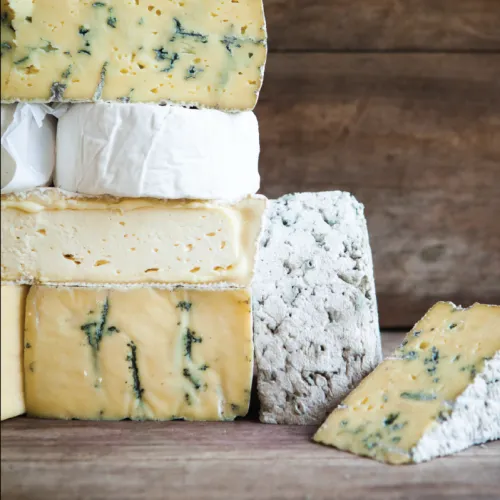
It means the conversations are different. Ask about the cheese and you might get a twenty-minute account of the herd, the pasture, the particular reasons this year's batch turned out sharper than last year's. That kind of knowledge doesn't travel through a supply chain. It only survives when the maker and the buyer are standing a metre apart.
The produce
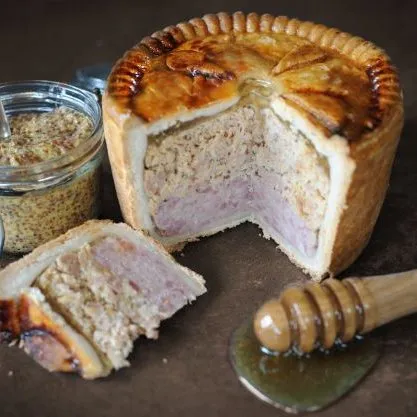
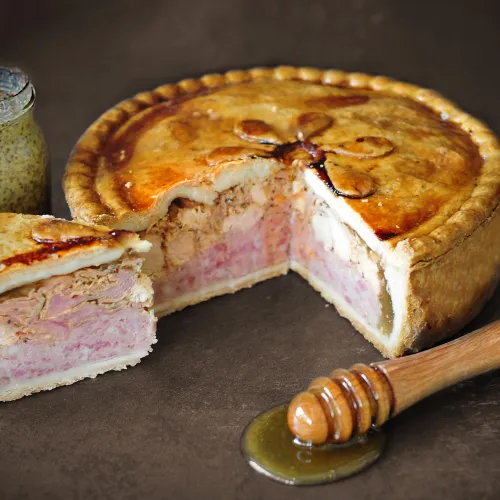
Somerset and the surrounding counties are serious agricultural country, and the market reflects it. Expect good meat — beef, lamb, pork and game in season — alongside vegetables that look like vegetables rather than the uniform shapes of supermarket shelving. Bread baked that morning. Raw-milk cheeses. Preserves made in small batches. Cider from orchards close enough that the farmer can name each variety of apple.
The range shifts through the year, which is partly the point. A farmers' market in January looks genuinely different from one in July. That seasonality is information — a quiet reminder of what actually grows when, and where.
Why the origin story still matters
There are now farmers' markets in most British towns of any size. Some are excellent; some have drifted towards street-food stalls and craft goods with only a loose connection to farming. Bath being first doesn't make it automatically better than what came after, but it does make it the place where the model was tested.
The late 1990s context is worth holding in mind. British food was then in the middle of a long reckoning — BSE had shaken trust in industrial meat production, supermarkets dominated the weekly shop more completely than ever, and a generation of small farms faced real financial pressure. A market that put the farmer in front of the customer was, in that climate, a quietly political act as much as a commercial one. It proposed that transparency and locality were worth paying a little more for. That argument has only grown more persuasive since.
Treat a visit as a Saturday morning rather than a quick errand — walk the full length of the stalls before buying anything, talk to a producer or two, and leave with something you couldn't have found in a supermarket. That's what the market was designed for, and it's still what it does best.