The rule that matters most
Whatever you bring, it should require nothing of your host the moment you arrive. No hunting for oven space, no scramble for a serving dish, no anxious rearranging of the fridge. Christmas kitchens are already running at capacity, and a gift that lands on the worktop demanding attention is, however kindly meant, another thing to manage.
That principle rules out most obvious missteps: the pudding that needs steaming, the cream-filled patisserie box that must go straight in the fridge, the cheese selection that wants unpacking and plating. It also makes the choice simpler, because the right options are more straightforward than you might expect.
Bottles with something to say
A bottle works best when there's a reason behind it beyond convenience — not a decent red grabbed at the supermarket, but something with a story. A small-producer cider from an orchard you visited, an unusual fortified wine, a single malt from a region your host loves. The story is part of the gift.
If you know the menu, use that knowledge. A host planning a Stilton course will almost certainly welcome a port alongside it. Someone serving a traditional roast may have the wines sorted already and would prefer something that isn't competing — sloe gin for after, perhaps, or a good sherry for before. When in doubt, ask. Most hosts will tell you they'd love a bottle of something specific, and that information is far more useful than a surprise they have to work around.
Chocolates, biscuits and the moment after lunch
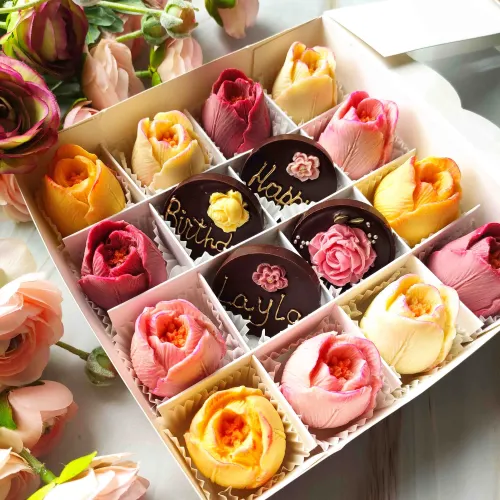
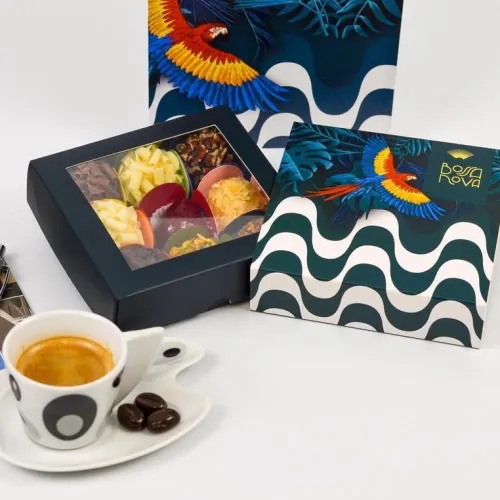
The lull after Christmas lunch — coffee going round, the table a comfortable wreck — is exactly when a beautiful box of chocolates earns its place. A box of well-made truffles or dark chocolate thins needs no introduction and no preparation. It simply appears at the right moment.
Good biscuits deserve more credit than they usually get. A tin of proper cheese biscuits — the kind with enough structure to carry a ripe Cheddar or a crumbling Wensleydale — is quietly invaluable. Cheeseboards tend to outlast the biscuits supplied for them, so you're solving a real problem rather than adding to a pile of things the host didn't need.
Something for later
One of the most considered choices is a gift that isn't for Christmas Day at all. A wedge of aged cheese and a jar of chutney, presented together, is a Boxing Day gift as much as a Christmas one — something to bring out when the fridge is raided, the turkey is cold, and nobody wants to cook. A tin of biscuits, a jar of proper marmalade, a good fruit cake: things the host can open quietly on the 27th, when the guests have gone and they finally have a moment to themselves.
This kind of gift acknowledges something often overlooked: the person cooking Christmas dinner doesn't always get to enjoy what they've prepared in quite the same way everyone else does. Something reserved for them, after the event, is a genuinely thoughtful gesture.
When to ask, and when not to
Dessert is the one area where you should always check before bringing it. If the host has planned their own pudding — and many people feel strongly about their Christmas pudding — an unexpected trifle or yule log creates a dilemma rather than resolving one. Offer first, and mean it either way.
A quick message asking whether there's anything the host would find useful is never an imposition. It might reveal that wine is entirely covered and they'd actually love some good coffee, or that they've been hunting for a particular cheese for the board. The worst outcome is they say not to worry — at which point you default to chocolates and a good bottle, which is never wrong.