The language gap on the label
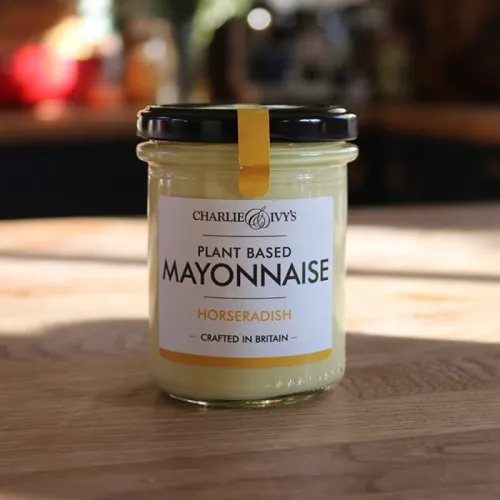
Walk the aisles of any food shop and you'll find 'plant-based' and 'vegan' used almost interchangeably on packaging. They are not the same thing, and that distinction matters more than most manufacturers would like you to notice.
'Vegan' carries the possibility — not the certainty, but the possibility — of independent verification. Recognised certification marks, such as those issued by the Vegan Society or equivalent bodies, require producers to demonstrate that no animal-derived ingredients appear in the product and that steps have been taken to minimise cross-contamination during production. To display an approved certification mark, a producer must apply, pay a fee, and submit to scrutiny. The mark can be withdrawn.
'Plant-based', by contrast, is entirely unregulated. Any manufacturer can print it on any product with no obligation to meet a defined standard. A ready meal labelled plant-based could contain honey, dairy derivatives, or ingredients processed on shared lines with animal products, and there would be nothing legally improper about it. The phrase communicates a general direction of travel — fewer animal inputs — rather than a clear commitment.
Why 'may contain milk' appears on vegan products
A product can be formulated with entirely vegan ingredients and still carry the advisory 'may contain milk' or 'produced in a facility that handles milk'. This is not a contradiction; it is cross-contact labelling, and it exists for a different purpose altogether.
Cross-contact advisories are there to protect people with serious allergies. They signal that traces of an allergen could be present due to shared equipment or production lines, even where no dairy ingredient is deliberately added. For someone with a milk allergy, that warning is safety-critical. For a vegan, the picture is more complicated.
From a strict ethical standpoint, trace cross-contact is quite different from intentional inclusion of an animal product. Many vegan certification bodies accept this distinction and will certify products that carry cross-contact warnings, provided the manufacturer has taken reasonable steps to clean equipment and reduce risk. Others will not certify any product with such an advisory, taking the position that the standard should be uncompromising.
Two certified vegan products can therefore sit side by side — one carrying a 'may contain milk' notice and one not — and both can legitimately display a certification mark, depending on which body certified them. Knowing which body's standards you trust is, in practice, as important as knowing whether the mark appears at all.
How committed buyers verify
Relying on front-of-pack claims alone is not enough if you care about the detail. Here is what more practised buyers tend to do.
- Check the back of pack first. The ingredients list and allergen information are governed by food labelling law and must be accurate. Front-of-pack 'vegan' or 'plant-based' claims carry no equivalent legal weight.
- Look for the specific certification mark, not just the word. A logo from a named certifying body is meaningful; the word 'vegan' printed in a green font by the marketing department is not. Familiarise yourself with the marks used by the main certifying organisations.
- Understand what the certifying body requires. Standards differ. Some bodies publish their criteria openly online; a quick search will tell you whether cross-contact is permissible under that mark or not.
- Contact the manufacturer for grey areas. Smaller artisan producers often have no certification at all — not because their products are unsuitable, but because certification costs money and takes time that very small businesses may not have. A direct email or call asking about ingredients and production setup is often more informative than any label.
This last point is worth making for anyone buying from independent makers. A small-batch jam producer working from a dedicated vegan kitchen may produce something far more rigorously animal-free than a large manufacturer whose certified product is made on a line shared with six others. The absence of a mark is not automatically a red flag.
Reading the shelf more clearly
'Plant-based' tells you a product is positioned at a market; 'certified vegan' tells you it has met a defined standard set by a third party. Neither phrase, on its own, tells you everything you need to know about cross-contact risk or supply chain rigour.
For most everyday shopping, a reputable certification mark combined with a clean ingredients list is a solid foundation. For anyone managing a health condition alongside a vegan diet, or buying for others with strict requirements, checking the certifying body's published standards is time well spent.