Why food gifts work when other gifts don't
A good food gift does something that a candle or a bunch of flowers can't quite manage: it creates a moment. Not just the opening, but the eating — a shared bottle, a slow breakfast, a plate passed across the table. That's the frame worth starting from. Rather than asking what to buy, ask what the two of you might actually do with it.
It also helps to think small and specific rather than grand and generic. A beautiful bottle of English sparkling wine chosen because you drank something similar on a particular evening will mean more than the most expensive hamper assembled by an algorithm.
Build around an occasion, not a category
The gifts that land tend to have a shape to them — a beginning, a middle, an end. A cheese and wine pairing for two, with a few carefully chosen accompaniments, becomes the whole evening rather than a prelude to it. A cocktail kit — the spirits, the mixers, maybe a good-looking tin of garnishes — implies a ritual: the ice, the shaker, the fact that neither of you has anywhere to be.
A special breakfast is underrated. Good coffee, proper pastries from a local bakery, a small jar of something exceptional — a single-variety British honey or a conserve from a maker you've actually visited. It says: this morning matters. That framing is often more romantic than anything that arrives in a heart-shaped box.
A sharing dessert — a whole tart, a proper pudding from a small producer — works in a similar way. It's inherently for two people. You can't really eat a whole tart alone and feel festive about it.
Personal beats polished, every time
The brief we keep returning to when we think about food gifts is this: personal over generic. A hot sauce from a producer you discovered on holiday in Cornwall. The specific aged cheddar from the farmers' market you go to together. These things carry a memory, which means they carry a meaning that no luxury retailer can replicate on your behalf.
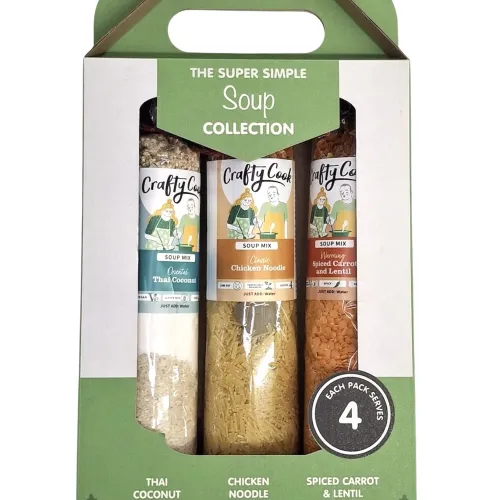
This is also the argument against the pre-assembled hamper, unless you've chosen every item in it deliberately. A collection of things someone else thought went together is a different object from a collection of things you know this particular person will love.
Not everyone wants something sweet
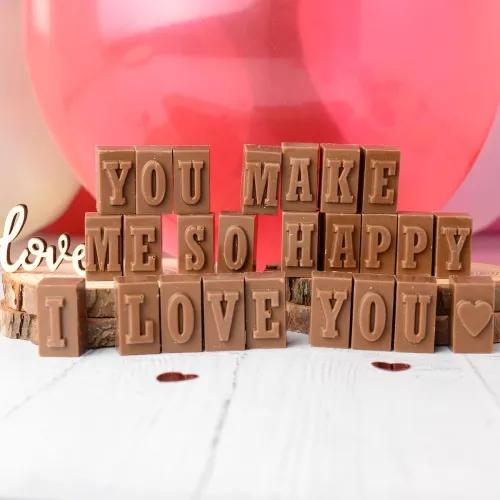
Chocolate and Valentine's Day have been paired for so long that it's easy to forget not everyone actually wants a box of truffles. For someone whose tastes run savoury, a food gift can be even more thoughtful precisely because it isn't the obvious thing.
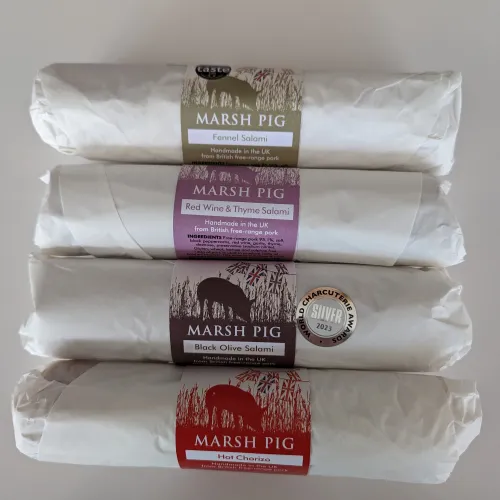
A small selection of well-sourced charcuterie — cured meats from a British producer, perhaps, or something brought back from the deli counter of somewhere you both liked — works beautifully alongside a bottle of something red. Savoury biscuits from a small bakery, an interesting chilli sauce, a jar of really good olives: these are the building blocks of an impromptu grazing plate, which is its own kind of celebration.
It's also worth saying plainly: gifts for him and gifts for her need not differ. The instinct to reach for different things based on gender tends to produce worse choices than simply thinking about what this person — specifically — would genuinely enjoy opening.
A note on English sparkling wine
If you're choosing a bottle, English sparkling wine is worth considering seriously. The chalk and clay soils of the South East have proved well-suited to the grape varieties that produce wines with real finesse, and the category has grown considerably in ambition and quality. A bottle from a small English producer is a more considered choice than a default to something French — and for a gift tied to place and story, that matters.
Pair it with something to eat rather than presenting it alone. Even a few good things — a piece of washed-rind cheese, some water biscuits, a few slices of something cured — turns a bottle into a plan.