A serving board is not a chopping board
That distinction sounds obvious until a beautiful aged cheddar acquires the ghost of yesterday's garlic. A serving board presents food at its best rather than taking the punishment of daily prep. The care routine is essentially the same — keep it clean, dry it thoroughly, oil wood regularly. What differs is how each material performs at the moment of serving.
What slate, marble and wood each do well
Slate is the most theatrical of the three. Its dark surface makes pale rinds and vivid accompaniments stand out, and you can write directly on it with chalk — useful for labelling unfamiliar cheeses without fussing with paper flags. The downside is that slate scratches relatively easily, so the surface acquires a history over time. It stays close to room temperature rather than genuinely cold, though it doesn't warm up quickly.
Marble is the material to reach for if you want things to stay properly cool. It retains cold well, which matters when serving butter, pâté or soft cheeses that begin to slide at room temperature. It's heavy, unforgiving if a corner meets a tiled floor, and it won't tolerate chalk or carving — but for a formal cheese course it has a quiet authority wood can't match.
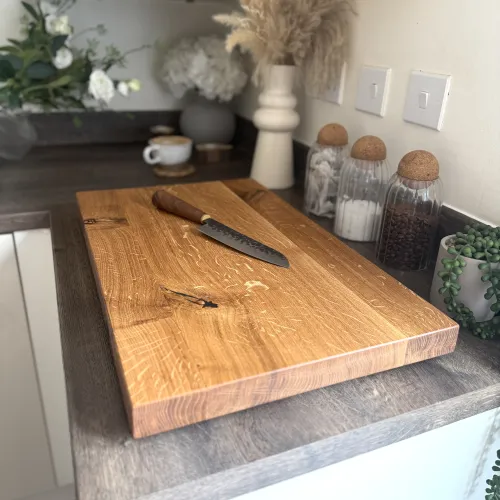
Wood is the warmest option in every sense: quiet under a knife, forgiving of small knocks, and it develops character rather than simply looking worn. The trade-off is that wood is porous, absorbing moisture and strong flavours more readily than stone. Oiling regularly with a food-safe oil keeps the surface sealed and extends the board's life considerably.
Getting the size right
The most common mistake is choosing a board that's too small. Cheeses placed too close together mean the knife moving from a washed-rind to a fresh goat's cheese carries flavour across — and not in a good way. Leave enough space between pieces that each one feels like a destination. A rough guide: if you can't fit a small ramekin of chutney between each cheese without things touching, the board is working too hard.
Blue cheeses deserve their own knife regardless of board size. The flavour is assertive enough that even a quick wipe won't neutralise it, and the mould can transfer visually to other cheeses in a way that puts guests off before they've tasted anything.
Shape follows occasion
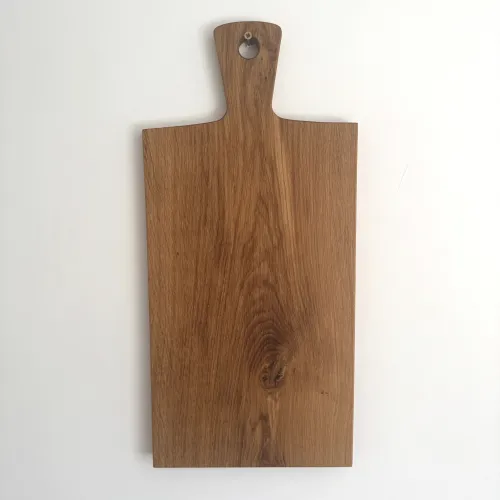
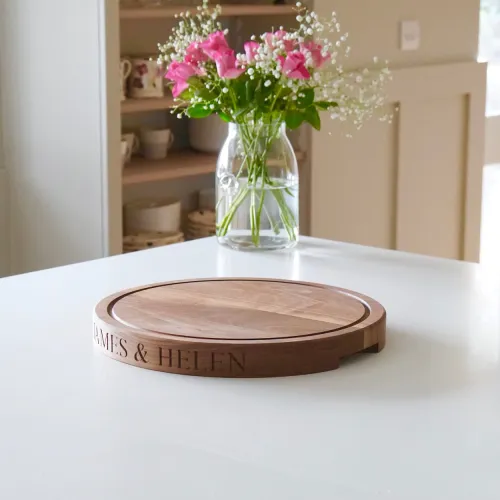
Round boards suit a cheese course at the centre of a table — they read as composed and finished, and guests can reach from any direction. Long paddle boards suit charcuterie and mixed spreads where the food benefits from a loose sequence: meats at one end, pickles and bread at the other, cheeses in between. The paddle shape can feel awkward on a crowded table where the ends overhang.
If you regularly host both kinds of occasion, two boards of different shapes is a more practical investment than one large compromise. A medium round in wood and a long slate paddle covers most situations without redundancy.
What to look for when buying
Avoid boards with decorative recesses or grooves machined into the surface — they trap moisture and are difficult to clean. Feet or rubber grips on the underside make a real difference on a smooth table. For wood, close-grained hardwoods are denser, absorb less moisture, and hold up better over years of use. For slate, run a finger across the surface before buying — a very rough texture makes it harder to slide food and more difficult to clean. Marble should feel substantial in the hand; thin pieces are prone to cracking.
A well-chosen board, properly cared for, should last indefinitely. That's worth keeping in mind when the price feels steep.