It starts with the leaf itself
Most standard teabags are filled with what the trade calls fannings and dust — the smallest particles left after larger leaves have been sorted and processed. That's not an accident or a compromise; it's engineering. Small particles have a vast surface area relative to their mass, so they give up their tannins and colour almost instantly. The result is a brew that's fast, strong, and consistent from cup to cup. For a milky morning tea pulled in under two minutes, that's exactly what you want.
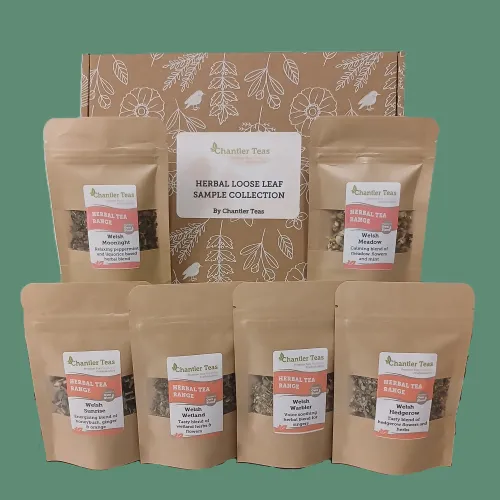
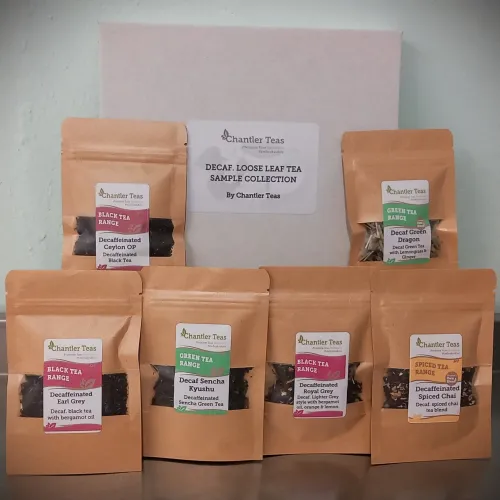
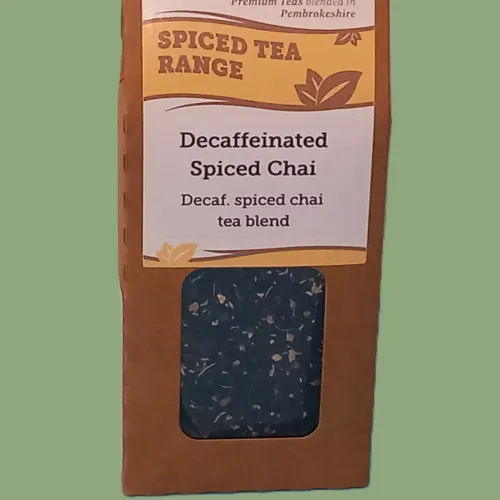
Loose leaf tea typically uses larger, more intact pieces of the plant — sometimes whole leaves, sometimes larger broken grades. Given enough water and space, those pieces slowly unfurl and release flavour in successive waves rather than all at once. The cup tends to be less aggressive, more aromatic, and noticeably more layered as it cools.
Where pyramid bags fit in
The pyramid or silk-style bag was developed to bridge this gap. The roomier shape lets larger leaf move freely in the water rather than sitting compressed in a flat paper envelope. Quality varies considerably between brands, but a well-filled pyramid bag can genuinely perform closer to loose leaf than to a standard bag. If you want convenience without sacrificing too much complexity, they're worth seeking out from independent producers who are honest about what they put inside.
Neither is the wrong answer
A builder's brew — strong, amber, taken with milk and brewed in a mug with a standard bag — is a legitimate British institution with its own internal logic. It's optimised for speed, robustness, and comfort. Dismissing it as inferior misses the point entirely.
Loose leaf rewards a different kind of attention. You're choosing to slow down, to use a pot or an infuser, and to taste what's actually there. That's not virtue; it's preference. The honest framing is that each format suits a different moment, and most serious tea drinkers keep both in the cupboard.
Getting more from loose leaf
One persistent misconception is that loose leaf is extravagant. Per cup, it's often comparable to a quality teabag — sometimes cheaper — because a good loose leaf can typically be infused more than once, particularly green and oolong varieties. The first steep is not the only steep.
Water temperature matters more than most people realise, and it matters most for green tea. Boiling water on a delicate green leaf scorches it, bringing out bitterness rather than the clean, grassy sweetness the leaf is capable of. Black tea is far more forgiving. If you're new to loose leaf and find a green tea disappointing, cooler water is usually the first thing to adjust. The principle is straightforward: the more delicate the leaf, the gentler the water should be.
Storage has a real bearing on what ends up in the cup. Tea is vulnerable to light, moisture, heat, and strong odours — all of which degrade flavour faster than most people expect. We cover the specifics in our piece on storing tea and coffee properly, which is worth reading alongside this one if you're investing in better leaf.
When the source of the leaf matters
Beyond format and grade, there's the question of where the tea was grown — the estate, the altitude, the season of picking. That's a distinct layer of consideration, and one we give its own space in our piece on single-estate teas. The differences between origins can be subtle enough to be lost if the leaf is poorly stored or badly brewed, so it's worth exploring once you're comfortable with how format affects your cup.
Start with format. Then think about source. The order makes the learning easier.