The format, plainly explained
Royal Mail's Large Letter size sets the boundary for any true letterbox gift: no wider than 35.3cm, no taller than 25cm, no deeper than 2.5cm, and no heavier than 750g. Stay within those numbers and the parcel drops through a standard door without a knock. Exceed any one of them and the whole idea collapses — a card through the door, a trip to the collection office, and the spontaneity you were paying for is gone.
That flat, shallow rectangle is the defining constraint. Everything else — what goes inside, how it's packed, whether it arrives in one piece — flows from it.
What actually fits
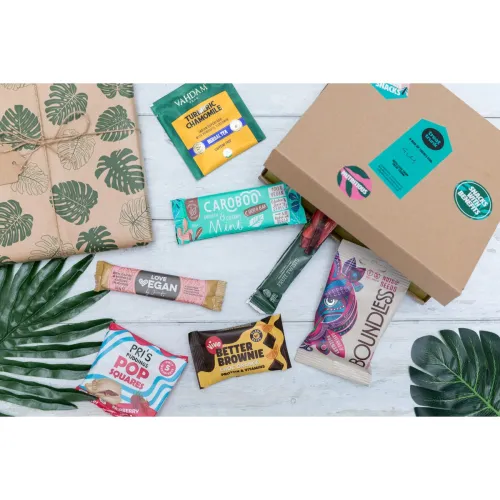
Foods that suit this format share a few characteristics: flat or stackable, no refrigeration needed, and robust enough to survive a letterbox's spring-loaded flap and a jostle in a mail sack. Brownies, flapjacks and biscuits travel well when packed in a sealed inner bag inside a rigid card sleeve. Fudge, cut into small pieces and laid flat, is similarly well-suited. Chocolate bars and thin chocolate slabs — particularly from smaller British makers — fit almost perfectly. Loose-leaf tea in a flat kraft pouch, sachets of hot chocolate, a bag of flavoured popcorn: all of these work.
Packaging does real work here. A rigid card outer with a cut-to-fit inner tray stops contents from sliding and absorbs compression from the letterbox flap. Sealed bags protect against moisture and keep biscuits crisp. Without that internal structure, even a well-chosen product can arrive as rubble.
What struggles, and why
Anything tall is the first casualty — a jar of preserve, a bottle of olive oil, a tin of biscuits. Height alone rules these out regardless of weight or width. Fragile items are a second problem: meringues, tuiles, anything with a thin snap will not survive the journey reliably. Fresh or chilled foods are essentially incompatible with the format; a parcel that could sit on a mat for hours offers none of the temperature control those products need.
Weight deserves honesty, too. 750g sounds generous until you're fitting several items into a box with a tray. Dense cakes, heavier sweets, and anything in glass push against that limit quickly. The best letterbox gifts lean towards lighter, drier foods for a reason.
When this format makes sense
A letterbox gift works hardest where you can't guarantee someone will be home — sending a birthday treat to a friend in another city, posting a thank-you to a colleague you won't see for months, marking an occasion for someone who lives alone. Nothing is required of the recipient except opening their own post.
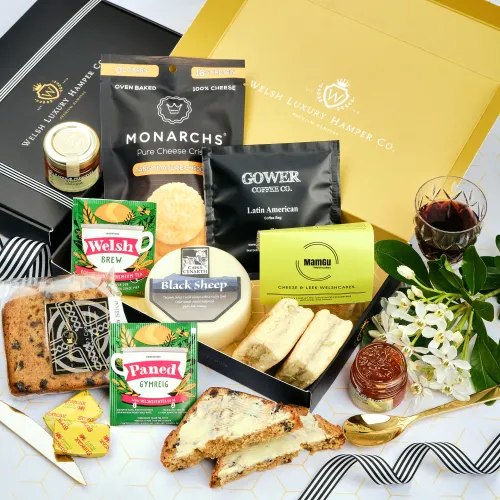
Compared to a hamper, the letterbox format is leaner by design. Hampers carry ceremony and abundance; letterbox gifts carry a single, well-chosen thing. A box of properly made brownies or a small selection of single-origin chocolate bars arrives as itself, not buried in tissue paper and raffia.
For long-distance gifting — where a perishable or fragile delivery feels like a gamble — flat, shelf-stable food packed to this format is a practical solution rather than a compromise.
How to judge quality before you order
The format is now common enough that some retailers apply the letterbox label loosely. Check whether the listing specifies actual packed dimensions or merely claims it fits. Is the outer packaging rigid rather than a padded envelope, which offers far less protection? Are perishable items genuinely shelf-stable, or is the product relying on arriving quickly?
The best letterbox food gifts are ones where the maker has thought about the format from the start — portioned to fit flat, packed to protect, and chosen because the food itself is good rather than simply because it's thin enough to post.