Why staling happens faster than you'd expect
Roasted coffee is an unstable thing. The roasting process drives off moisture and creates hundreds of volatile aromatic compounds that begin escaping the moment the beans leave the roaster. Air is the primary culprit, but light, heat and moisture all accelerate the process. Grind the beans and you've multiplied the surface area exposed to those enemies many times over — which is why ground coffee stales within minutes of being milled, not hours or days.
Tea is quieter about its deterioration but no less susceptible. The dried leaves are extraordinarily porous and will absorb whatever smells surround them — a fact that supermarket tea bags, sealed in foil pouches, quietly acknowledge. Buy loose leaf from a good merchant and it arrives at its best; how long it stays that way depends almost entirely on how you store it.
The roast date is the most useful number on a coffee bag
Independent roasters print a roast date on their bags, and it's worth paying attention to. Freshly roasted coffee is best within a few weeks of that date — not because it becomes undrinkable afterwards, but because the brightness and complexity that distinguish a well-sourced bean gradually give way to something flatter. A best-before date tells you very little; a roast date tells you where you actually are in the coffee's life.
This is one reason buying directly from a small roaster matters. Supermarket coffee may have been sitting in a warehouse for months before it reaches the shelf, with no roast date in sight. If a bag carries only a best-before date, treat that as information in itself.
Where to keep your beans
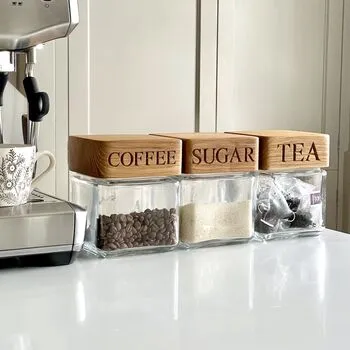
An airtight container kept somewhere dark and cool suits most people — a cupboard away from the cooker, not the worktop beside it. Many coffee bags now include a one-way valve that lets gases escape without letting air in; once you've opened the bag and broken that seal, decanting into a dedicated airtight tin or jar makes sense.
The fridge is a persistent myth. It feels logical — cool, dark, controlled — but in practice it is a hostile environment for coffee beans. They absorb odours readily (yesterday's leftovers, the cheese drawer, anything pungent), and the repeated temperature changes each time the door opens encourage condensation on the beans themselves. Moisture and coffee are a poor combination outside of the brewing process.
Freezing divides opinion, but it works for long-term storage. Buying a larger quantity from a roaster and freezing most of it in a properly sealed, airtight bag preserves flavour better than leaving beans exposed to air for weeks. The important discipline is to use them straight from frozen rather than defrosting and refreezing, which invites condensation all over again. For everyday use, a small airtight container in a cool cupboard remains the simpler choice.
Storing tea well
A good tin caddy with a tight-fitting lid is the traditional answer, and it remains the right one. The key variables are the same as for coffee — air, light and moisture — but tea has one particular vulnerability: it is remarkably good at absorbing the smells around it. Kept next to a jar of cumin or a pot of dried chilli flakes, tea will eventually taste of them. Keep the caddy in its own space, away from the spice shelf.
Not all teas age at the same rate. Green teas — delicate, lightly processed, full of volatile grassy or vegetal notes — fade noticeably faster than black teas, which have more robust, oxidised character. Buy green teas in smaller quantities and use them up promptly. Black teas are more forgiving, though they still reward careful storage.
Loose leaf tea holds its character longer than the finely milled dust in most commercial tea bags. The larger the particle, the less surface area is exposed and the slower the deterioration. It is the same principle as whole coffee beans versus ground: buy in a format that preserves integrity for as long as possible.
The simplest rule
Buy less, more often, from producers who tell you when something was made. For coffee, that means a roaster who prints a roast date. For tea, it means a merchant who sources with enough care to know the harvest season. Neither ingredient is made for a long shelf life — both are made to be drunk, and sooner is better.